Rethinking the Physical, Part 4: Audio

After years of transforming my pedagogy, strengthening my relationships with students, and retuning content, this year I’m placing emphasis on the furniture, walls, lighting, and the many other physical elements that make up my classroom. Each post in this series details a different element and how I’m rethinking it. This is the fourth post in the series.

SmartBoards do a lot of things well. They allow us to present information on a beautiful screen. They help our lessons come alive through an interactive and dynamic interface. They connect to every device our little hearts desire: laptops, phones, tablets, doc cameras. In short, the SmartBoard is a multimodal paradise that offers the world to our pedagogy.

To teach without our beloved SmartBoard seems unimaginable, but the fun doesn’t end there. It also has speakers! This means that videos, podcasts, music, and every conceivable sound effect can reach the ears of our students through our Smartboard. Audio is a subtle but vital part of a teacher’s instructional toolbox, and modern SmartBoards understand this. I really appreciate this convenience because I taught for many years with a SmartBoard that didn’t have speakers. Too often, after making last-minute changes to my lesson to include a video, I would have to scramble to find speakers to play it. That is an early morning hustle that I don’t miss.

Despite my gratitude for the SmartBoard’s speakers, I have a guilty confession: I have outgrown them. The novelty of built-in audio no longer satisfies me. Sitting back and passively accepting SMART’s mediocre approach to sound is no longer viable. My pedagogy now requires being more intentional with how audio is consumed in my room.

I use music a lot in my teaching. I’m convinced that the right song can create an environment conducive to productivity. Music also helps establish community and a sense of belonging. Anyone with a favorite song knows how music can reduce anxiety and boost mood. Whether it’s a chill lo-fi hip-hop instrumental, the upbeat lyrics of Lupe Fiasco, the stylish vibe of Ella Mai, or the timeless grudge from Nirvana, music helps set the tone from the moment my students walk into our room. Our playlist is co-constructed. We work to it. We learn to it. Along with thinking minds, it serves as the heartbeat of the room.

Because music is essential to my teaching, a key source of my dissatisfaction with the SmartBoard is how music sounds coming from it. The sound is flat. The bass is nonexistent. Simply put, it’s a mediocre experience. It’s clear that SMART added speakers to their crown jewel to satisfy a crucial need for educators, but that’s where the story ends.

The mere presence of mood-boosting music in the classroom is important, but having the right source for that music makes it come alive and amplifies its effect in the room. For years, I have turned to Bose as the source of my classroom audio.

It began in 2014 when I brought the Bose Companion 5 Multimedia Speaker System into my classroom.
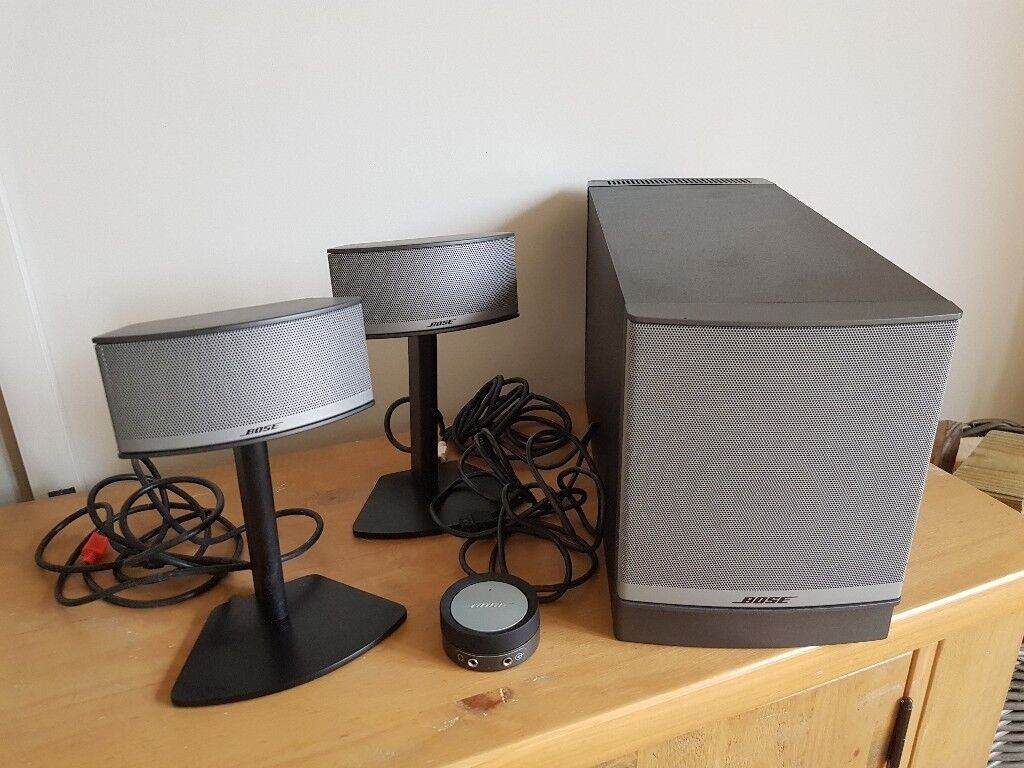
Bose Companion 5 Multimedia Speaker System

With its powerful subwoofer and two accent speakers, that system changed everything. Vocals were crisper. Beats were fiercer. Each chorus landed with more purpose. It was like night versus day when compared to the SmartBoard speakers. The system even had a slick dial with a tapping mechanism to adjust audio levels. For the first time in my career, the sound reached every corner of the room with a vivacity that SMART could never imagine. It breathed new life into my room.

The Companion 5 transformed the audio in my classroom and kept my students and me working in rhythm for eight years. But in September, I sought to rethink everything in the classroom. This included my Companion 5.

When pondering how to upgrade my sound system, my mind immediately went to surround sound. My classroom is big (which I frequently underestimate), and my students are always moving around discussing work. Surround sound would acoustically envelop the space and help our playlist reach my kids anywhere they worked. On top of that, the room was already de-fronted with 360-degree whiteboards. Why not extend this theme and do the same with the sound? Instead of having the audio emerge only from the SmartBoard side of the room, what if it flooded the room from all sides?

Before this year, I had no experience with surround sound. Thankfully Bose had me covered. I found several options on their website. After a few days of indecisiveness last summer, I landed on the Bose Soundbar 700 and surround speakers.

Thankfully, the setup of the speakers in my room was straightforward. My SmartBoard is mounted on two large rectangular columns bolted into the ground. The tops of the columns reach several feet above the board and form the perfect platform for the soundbar. The location is perfect because it’s stable, secure, and isolated from the hustle and bustle of the classroom.

SoundBar resting on the columns that hold up the SmartBoard

I had a lengthy debate about where to mount the surround sound speakers. Would they go on the sides of the classroom? The rear? Somewhere else? Their placement impacts the acoustics in the room, so I went back and forth on this. I ended up placing them in the room’s corners, opposite the soundbar. These are also locations high enough where they won’t be bumped — or even noticed — by students.
A surround sound speaker in the back corner of the room

I considered placing the soundbar atop the lockers in the room’s rear, opposite the SmartBoard. This would have created an interesting sound dynamic, with the main audio source coming from somewhere other than the SmartBoard. I wonder how it would feel to watch a video with the audio emanating from behind me? Would it improve balance? The setup seems unnatural, but since I mostly play music over my speakers, it might not matter much. Next year I want to try it.

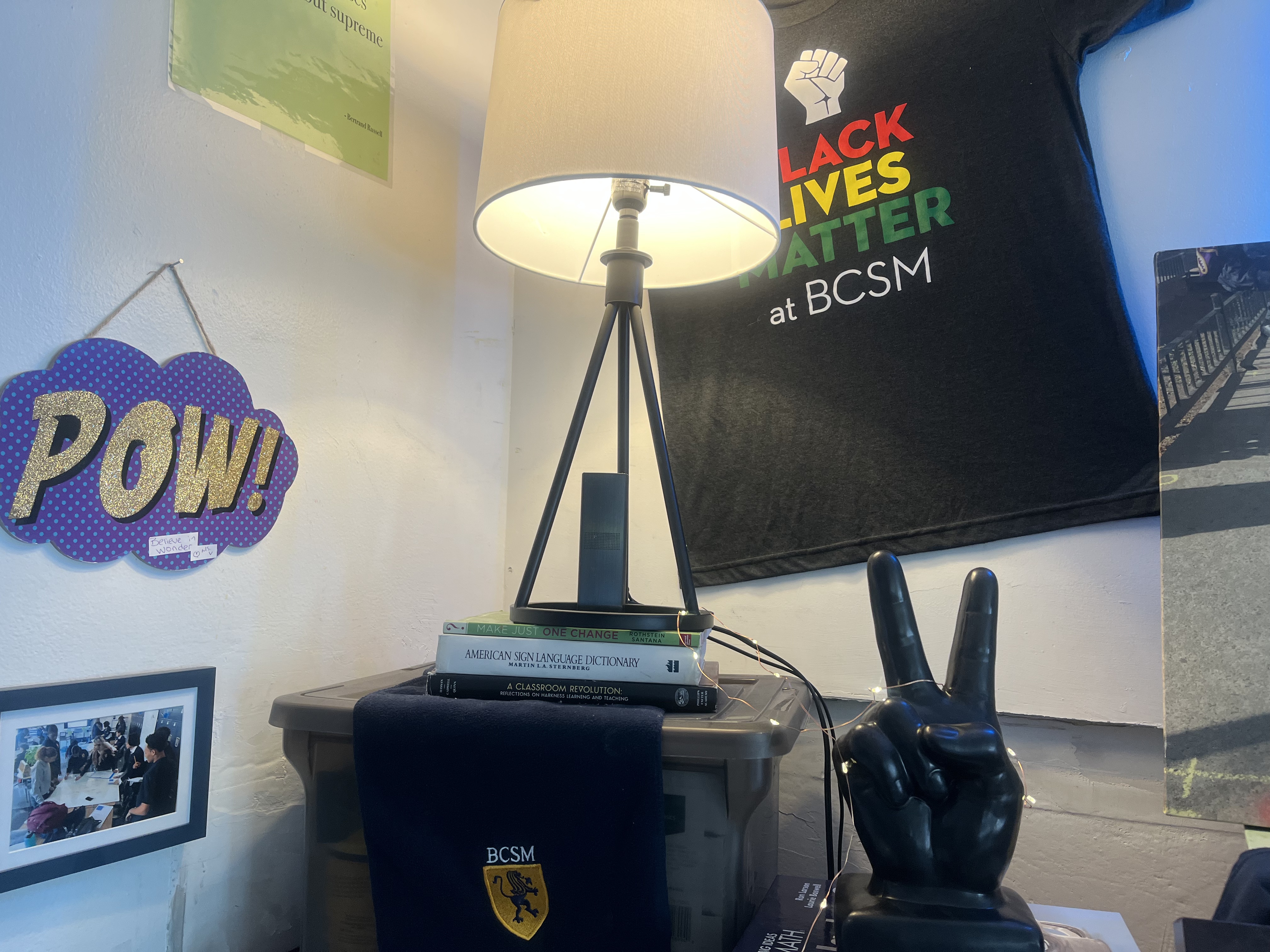
A benefit that I didn’t anticipate was the fact that the sound system runs on Bluetooth. This is a huge upgrade. This means that I’m not physically tethered to speakers and can play music no matter where I am in the room, including sitting at my desk before school. But given this clever presentation remote that allows for volume adjustment, I can change the volume on the fly as I move around the room. Need to grab the class’s attention for an impromptu announcement? Time to transition group work to a whole class discussion? With this remote, I no longer need to run to the laptop to pause or turn down the music. I can do it from wherever I am in the room. It’s a game changer.

Though I’m thoroughly satisfied with the surround sound in my room, I have two minor qualms. First, there’s no doubt that the sound that fills the room is triumphant, but the SoundBar pulls most of the weight. The small speakers could pack more punch. They’re weaker and less present than I expected. Second, despite the ease of setup, I did have to call Bose for technical support to arrange for a replacement SoundBar. This was very annoying. But, given the headache, their customer service was outstanding. I didn’t have to wait long to speak to someone and the first person I spoke to walked me through complicated troubleshooting. A totally refreshing experience.

I’d be naive if I didn’t admit that the price of these speakers gave me pause. Spending several hundred dollars on a sound system for my classroom isn’t the most reasonable thing for a teacher to do. Luckily, my Math for America fellowship comes with a bank of flex funds that can be used to make classroom-related purchases, which I used for my surround sound.I can’t say enough good things about MfA and the wonderful people there.Making my speaker dreams come true is one of many upgrades they’ve had on my teaching and career.

After spending a good part of the school year with surround sound, I’m happy. My students are too. Actually, come to think of it, I don’t even know if most students even know that the room has been outfitted with surround sound. Given the other dimensions of the room that are far more salient, like the lighting and seating, perhaps the elevated audio simply blends in.

Either way, the acoustics in the room are better than ever. So while the SmartBoard’s multimodal design may offer the world to my pedagogy, my speakers make up for one of its major flaws. Here’s to many years of vibrant sounds and lively audio.

bp

Dear S and L, (Student Letter #10)

To help me be more critical and mindful of the bonds I’m forging in and out of the classroom, I write anonymous letters to some of my current and former students. This is the tenth post in the series.

Dear S and L,

When you walked into my classroom today, I fell to a knee. The reaction was a first for me in my years of reuniting with former students, yet it felt so natural. Starring at you in awe, I stayed down for what must have been 20 seconds. In a classroom you once occupied, you happily stared back as my head shook in disbelief at your presence. I smiled and sighed assuredly. You were strangers to everyone in the room but me. You two took my breath away.

It wasn’t until one of my students walked over and offered to help me up that I realized that I was still kneeling. As I handed the reigns over to my co-teacher and stepped into the hallway to chat with you, I sensed it but didn’t know quite what had come over me. It’s certainly been a while since I’ve seen you, but my reaction told a much bigger story. Why did your presence affect me so?

I asked what brought you here and have things have been going since graduation. You both were doing fine. You found yourselves driving around the neighborhood and decided to drop in. S, you work at the post office. L, you’re in school studying to become a physical education teacher. Y’all have been making music together and are preparing to release content to the public in the coming weeks. Anticipation and excitement painted your faces. You looked happy.

L, you were slimmer and more jovial than you were in high school. You still have that humble charisma about you. S, you looked exactly the same: tall, lanky, and full of charm. You had the same retro Charlotte Hornets jacket I remember from high school. It’s clear that adulthood has claimed you both as its own. As your former teacher, I’m proud that you’re both growing up into productive young men.

We spoke in the hallway for a mere 10 minutes. Our conversation was like any I’ve had with former students: reminiscent, light-hearted, hopeful. But the more we spoke, the more my mind wandered back to the 2019-20 school year.

S, you were a senior in my period 3 class that year. We knew each other well because I taught you in 9th grade. We enjoyed a wonderful first semester together. You wrote two thoughtful math journals and always stayed back after class to ask me questions. We chatted frequently about your aspirations of being an actor.

L, you were also a senior that year. Having taken my class the year before, you weren’t my student anymore. But I still saw you around the school all the time. We had a handshake. I went to many of your basketball games.

In the spring of 2020, Covid hit and upended everything. I never saw either of you again. Our departure from school and each other happened so quickly. One week I was handing out Friday Letters and your grading exams. The next I was on Zoom in my bedroom, pretending to be a teacher. It was a nightmare.

With the resurgence of in-person learning these last two years and my faith in teaching fully restored, I have come to forget about our suffering that spring. New challenges and new students have kept it buried. It was better that way. It was too dark and too sad a time to dig it up.

That changed the moment I saw you today. In an instant, it all came flooding back. The insecurities, the worries, the isolation, and the unimaginable losses of spring 2020 revealed themselves again. With your presence, I suddenly remembered both my pre-pandemic self and the hard transition I was forced to make in order to endure the worst period of my teaching career. This is why I fell to a knee upon seeing you. I was overtook by a past that I wish never existed.

Adding to the impact of your visit was when it occurred. I think my reaction would have been less emotional had I not been teaching when we saw each other. Being surrounded by the love and togetherness of my current students, I was immersed in tradition and predictability and wonder. It was an ordinary lesson, but the room was bright and full of life. Seeing you at a moment was a sucker punch from an unfriendly and broken past. It was the antithesis of what I have currently enjoy. Seeing you knocked the wind right out of me.

You two are amazing, kind, and bright young men, but it’s important for me to understand that you are also a bridge to a place that I’d rather not think about. I need to be better at confronting this part of my teaching past. I cannot completely separate you from what happened during the spring of 2020, nor should I. I’m grateful for the bonds we established before and during that scary time. It was those bonds that instilled faith in me during the bleakest of days on Zoom. Bonds like ours are what healed me and kept me in the classroom.

Despite my mental roller coaster during our reunion today, I savored every minute. After you left and I returned to class, I spared a few seconds to describe both of you to my students. Connecting the past to the present seemed fitting in that moment. As I gathered myself in front of my students, their faces and minds were still responding to the math my co-teacher led them through. I shared some of what I shared here and exposed a few of my battle wounds. I got emotional. I remembered the spring of 2020. I remembered how hard it had been. I remembered you.

I hurried my emotions away so as not to detour the class. We moved on after a minute or two, but the thought of you two lingered in my mind for many hours to come. Later, I found you in the building to show you L’s class photo from 2019 that still hangs above a whiteboard in my classroom.

Thanks for deciding to stop by. You made my day by helping me remember and confront. I wish you well.

Here’s to bright futures that acknowledge the past, no matter how dark it is.

Sincerely,
Mr. P

P.S. Good luck with everything. Send me some of your music sometime. I’d love to play it for my students.

Classroom Crews and a Vision of a Cosmopolitan Classroom

It happened several months ago. I was packed around my principal’s small conference table with seven colleagues, a rep from the superintendent’s office sitting at the head. We were there for a 45-minute discussion on all things equity. In my experience, these types of conversations are bland usually involve a lot of high-level posturing and showmanship. For these reasons, I don’t like them. Near the end of our time together, however, my attention piqued. The rep turned our eye to the future. Where were we headed? What was next? The superintendent wanted a vision, but it had to be something concrete. The rep asked the teachers around the table, If I walked into your classroom on a typical day five years from now, what would it look like?

Given the circumstances, I shouldn’t have been caught off guard. But I was. I felt like I was staring out at empty ocean trying to identify something recognizable on the horizon. I couldn’t find it so, overwhelmed, I let everyone else go first. I sat in my upholstered chair and pondered. What was my five-year vision for my classroom? What would my students be doing? What would I be doing? What would the room look like? What would it feel like?

In his book For White Folks who Teach in the Hood and the Rest of Y’all Too, Chris Emdin describes cosmopolitanism as an essential element of his teaching framework, reality pedagogy. When the term cosmopolitanism comes to mind, many of us think of being “worldly,” being connected to many different cultures and walks of life. But to Emdin, this broad way of relating to the world can also be situated in the context of a classroom. He defines cosmopolitanism as “an approach to teaching that focuses on fostering socioemotional connections in the classroom with the goal of building students’ sense of responsibility to each other and to the learning environment.” He argues, and I agree, that cosmopolitanism is a vital dimension for an effective classroom — especially one in an urban setting.

I consider personal attachment a big part of cosmopolitanism. When students feel connected to the classroom and the people in it, the space takes on a different meaning than it does otherwise. Seen under the light of cosmopolitanism, a classroom is no longer just a place students arrive each day to learn mathematics, history, or art. Students’ relationship with their classroom is more sophisticated and pronounced than that. It is part of who they are. It’s a destination. It’s a place where a student’s academic self flourishes in direct proportion to the connections they have with the classroom and its fellow inhabitants. In a cosmopolitan classroom, learning and living are equivalent.

Naturally, if a place is important to you, then you take care of it. You own it. Thus, in a cosmopolitan classroom, the responsibility for classroom success shifts from being solely a teacher’s concern to one that is shared by students as well. With the teacher’s guidance, students help maintain the room on a daily basis to ensure that the space reflects them. The cosmopolitan classroom is a communal enterprise. Community is paramount.

Emdin focuses mainly on students’ cosmopolitanism, but I think that a teacher’s socioemotional connections to the classroom are equally important. Teachers must model what cosmopolitanism looks and feels like for students. This is especially true for those students who have never experienced it in a school setting.

When it was my turn to speak about my five-year vision, this all flashed before me. I didn’t use the word “cosmopolitanism” in my response, but it was the core of what I saw in my future classroom. As I spoke, I envisioned students managing the classroom alongside me, the space being an extension of each one of us. Each student carried a role that fed directly into the class’s success. These roles extended well beyond the roles they traditionally inherited as students.

What are my students doing in this vision? They’re connecting my laptop to the SmartBoard and pulling up the slides at the start of class. They’re handing out materials to fellow students as they walk in. They’re setting timers. They’re erasing and cleaning whiteboards at the end of class. They’re hanging up posters and photos. They’re updating bulletin boards. They’re watering plants. They’re tidying up the classroom furniture, pushing in chairs and straightening tables. They’re coplanning and coteaching lessons with me. They’re sweeping floors.

Classroom Crews is one small way I’m working towards making this vision turn into reality. Classroom Crews are small teams of students who are responsible for managing a particular aspect of the classroom. For example, Set Up Crew connects my laptop to the SmartBoard while I greet students at the door. The Board Crew ensures our 12 large whiteboards are wiped clean at the end of the period. The Calculator Crew counts and organizes our graphing calculators. The Watering Crew tends to the plants in the room on a set schedule. The Photography Crew takes photos of the class to document the year. The Floors Crew sweeps at the end of the day.

As of today, I have a total of 14 different Crews. Each has two members. Being part of a Classroom Crew is voluntary. I send around a clipboard for sign-ups at the start of each marking period. During sign-ups, I encourage students to find new ways to contribute to the class by joining a different Crew or creating a new one altogether. Interestingly, several Crews developed as a direct consequence of my reimagining of physical space this year. Like any parent who reminds their kids about their chores, I need to remind my students about their Crew responsibilities on occasion. I teach teens, this comes with the territory! I view these instances as opportunities to reflect with my students about the importance of everyone on the team chipping in and doing their part.

When someone walks into my classroom on a typical day in five years, I hope it looks different than it does today. I hope that my students’ relationship to our classroom and everyone in it is richer and more full. I hope that my Classroom Crews are more prominent. I hope a cosmopolitan ethos is a defining characteristic.

bp

A Thousand Words a Day • Mar 6-10 (No. 28)

To help me be more critical and mindful of the bonds I’m forging in and out of the classroom, I write anonymous letters to some of my current and former students. This is the 28th post in the series.

Monday, March 6

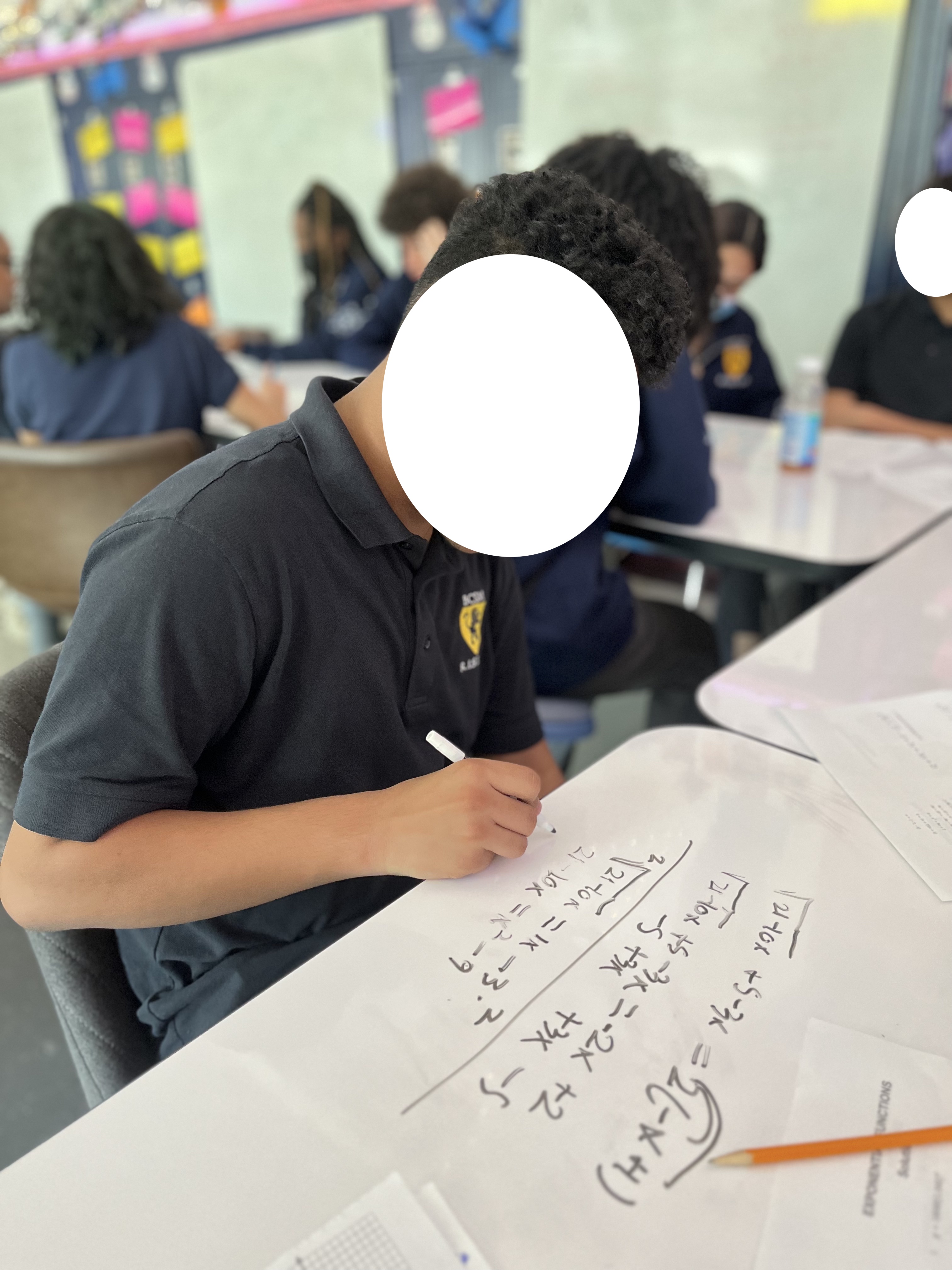
Vertical whiteboards are indispensable to my pedagogy

Tuesday, March 7

I’m just plain spoiled having whiteboard tables

Wednesday, March 8

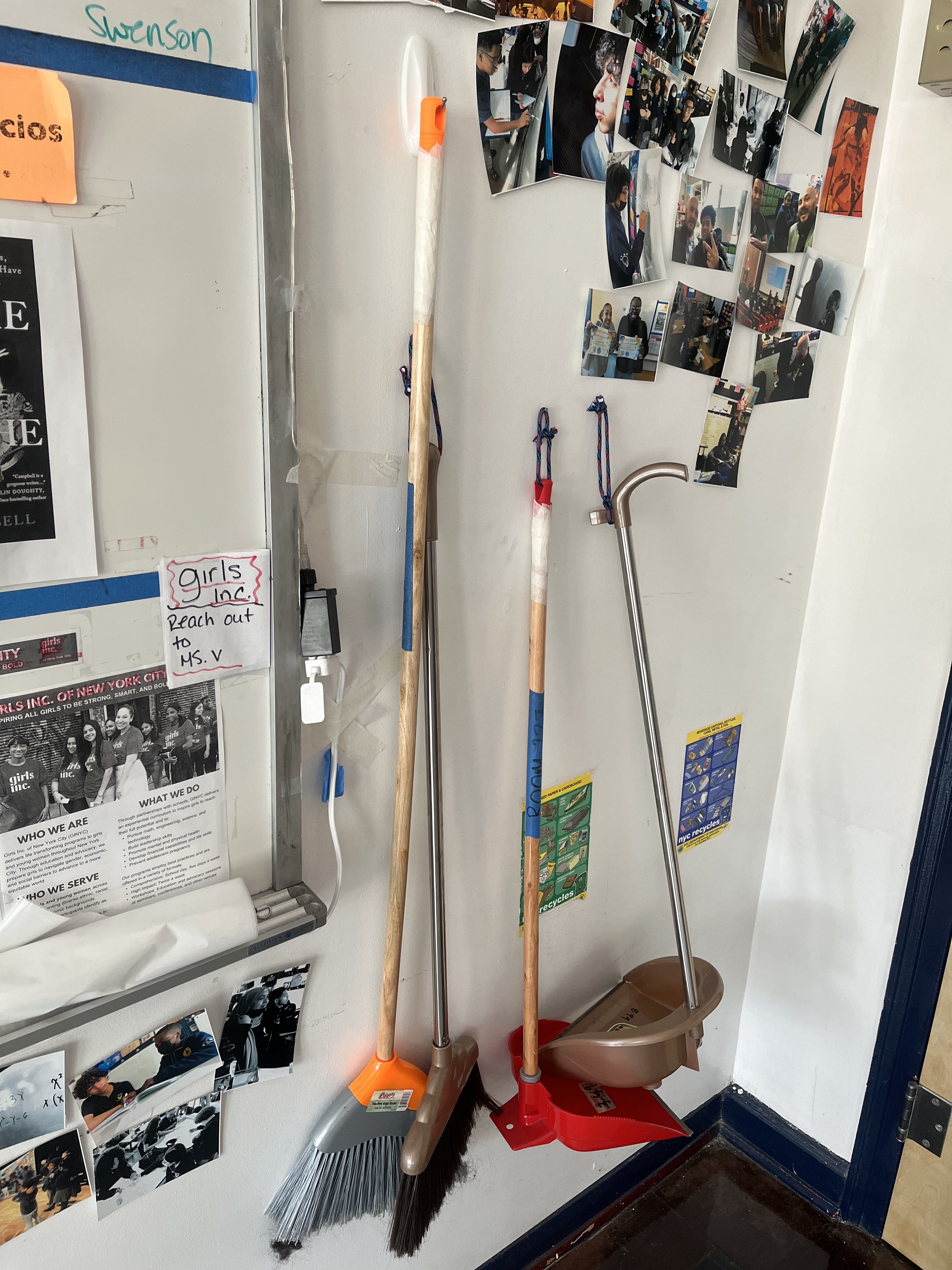
A much needed re-organization of my brooms and dustpans

Thursday, March 9

A brief meeting with my Mathematical Voices Vol. 4 student editors during class

Friday, March 10

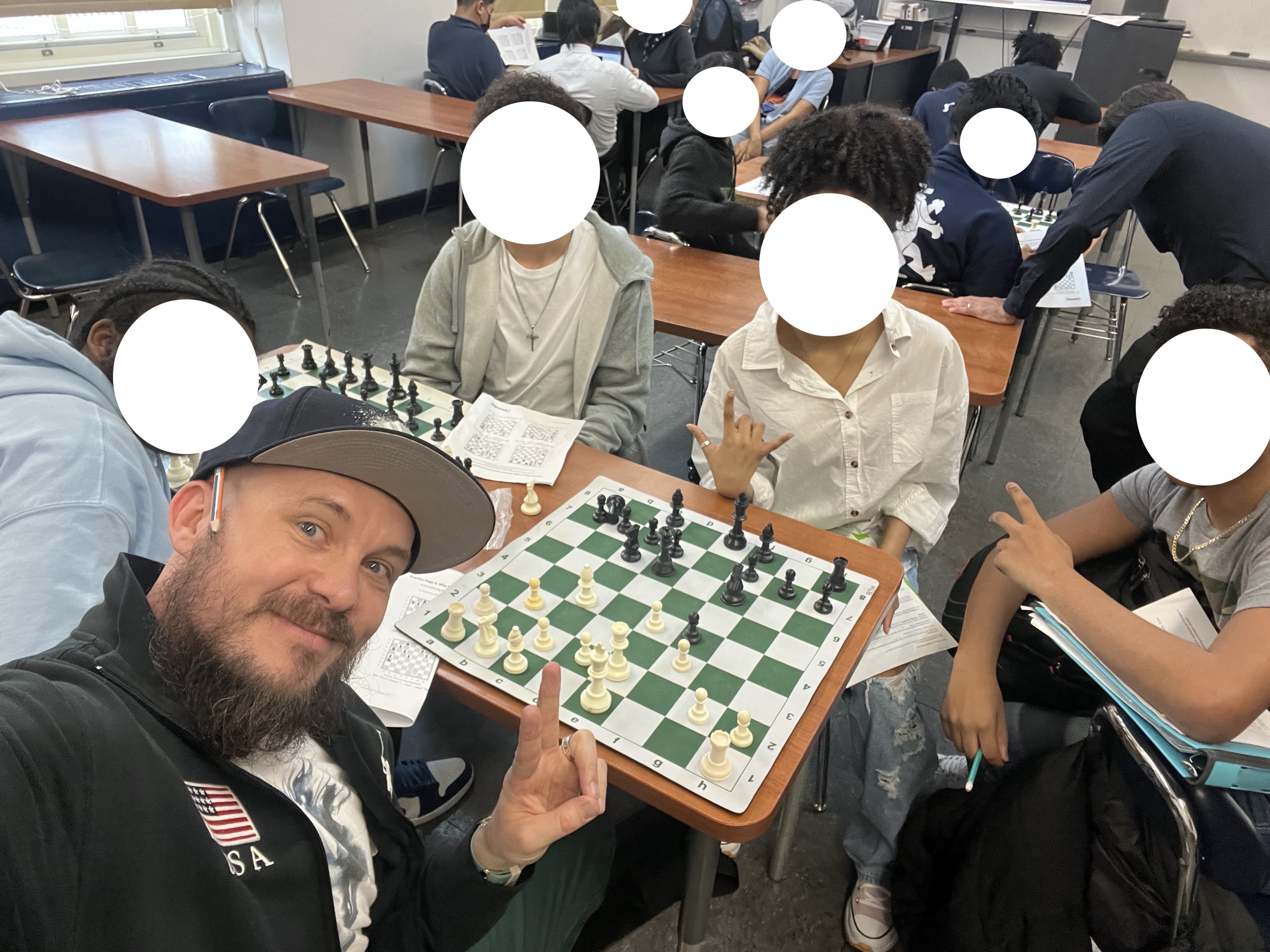
Stopped by to play chess with some of my students’ in their chess elective

bp