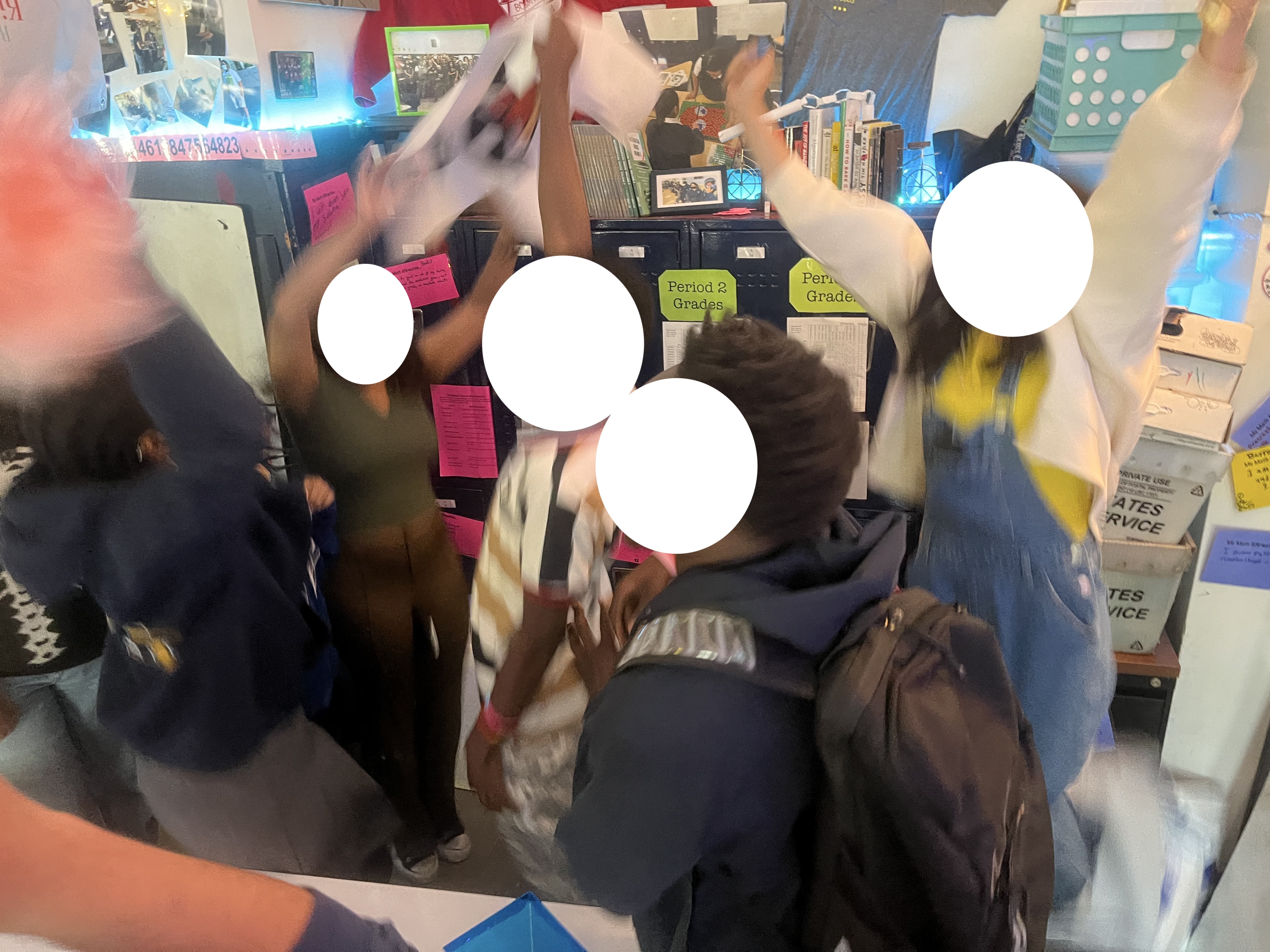
The Last Word

P.P.S. I guess this wasn’t that short after all. My bad. I guess I was trying to hang on to you for as long as possible.

Those were the last words I offered my students this year. They came at the end of a letter I gave my students yesterday after their state exam in Algebra 2.

The letter was motivated by my outright contempt of exam day. My students and I accomplished many wonderful things throughout the year. We learned lots of math, but math was only the vehicle to greater things. We laughed, bonded, and discovered new parts of ourselves. Given all that happened, the fact that the state exam is the last experience my students have with our class bothers me. I struggle with accepting it as the final chapter of our story. This happens every year at this time. It hurts.

Because of this, my pride gets the best of me at the end of the year. It’s why I resist the urge to cram for the exam on the last few days of class and instead elect to celebrate my students and our time together. It’s also why exam day puts me in a bitter mood and fills me with contempt. It keeps me from handing out peppermints and starbursts to my students as they settle in for the exam. My colleagues do it, and I feel like I should too. Yet I don’t. The goal of these small refreshments is to help students engage during their three-hour battle with the test, but it’s a gesture that supports a conclusion that I hope didn’t exist. I refuse to glorify an ending that fails mightily to provide meaning.

This year, instead of sulking on exam day, I decided to act. I didn’t want my dissatisfaction with the exam to take up more space than it already does. To do so would be disrespectful to all that my students and I built together. This year, New York State was not going to have the last word.

Thus, my letter. I waited for my students in the lobby of the school and handed it directly to them after they finished the exam. I placed each in an envelope bearing their name. Their letter was accompanied by a hug, some words of gratitude, and a smile.
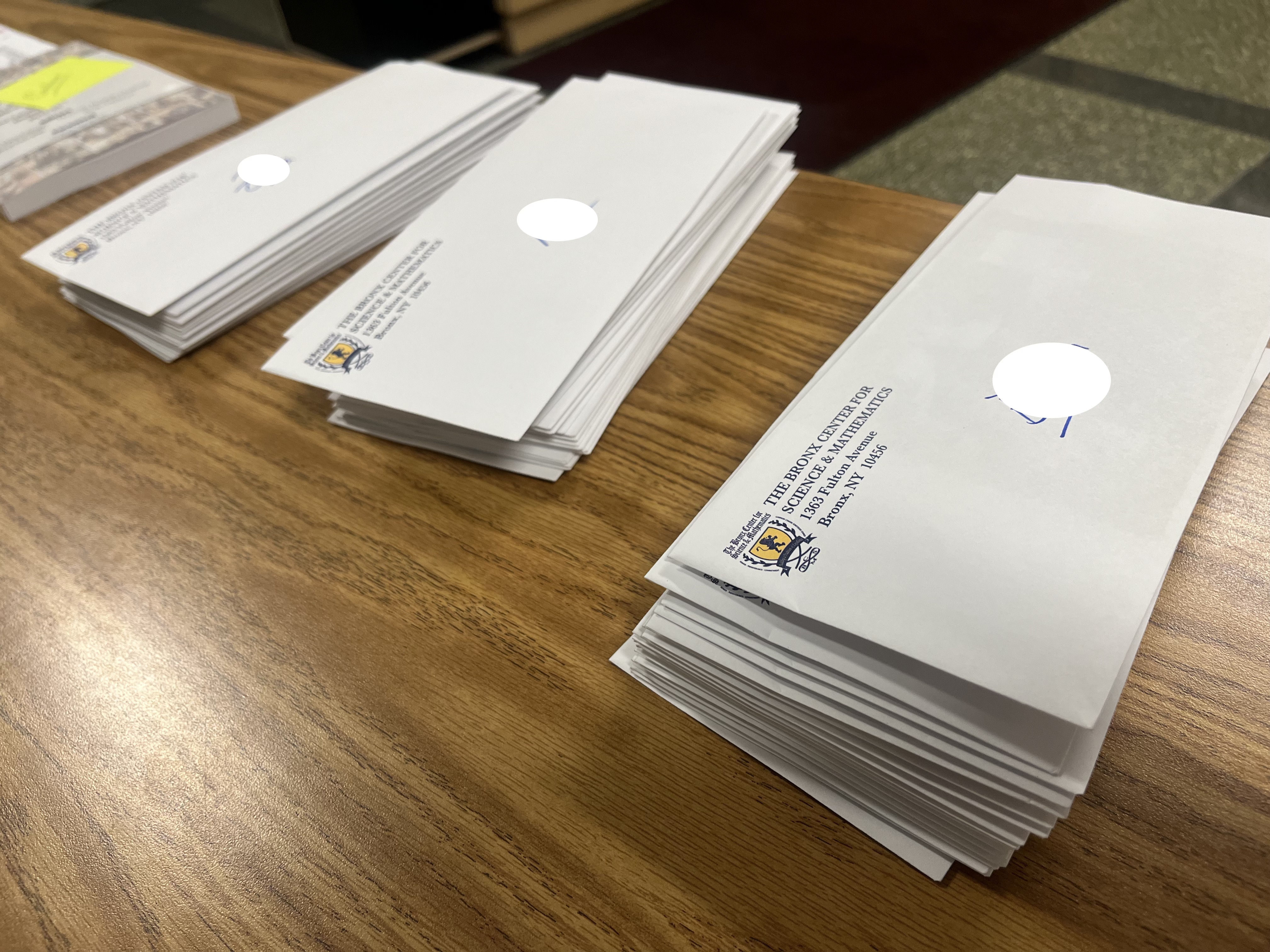
My stack of post-exam letters

In the letter, I asked them to not be too hard on themselves for anything on the exam that they didn’t know. As their leader, so many of their struggles on the exam are the result of my shortcomings throughout the year. I offered my apologies for not being more organized and efficient to help them be better prepared for today.

While the letter each student received was mostly the same, I used a mail merge to personalize them. My comments reflected a connection we developed during the year and the unique appreciation I have for each one of them. We took a class photo on the last day of class, and I included a 4″ x 6″ print of it in their envelopes.
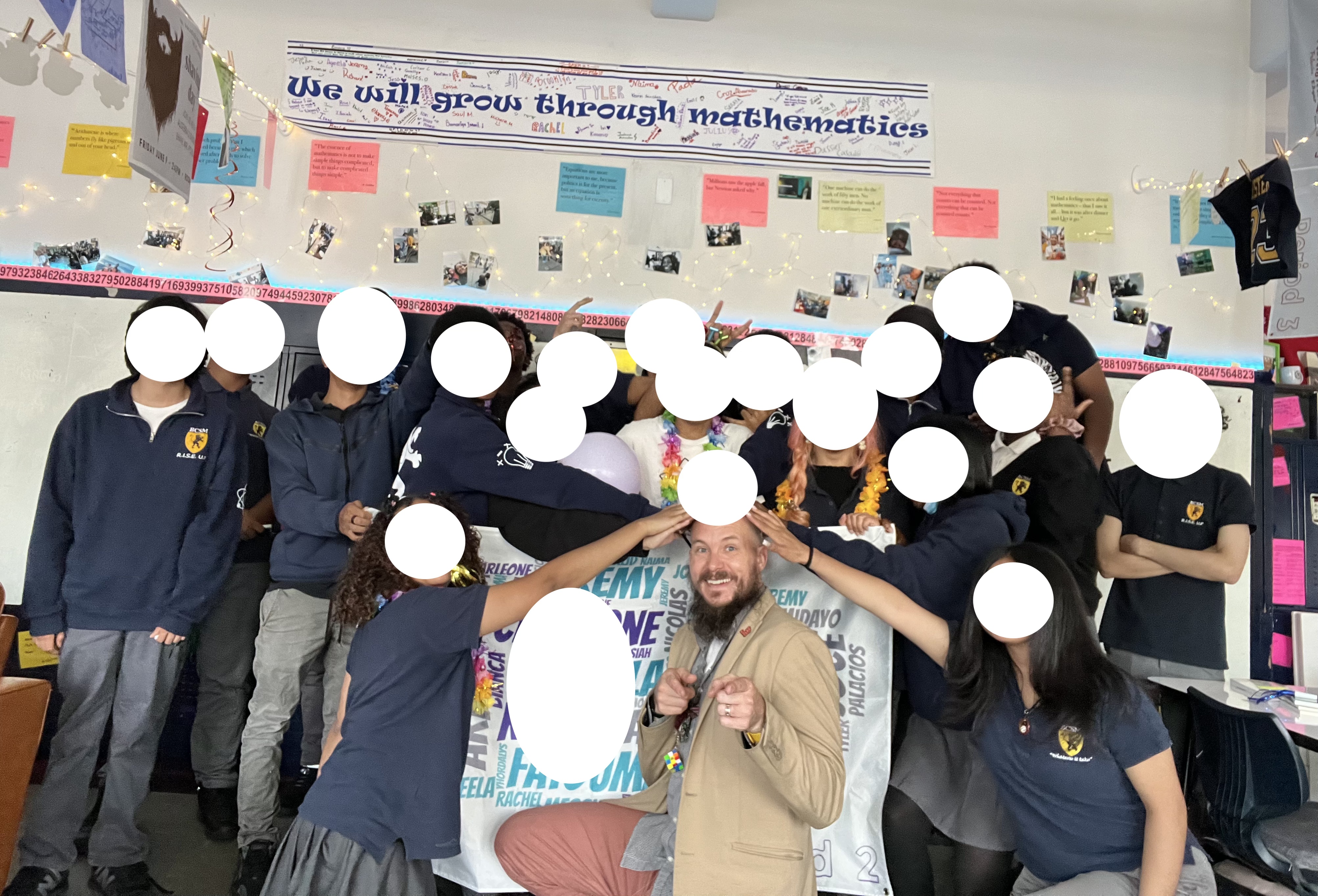
Each student got a class photo with their letter

I closed the letter by thanking them. I wasn’t always great, but they were. Most of us must go outside to see the stars. Not me. This year, I was lucky enough to teach among them each day right inside room 227. What a wonderful gift they gave me.

The letter was a symbolic gesture more than anything else, but it was significant. It served as a rewriting of the final chapter of the school year to give ownership of it back to me and my students. We got the last word.

bp
The Final Week

The end of the school year can be anticlimactic. With state exams looming and summer within reach, it is easy to count down the days. Teaching is complex, demanding, and depending on the situation, downright harsh. There’s no blame in anyone sprinting towards the finish line.

Maybe I’m getting older, but for me, I’m starting to see the end of the school differently. Instead of waiting for it to end, I now view the closing of the year as the ending of a great story. A ten-month plot has been building, and it’s all come down to this. The finale, the last act — it’s a vital part of the story. Contrary to my earlier beliefs that test prep should be the priority, I now think the last few days should provide closure and allow us to celebrate our time together as a class. I owe it to my students and myself. The last week of school should be given as much attention as the first.

Thus, instead of counting the days that remain in the final week of school, these days, I’m in the business of savoring them. I spent the last week of class with several “events” to close the year. These events served as our final act. Here’s what it looked like.

Tuesday, June 6: Off the Wall
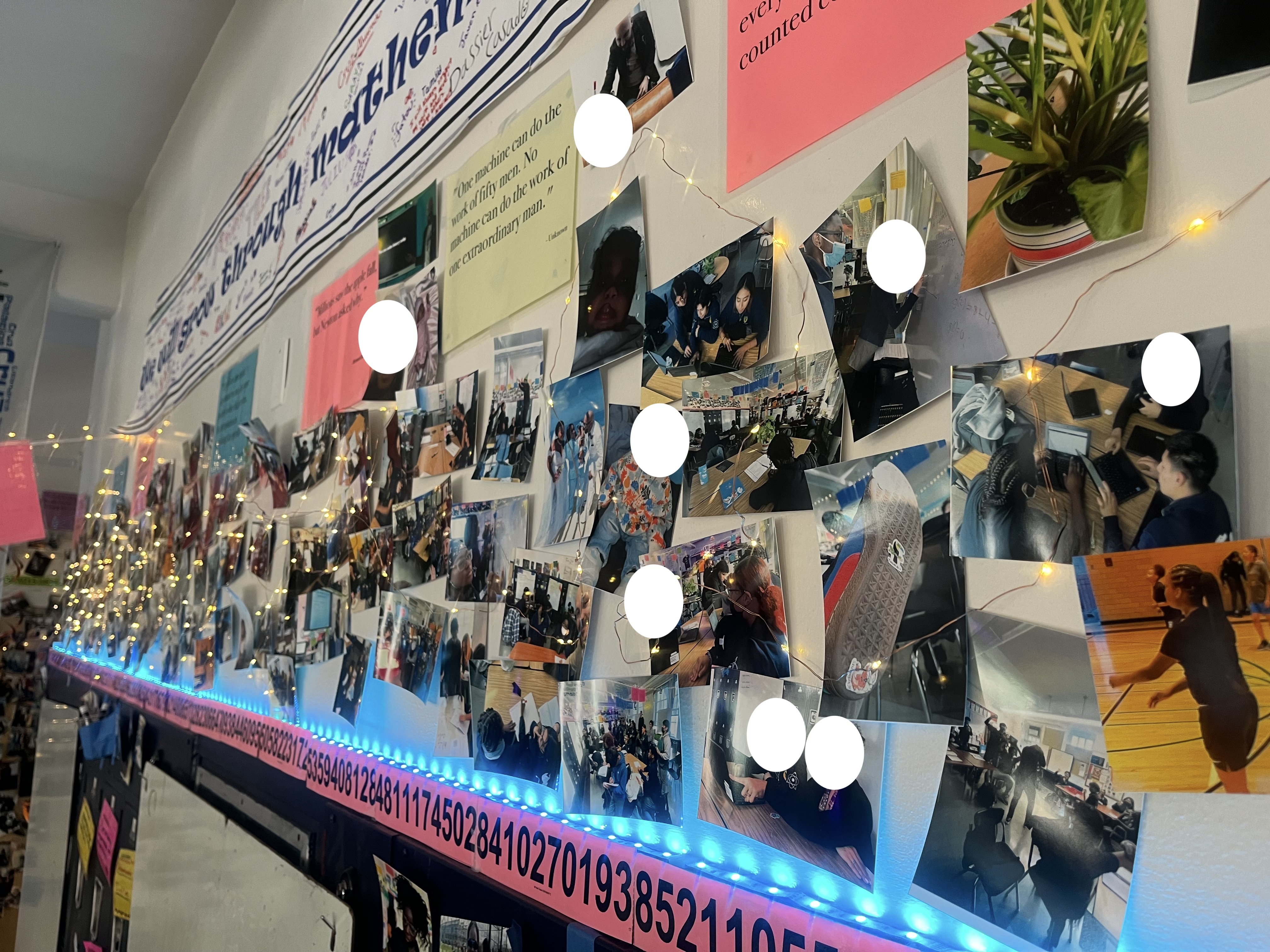
A really cool part of my classroom this year was the photographs I had on the walls. There were hundreds of them. They covered three of our walls, the door, and the SmartBoard. They mainly featured my students during class, but some included their families (and mine). Several class photographers used old iPod Touch to snap many of them. A Kodak printer did the rest. It was an unforgettable display.

Our photo collage plastering one of the walls

To end the year, I decided to give the photos to my students. There was no other way. I called the event “Off the Wall.” After school, students came by the dozens to claim the photos they wanted. It was a mad dash to grab memories. While thrilling to witness, it was also sad to see all the smiling faces and memorable moments recede into pockets and backpacks. The photo collection was my favorite part of the room.

Wednesday, June 6: Cogen Reunion
My weekly cogenerative dialogues (or cogens) were a success this year. While the first cohort got off to a rocky start in October, I’m thankful things got smoother as the year went on. We accomplished a lot. This was the third year in a row I’ve used cogens to improve my teaching and classroom community. I was fortunate to have 22 students take part.

To honor them and bring closure to our time together, our Cogen Reunion brought all the members from the entire year together in one place. I created some cheap gift bags, and we spent an hour after-school thinking back on the year and eating pizza. Total fun in spite of the eery smog outside from Canada’s wildfires.

The entire cogen gang is together!

Monday, June 12: Book Release, Plus/Minus Awards, Flag Raffle, Last Pass of the Token of Appreciation
Today was a busy day. This was a consequence of us being remote on Friday because of air quality concerns. In my planning, I had evenly dispersed my end-of-year events so as to not get overwhelmed. Now I had to squeeze even more in today. Agh!

Class started with the release of Mathematical Voices, Volume 4. It was special to give each student their dedicated copy and personally thank them for making it possible.

Mathematical Voices, Vol. 4

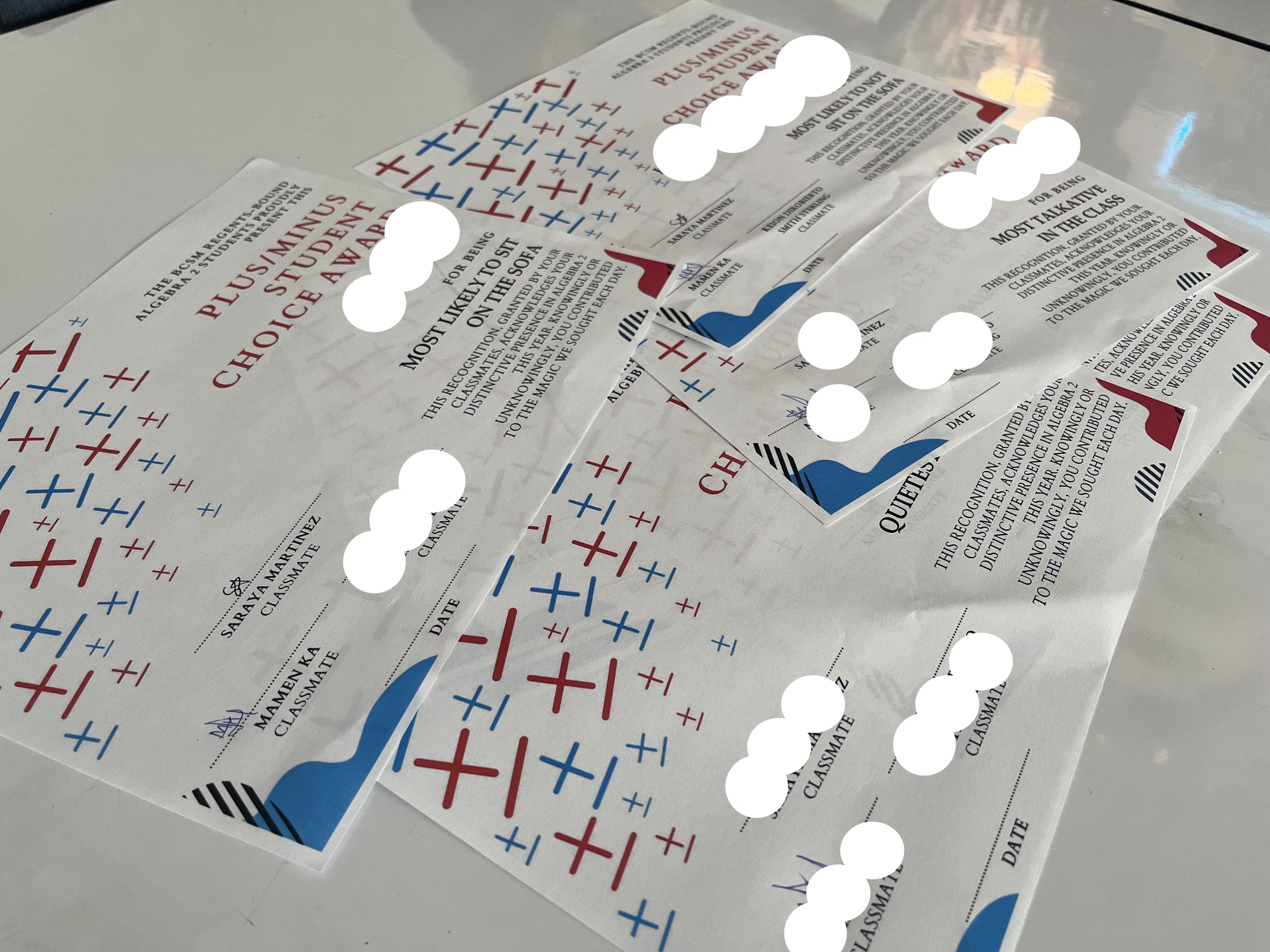
After that, two cogen students from each of my three Regents-bound classes hosted the first-ever Student Choice Plus/Minus Awards. I had been meeting with the students for a couple weeks during lunch to plan out this award ceremony. This felt similar to The Algeys, which I hosted back in January. I helped create the nifty certificates, but the students came up with all of the awards themselves, which included polling the class. It was great.

Certificates for the Student Choice Plus/Minus Awards

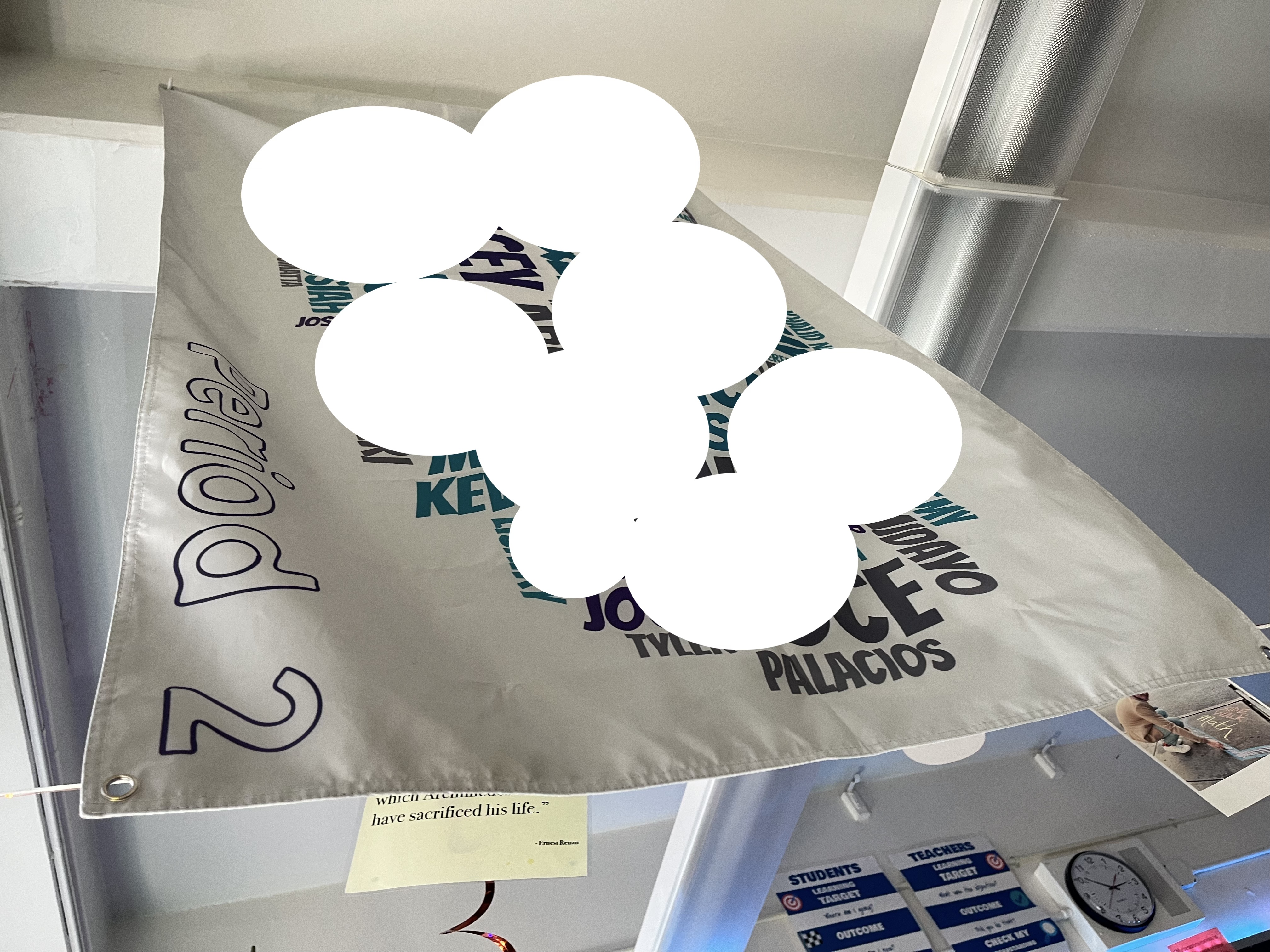
After the award show, with 10 minutes remaining, we held our Flag Raffle. Early in the year, I had custom flags made for each of my five classes. Each displayed the names of students in a trendy word cloud. I hung the flags from the ceiling around the classroom. Having no need for them at the end of the year, I raffled them off to interested students. It was a unique takeaway from our class.

The period 2 class flag hanging from the ceiling

The last thing we did was pass the token of appreciation for the last time. The personality of each class was on full display in this heartfelt send-off to our weekly class tradition.

Tuesday, June 13: Class Offerings and Shaving Day
The last day of class. In addition to filling out my end-of-year report card and writing a letter to a future Algebra 2 student, my Regents-bound classes received a letter from me. I do this every year. In the letter, each student gets mentioned by name. I highlight their significance to our class and why I’m grateful for them being part of our class this year. During the last few moments of class, I read the letter aloud.

Given the physical transformation of my classroom this year, I accompanied this year’s letter with what I called a “Class Offering.” These Offerings were objects from the classroom that I gifted to students when I reached their name in the letter. I gave out lamps, quotes from the walls, art, pillows, signs, and plants, among other things. The week prior, I went through my roster and connected each student to a particular object in the room that I thought represented them.

As I walked around the room reading my letter and handing out offerings, I got emotional. It was hard to let my students go. I found solace in them taking a piece of our classroom with them.

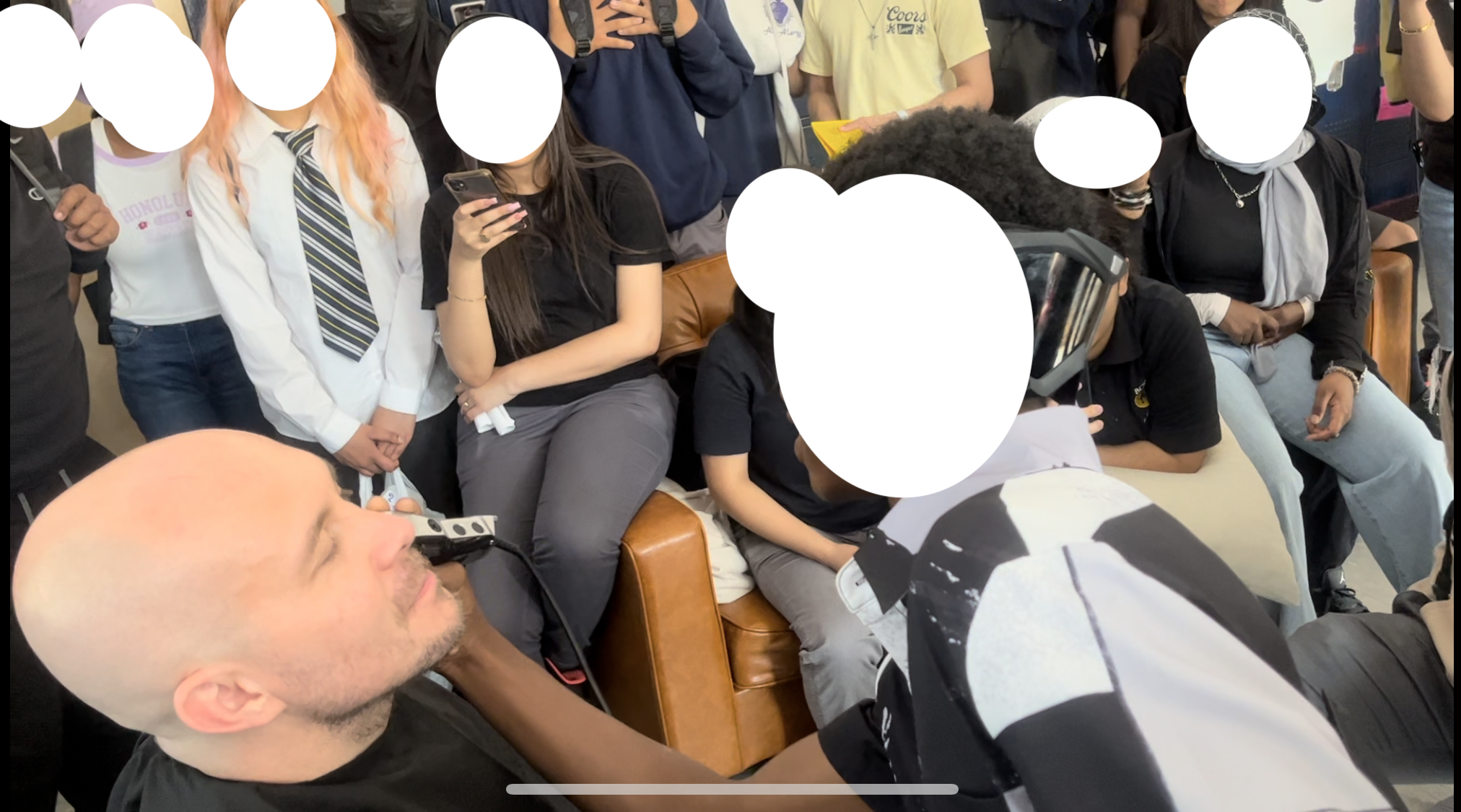
After school, I held my much-anticipated Shaving Day event. To symbolize the growth that my students experience with me, I grow my beard out all school year. I shave in September, and my face doesn’t get touched again until my students shave it again in June. This is the fifth year I’ve done it.

After school, with many students gathered around me in a chair near the SmartBoard, my beard came off at the hands of my students. It was calmer and more focused than in years past, but still held the same excitement. A fitting send-off to a memorable year.

My students shaving my 10-month-old beard as part of “Shaving Day”

bp

The Great Locker Quest

Two months ago, during one of my five-minute check-ins at the start of class, some students told me about an Escape Room they did. It was part of their mentoring program. None of them had done anything like it before, and they had a blast. They admitted to not having solved the room, but their smiles and jovial spirits told me it didn’t matter.

In the days that followed, I began thinking about the idea of doing a Mystery Room with my classes. My classroom has a bunch of unused lockers that could serve as lock boxes. Clues could be placed in all of the many nooks and crannies of the room. It could kick off our review for the upcoming Regents exam. The potential was there.

Six years ago, I tried something similar. I don’t remember much about the lesson other than how it imploded. Horrible planning led to clues never being found and the combinations of locks getting all mixed up. My students were confused, and I was overwhelmed. It was baaaad.

But I’m a different teacher now. I plan better than I did six years ago and have more resources at my disposal. I also have a weekly cogen that improves much of what I do with students. The more I thought about it, I realized that doing an Escape Room would be a different experience for my students now. It could work.

A quick search on the web for classroom Escape Rooms let me know there’s no shortage of advice on how to plan for one. There are those that require no locks. Others can be done using only Google Forms. There were also plenty of tips on how to tell a story using the clues. It didn’t take long for me to feel bogged down.

But when in doubt, I turn to my students. Two or three weeks after initially hearing about my students’ Escape Room experience, I pitched the idea to my most trusted resource: my cogen. My interest was in building it with them from the ground up and avoiding the many online templates that exist. This would mean a lot more work for us, but it would also mean that the activity would be far more authentic and original than anything we could find online. Luckily for me, they loved the idea. Did I say that my students are wonderful?

It took three 30-minute sessions (we meet once a week) for us to pin down a structure we liked for the lesson and another two sessions for us to come up with all the clues and hiding locations. I took care of the math and making the handouts. The students helped with hiding the clues, logistics, and helping groups while they worked during the activity. With so many end-of-year things going on, I politely asked my cogen students to hold me accountable for doing my part. They did.

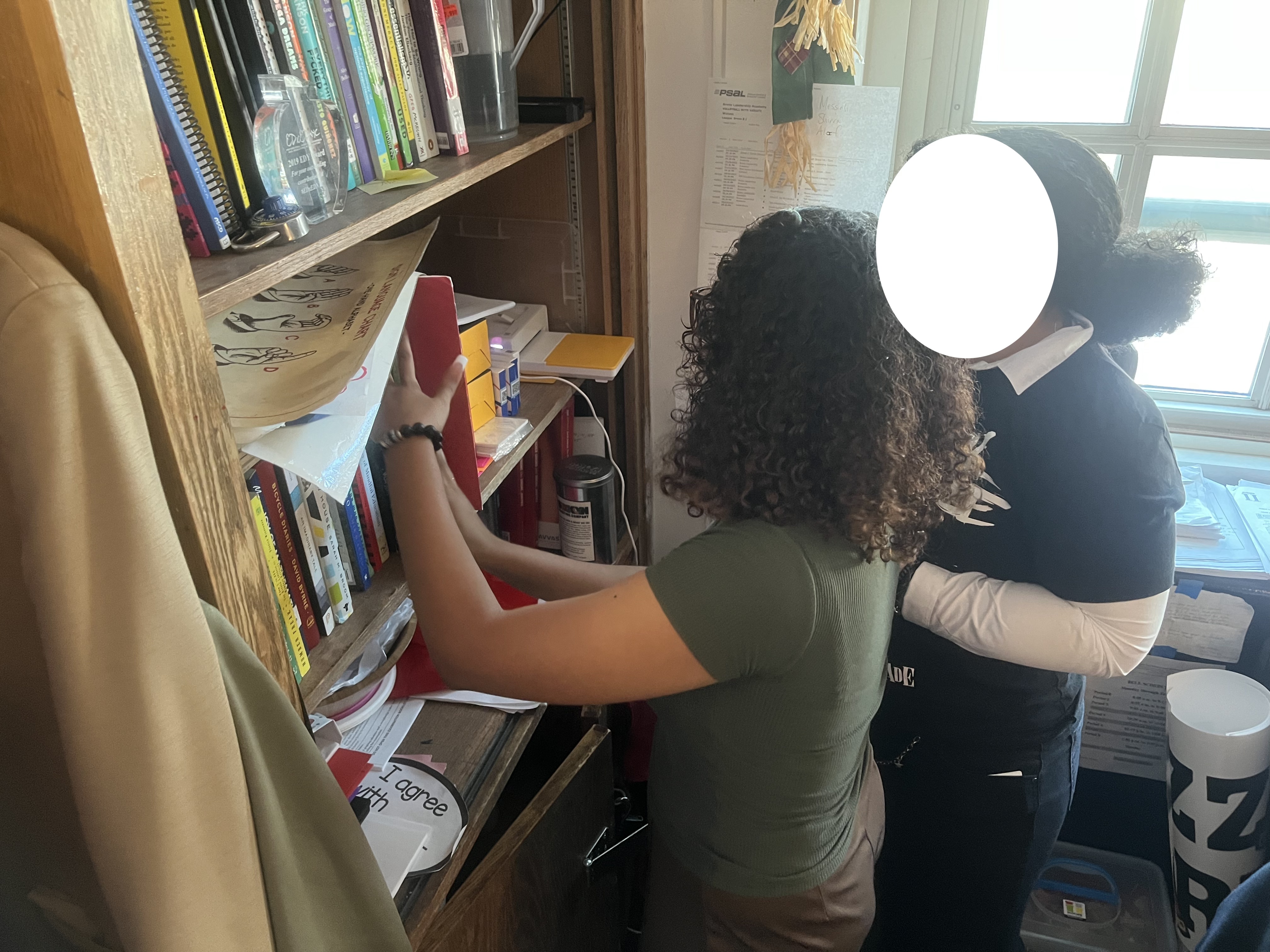
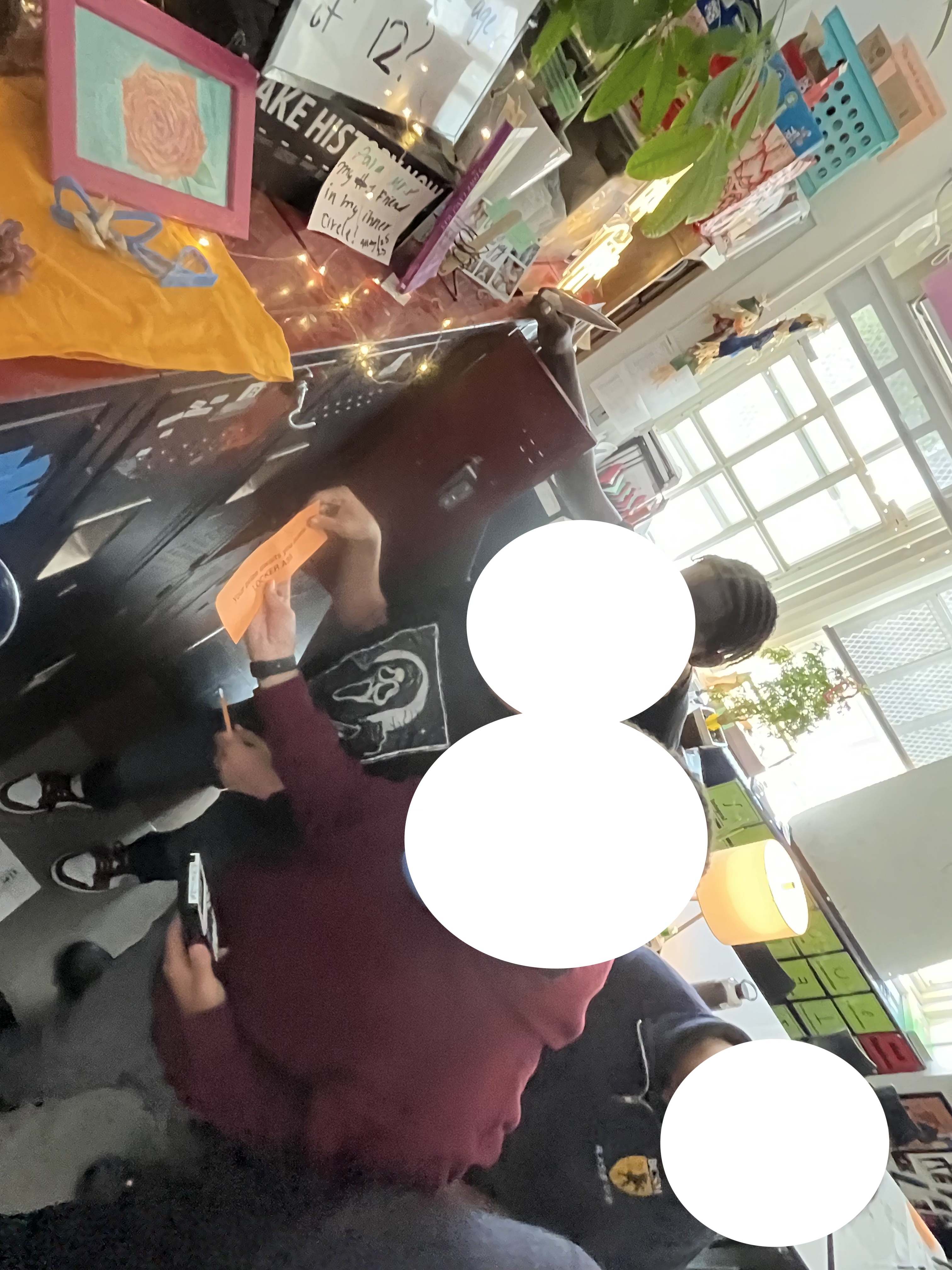
The grand prize was a pizza party for the class. In order to earn it, five groups needed to solve five unrelated problems. Each problem was hidden in locations decided upon by the cogen members. Interestingly, of each groups’ five clues, four were hidden in our classroom, and one was somewhere outside the classroom (in the school building). Here was our opening slide

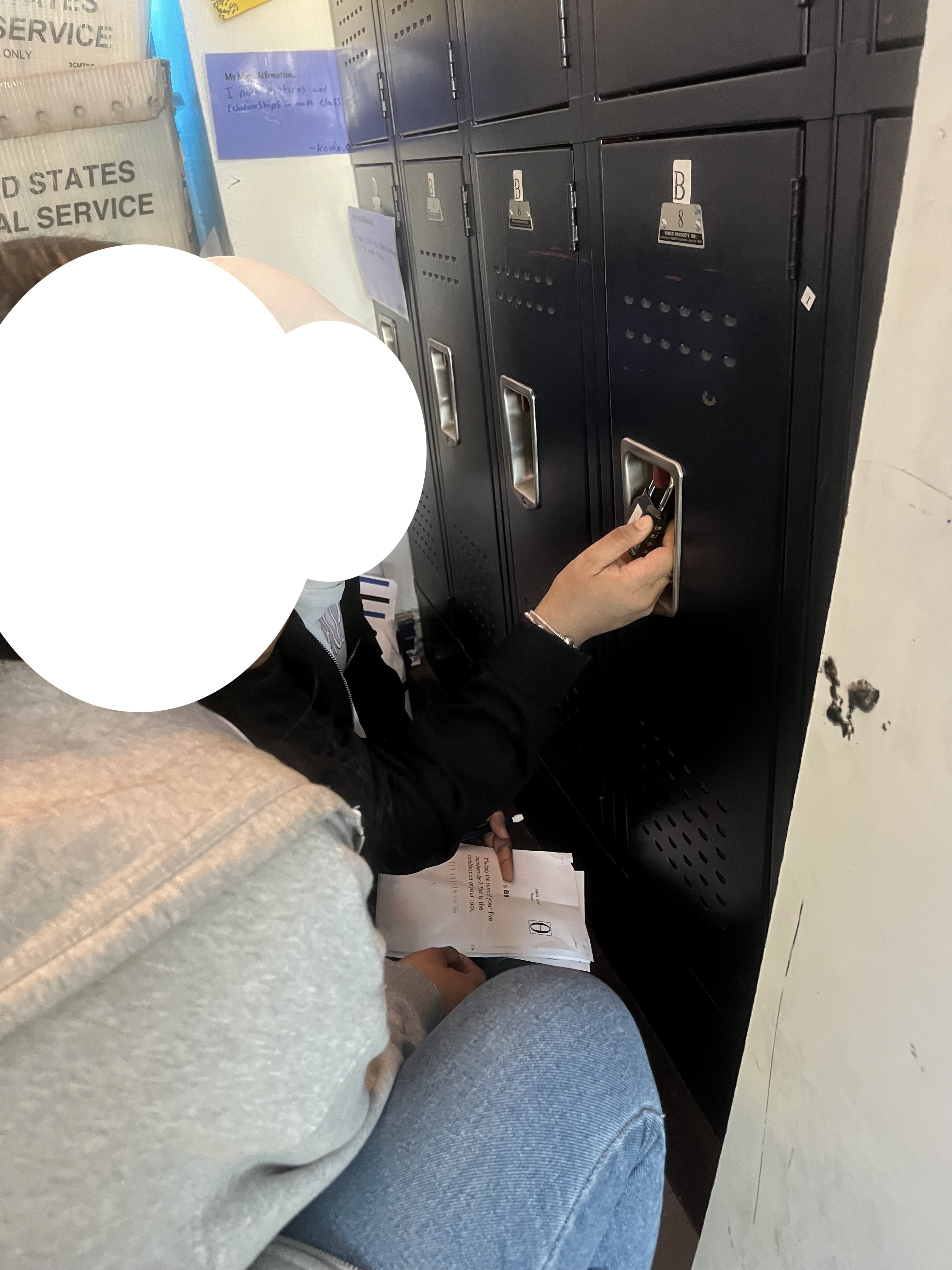
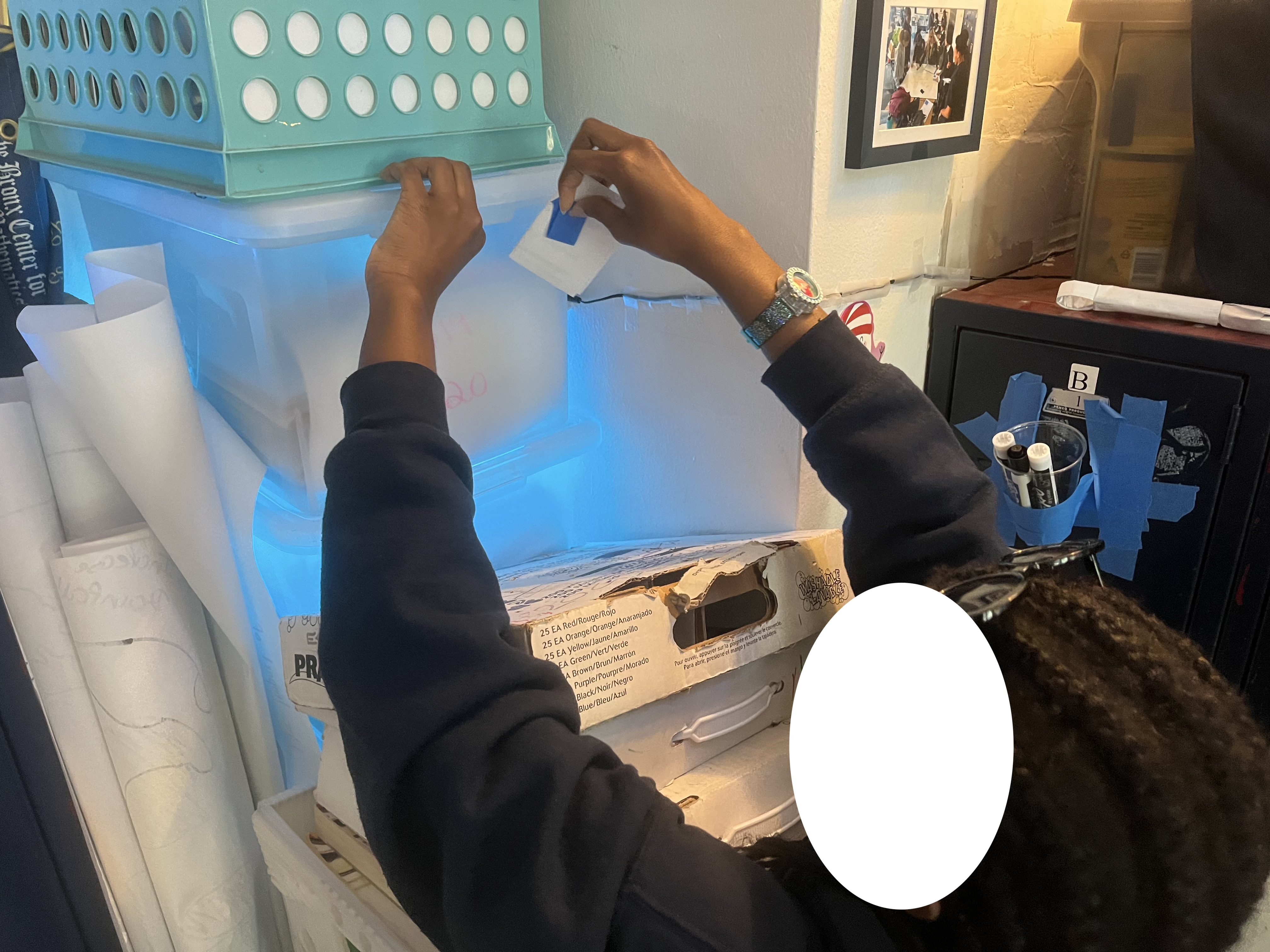
Each group was assigned a locker. The combination of their lock depended on the five solutions to their problems. In a twist, each group’s locker in itself didn’t actually contain a prize. Instead, each group’s locker held a piece of paper that had one-fifth of two final problems on it. (I printed the final two problems on poster paper and cut the paper into five pieces, one for each group’s locker.) After all five groups opened their lockers, the class had to put all their pieces of paper together to discover the final two problems. The solutions to these problems would help them unlock the locker containing the pizza party.

We designed it as a two-day “event.” If a class didn’t get into their final locker by the end of the second day, they didn’t get the pizza party. I had no idea how it was going to go.

Yesterday, at the end of day 1, I got mixed reactions from my three classes who were doing it. Some students got frustrated about figuring out the math and finding the clues. Others just didn’t seem to be that into it. This led me to have doubts about the worthiness of the activity. My cogen students and I spent weeks planning this thing out, and it seemed to be missing the mark.

When my cogen students and I met after school to debrief and set up the room for day 2, I admitted my uncertainty. They greeted my pessimism with a nonchalant pat on the back. Other than a small hiccup here and there, “things are going fine,” they told me. I was overreacting. Looking back, they were right. Other than one or two misplaced clues, the activity was progressing as planned. I tried to not let my past nightmares haunt me.

Keeping track of clues after day 1

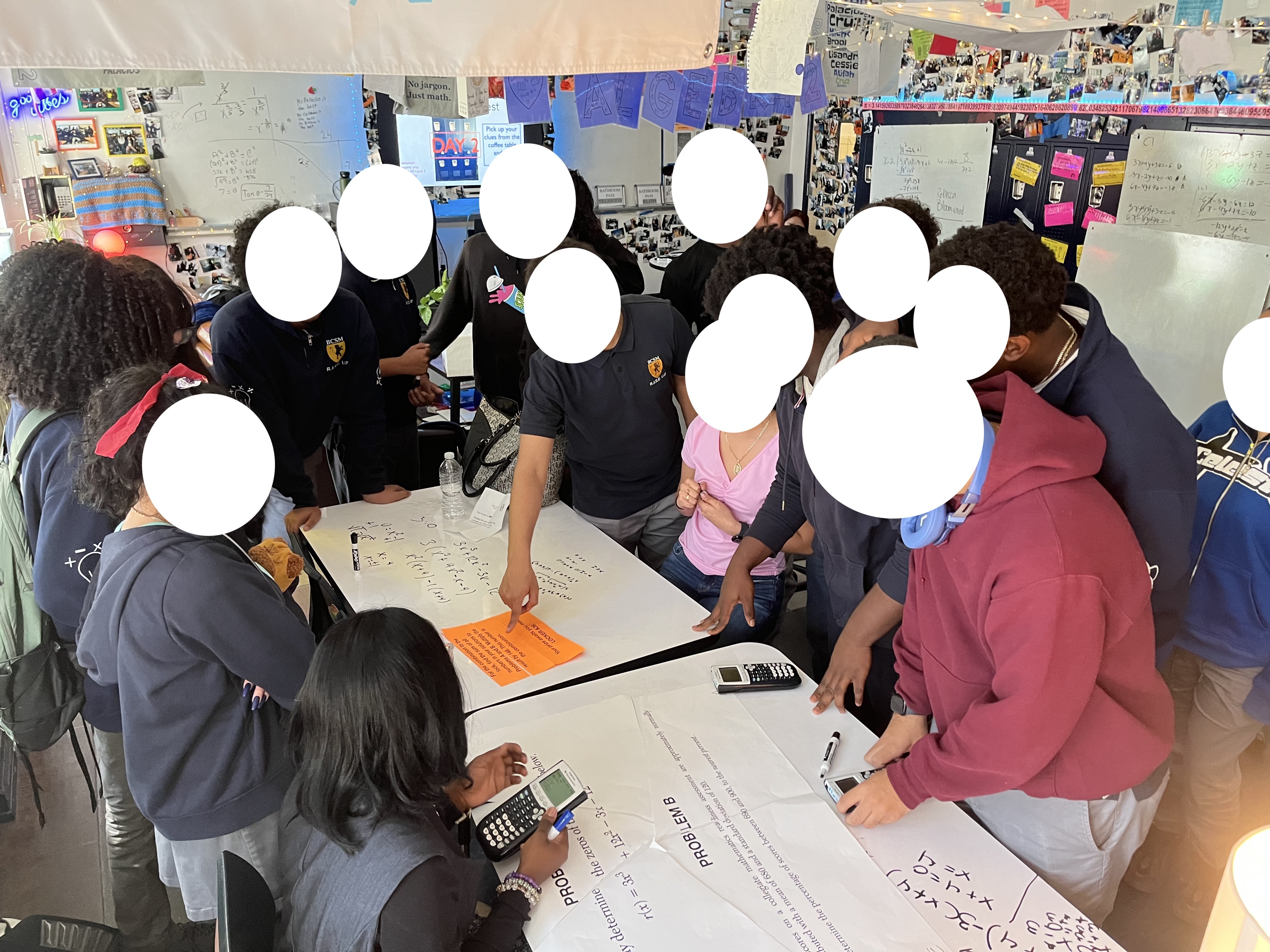
Little did I know the excitement that awaited me today on day 2. The moment the groups walked in and found the work that we collected from them the previous day, they pounced. They worked feverishly to solve their remaining problems, find clues, and get their lockers open. The moment the first locker was unlatched and the students learned that the prize was reliant on all the groups solving their problems, the energy intensified twofold. The next thing I know I’m smack in the middle of one of the fiercest learning frenzies I’ve ever seen. Students darted back and forth, turning the room upside down to uncover clues. They were immersed in doing math at all angles and corners of the room. They were running to the aid of their classmates like their life depended on it. It was a teacher’s dream. I savored every minute of it.


In the end, two of the three classes were able to open the final locker containing the pizza party. One of them completely ignored the bell marking the end of the period and stayed after several minutes because they were so close. They were foaming at the mouth to succeed.

Thinking back, there were moments when I didn’t know if the hours of planning, meeting with cogen students, and worrying about details were worth the time investment. It was a ton of work. Placing and replacing clues for each period was stressful, especially because two of my classes run back-to-back. Given all of its moving parts, the lesson was an organizational and logistical behemoth.

But it was, without a doubt, worth the effort. The moment the final locker was opened was all the evidence I needed. It was an eruption of unfiltered joy, anticipation, and community. Holding up their “Pizza Party” sign in utter triumph, the cheer in the room was deafening. Students jumped up and down in elation. They smiled in ways I never knew they could. It was mathematics that brought them to this state. In 17 years as a teacher, I have experienced few moments that compare.

Classwide jubilation once the final locker was opened to reveal a pizza party

If my first Escape Room six years ago was forgettable, this one was the exact opposite. I will remember it for a long, long time. The fun and excitement of the activity were great, but the togetherness it created through solving a huge puzzle was its true gift. My classes would be better off if they included more shared experiences like this one to help build community and a responsibility to each other.

bp

I was absent yesterday and had a defining moment upon my return today

Yesterday, I was absent. It was unexpected, and I wasn’t feeling well. It was my first day calling out all year, and I’m thankful for that. I’m also grateful to be able to return today. I love teaching and my students. My classroom is my second home.

Despite my relief and gratitude, something happened today that will stay with me for a long time. Or, stated more accurately, it’s what didn’t happen that struck me.

While a couple of students asked me how I was doing, the vibe was overwhelmingly passive. The fact that I was out didn’t seem to be a topic of interest. If I hadn’t mentioned my absence at the start of class, it would have been business as usual.

During first period, when it hit me that my students didn’t particularly mind that I was out, I realized that I could have done a much better job fostering deeper, more personal relationships with them. If I had done a better job at making them feel heard and seen, then perhaps they would have inquired about my absence, checked in on me, or wondered what had happened. The fact that I haven’t been absent all year underscores this fact.

It may seem like I’m yearning for students’ attention. I don’t see it that way. Instead, I think of my students’ responses after my absence as a barometer for the quality of our relations. If their reaction to my return is lackluster and plain — like it was today — it indicates that I have done a poor job of seeing them, caring for them, and making them feel like they matter. In these instances, the classroom is merely a place where students arrive each day and not a place of true being. And I’m only a source of mathematics and not an adult who genuinely cares for them.

I have a vision that is the opposite of what happened today. The day after I’m not in school in the future, I hope to see students approaching me as if I were a member of their family who unexpectedly didn’t show up for a gathering. I want to be approached by students with questions and concerns. I imagine students saying things like, “You good, mister? I missed you.” and “Everything alright? I had to check on you.”

bp