Some learnings from Carter G. Woodson and The Mis-Education of the Negro

The minister had given no attention to the religious background of the Negroes to whom he was trying to preach. He knew nothing of their spiritual endowment and their religious experience as influenced by their traditions and environment in which the religion of the Negro has developed and expressed itself. He did not seem to know anything about their present condition. These honest people, therefore, knew nothing additional when he had finished his discourse. As communicant pointed out, their wants had not been supplied, and they wondered where they might go hear a word which had some bearing upon the life which they had to live.

Carter G. Woodson, The Mis-Education of the Negro

Some colleagues and I have been reading The Mis-education of the Negro by Carter G. Woodson for a few weeks. Published in 1933, the book is a timeless indictment on anti-Blackness in our country and, more specifically, in our schools.

A major theme of the book is Woodson’s calling out of “highly educated” Black folks for doing things that work against the collective liberation of the race, included himself. As a white person discussing the book in the company of at least one Black educator, there are times that I’ve been made uncomfortable with our talks. It kind of feels like I’m part of a conversation between Woodson and other Black folks, a conversation I have no business being a part of. In this way, reading it on my own has been enlightening, but has made me question the cross-racial setting in which we’re studying it.

To deal with this personal dilemma, it’s been helpful for me to look inward and find ways to place myself in the crosshairs of Woodson’s criticism. For example, after coming across the passage I cited above, in which Woodson critiques Black ministers and how they show up for those they serve, I couldn’t help but draw connections to white teachers who serve Black and Brown students, especially in large numbers. In other words, teachers like myself.

The context of Woodson’s challenge, at least how I interpreted it, is how schools of religion have indoctrinated Black ministers with the values of white supremacy. This conditioning shows up in their interactions with their congregation. In his words, these schools “followed the traditional course for ministers, devoting most of the time to dead languages and dead issues.” He goes on to highlight an example of such a minister and says, “He went off to school, and when he came back the people could not understand what he was talking about. Then he began to find fault with the people because they would not come to church.”

This raises a stockpile of questions for me. Most directly, as a white teacher who teaches an overwhelming majority of Black and Brown students, how has my lived experiences, education, and continued professional development prevented me from interacting with my students in meaningful ways? Also, how has the euro-centric model of teaching and learning conditioned me to not center Black and Brown joy? How has it erased Black history from my instructional framework? How have I been trained in and perpetuate a system of deficit thinking that preys on Black and Brown students? How has it permitted me to downplay and then ultimately ignore the intellectual and emotional endowment of my students? How has it blinded me from comprehending gender and sexism? How has it separated me from my aging white body and mind and keeps pushing me, with every passing year, further and further away from the young people of color I serve? How does where I choose to live and do my business affect how I understand my students and the communities they inhabit? How has all this removed me from, as Woodson calls is it, my students’ “present condition”? How has it removed me from their realities?

In the end, I bring these questions with me into spaces that I occupy with students — and it shows. It shows in what I do or say, but also in what I don’t do or say. With these questions in mind, I’m not all that different from the Black ministers that Carter G. Woodson is calling out. Many of my students are disengaged, alienated from the content and class, or simply don’t come to class at all and, when this happens, I question their commitment to getting an education. It should come as no surprise, then, why many of my students leave me seeking a word which has some bearing on the life which they have to live. They’re not getting it from me or my pedagogy. My life and training as a teacher thus far has inescapably divorced us from reaching that point.


bp
Paying Homage to Malcolm X

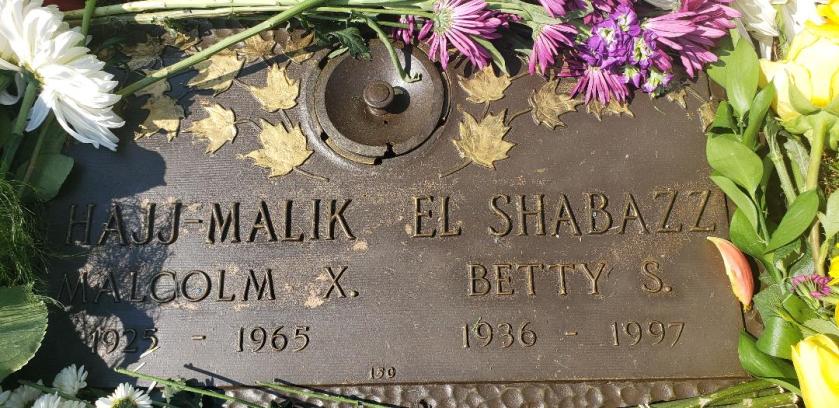
On Wednesday, May 19, several of my colleagues and I went to Ferncliff Cemetery in upstate New York to visit the grave of Malcolm X. It would have been Malcolm’s 96th birthday.

The idea for the visit was birthed after we read The Autobiography of Malcolm X in February. It was part our school’s book/podcast club. Having learned so much about him and discussing his impact, we decided that paying homage to him on his birthday would be a fitting thing to do. Seven of us carpooled and made the 35-minute trip.

While there, we spent some time standing around his grave, reflecting. We shared our learnings, our feelings, our shortcomings. We imagined a world where Malcolm was still alive, still evolving, still advancing his antiracist beliefs. We gave thanks for his truth-telling and revolutionary spirit in the face extreme violence, enraged white supremacy, and death. Living to the meager age of 39, we acknowledged that his life was far too short. We affirmed his gifts to not only to Black Americans, but all Americans. Just like Malcolm, we vowed to keep learning and to be critical of ourselves and the world around us.

While there was a sprinkling of people around us, it felt like we were alone. We had Malcolm all to ourselves. While we talked, he listened. He also told us a few stories and wished us well on our journey. It was powerful. The moment transcended our school, our students, and our professional bonds. I’ve been at my school for five years and it was one of the proudest moments I’ve had as a member of our community.

Admittedly, I didn’t know a lot about Malcolm before we read his autobiography. Reading it was informative on many levels. After we finished it, I wanted more of Malcolm so I picked up Black Minded: The Political Philosophy of Malcolm X by Michael E. Sawyer. I learned of Sawyer and his work after watching him discuss Malcolm at The Schomburg Center’s The Mother Tongue: The Philosophy of Malcolm X event in February. Black Minded was a dense and challenging read, but really helpful in getting closer to Malcolm and the nucleus of his thinking. I finished it this week, coinciding with our trip to Ferncliff. It left me with a lot more to share and feel than I would have otherwise. The Dead are Arising is on my summer reading list.

Despite living and working so close to his gravesite for many years, most of us didn’t know Malcolm was buried right underneath our noses. How did we not know he was here? Some of us drive past him every day and had no idea. Several people also spoke of the simplicity of his gravesite, expecting something with more grandeur given his stature. When I think of how society blacklisted Malcolm during his life and ostracized him after his death (it took over 30 years for him to get a postage stamp after his death, my gosh), the modesty and obscurity of his gravesite surprised me at first, but not after I gave it a second thought. The stark difference between his grave and that of Martin Luther King, Jr. tells the story.

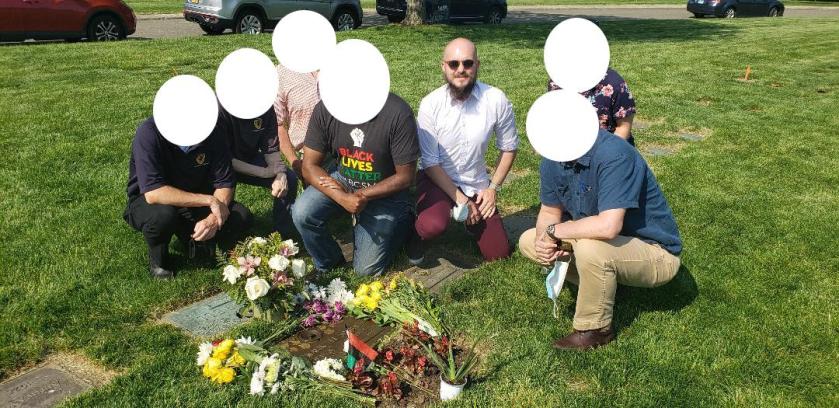
As we were getting ready to leave, more people began to arrive and a larger community formed. We opened up our circle, they opened up theirs, and suddenly we were speaking with perfect strangers. We were from all walks of life, all there to honor a man who moved us. We shared our connections to Malcolm and filled our hearts with a shared respect for the moment. We’ll probably never see those people again, but our transient companionship couldn’t be denied. They gave us water. We took a picture together. After about 15 minutes, we headed towards our cars. I felt whole.

Though our team departed his grave the same in number, we were far bigger than when we arrived. Thanks, Malcolm.


bp

Co-teaching

I’m a horrible co-teacher. Always have been. In all my years of teaching, it’s by far my greatest weakness. I suck at this important aspect of my practice for a lot of reasons, but I think it’s mainly because I’m a stubborn (and, if I’m honest, self-centered). Co-teaching, when done well, involves compromise. My problem is that I am really particular about certain aspects of the class, especially when it comes to fostering community and building relationships with students. I’m too picky and take far too much ownership over how the class functions.

One of the major consequences of my inability to co-teach is how my students often perceive me, the content teacher, as being the “primary” teacher of the class and the special education teacher as being secondary. This is maddening! I hate it. In my students’ eyes, there is almost always a hierarchy of adults in the class. This is evidenced by things like who they email about their grade and who they ask their content-based questions to. It got to the point where last year my co-teacher even got referred to as an “assistant.” It didn’t happen in our class, but still.

I find this deeply problematic. It yields status and social capital to one teacher over the other. While I make a fuss about it, I have no else to blame by myself. I’m complicit in maintaining this social order that is endorsed by students. If I put in more work into building synergy with my co-teacher while ensuring that that synergy is made visible to students, then maybe it would translate into how they view us as teachers and the equal footing we occupy.


bp

I buckled under the pressure

“Hold up y’all, let me turn off my camera to help me get through this…”

That’s what I said yesterday at the start of my school’s faculty meeting. My heart was racing, my palms were sweaty, my words were stumbling out of my mouth. I was losing my composure and drenched in self-consciousness. My anxiety and the physiological reactions that arrived with it were the result of my measly attempt to frame the white affinity space that all my white colleagues had just entered into on Zoom. There was about 20 of them and I was doing the introduction before we headed into breakout rooms where the real dialogue was to happen with facilitators from Morningside Center.

As a school, it was our second attempt at racial affinity groups, with the first being two weeks ago. These are not opt-in affinity spaces; the sessions are built into our day and everyone was asked to participate. It is a bold move and I’m thankful that my school has taken it (see below). Outside of being on the equity team who helped think it through, I didn’t have a huge hand in the first one. Morningside facilitated from start to finish. They were the face of the session.

Affinity spaces aren’t new to me. Last spring, when our school underwent an racial and social “awakening” of sorts, I advocated for them. At the time, I was still learning the rationale behind them, but I spoke up and heavily endorsed them. If the white staff members were were going to have honest and open reflections about racism and how it shows up in our lives and our school, then we had to make space for them to do this together — absent of folks of color. At the same time, and more importantly, people of color needed space to collectively process, share, and cope with their experiences with racism — absent of white folks. Cross-racial dialogue was also necessary, but hosting affinity sessions had to go hand-in-hand with them.

While I publicly vouched for racial affinity groups, I had never actually been part of one myself. That changed in the fall when I attended the Using Affinity Spaces in Schools training facilitated by Joe Truss and Jen Benkovitz. The six-hour training was informative and helpful, so I signed up for their five-month course this spring with white educators from all over the country. It was outstanding. As I was taking the course, I jumped at the opportunity to co-facilitate Math for America’s first-ever white antiracist affinity group. I knew I didn’t know what I was doing, but my co-facilitator and I knew there was a need for it. We’re halfway through the four sessions and it’s been pretty good so far.

Given these recent experiences, going into yesterday, I had gained a lot of momentum when it came to racial affinity groups. Over the last year, I attended multiple all-white, antiracist spaces, had transformative moments in them, and even co-facilitated a couple of them. As a white person, I believed in them and could definitely speak to their purpose first-hand.

So why was I struggling mightily to do a five-minute introduction to a white affinity space at my school? Why did I essentially freeze up and feel the need to turn off my camera to save face and help me get through it? All I had to do was explain the “why” behind our presence in a deliberately all-white space and the logic behind us being separate from folks of color. After that the breakout rooms would be open and I would be participant just like everyone else.

I think a big reason for my anxiety yesterday came from the immense respect I have for my colleagues — both the white folks and people of color. Academically, the work they do for our students is incredible. The truth is, since I’ve arrived there five years ago, I’ve never felt like I’ve lived up to the standards that they set for themselves and our students. Speaking to them was different than speaking with the white people I met through Joe and Jen and also different from when I co-facilitated at Math for America because 1) this was not an opt-in space and 2) I knew these people. They were my people. Despite never feeling like I’ve fit into my school’s traditional, fiercely individualistic culture, it was something I belonged to. These weren’t strangers or loose acquaintances — they were my teammates. It was personal now. It was harder.

I say all that to say that when I found myself staring out into their sea of whiteness, it intimidated me. I knew many of them didn’t want to be there and, of all people at our school, who was I to say that they needed to be? Who was I to push them racially? They’ve done miraculous things with our kids and I am probably the least skillful and most emotional teacher on staff. I felt small.

Looking out at them was like watching huge wave of privilege and reputation rise up right before me. It’s shameful to admit now, but their gazes forced me to run for cover by turning off my camera and stumbling over my words. Being a avid reader of all things racism, white supremacy, and Black culture, I had the racist history of our country and school system behind me…and I still buckled under a mere five minutes of pressure that was induced by whiteness. The self-imposed tension to appear racially intelligent to white colleagues who I admire and create meaningful change in a community that I don’t fit into was too much for me. I centered myself and the resistance instead of antiracism. I am not proud of this.

In addition, I also think I built myself up too much. It was five minutes which I thought, egotistically, required me to save the world from racism. I thought too deeply about it and pre-planned too much of what I was going to say. In the end, I found myself not living up to my own expectations once I opened my mouth. I cracked. I am far better when I’m nimble in my thoughts and actions, intuitively and authentically bouncing from one sentiment to another — especially when I have knowledge of whatever and whoever is in front of me.

After a few moments of expressionless, hollowed-out meanderings about the need for affinity spaces, I did manage to turn my camera back on. At some point, before I opened up the breakouts, I remember acknowledging my vulnerability and thanking everyone for tolerating it. I muttered something about affinity spaces being unnatural and my behavior was evidence of it. It was awkward. Entering my own breakout, I felt flushed and did my best to silence my white fragility and fully engage for the rest of the workshop. After we finished, I was exhausted and incredibly embarrassed.

I’m ashamed to hit publish on any of this, but know I have to. I’m even more ashamed to see my colleagues on Monday, especially my colleagues of color, who will never know what happened. But by hitting publish, I hope to better own it and use it as a moment of growth. It’s my truth.


bp