Rethinking the Physical, Part 1: Seating

After years of transforming my pedagogy, strengthening relationships with students, and retuning content, this school year I’m rethinking the furniture, walls, lighting, and the other physical elements that make up my classroom. Each post in this series details a different element of my room and how I’m reimagining it. This is the first post in the series.

Practically every classroom I’ve been in (including mine) has approached seating the same way: hard, sturdy chairs.
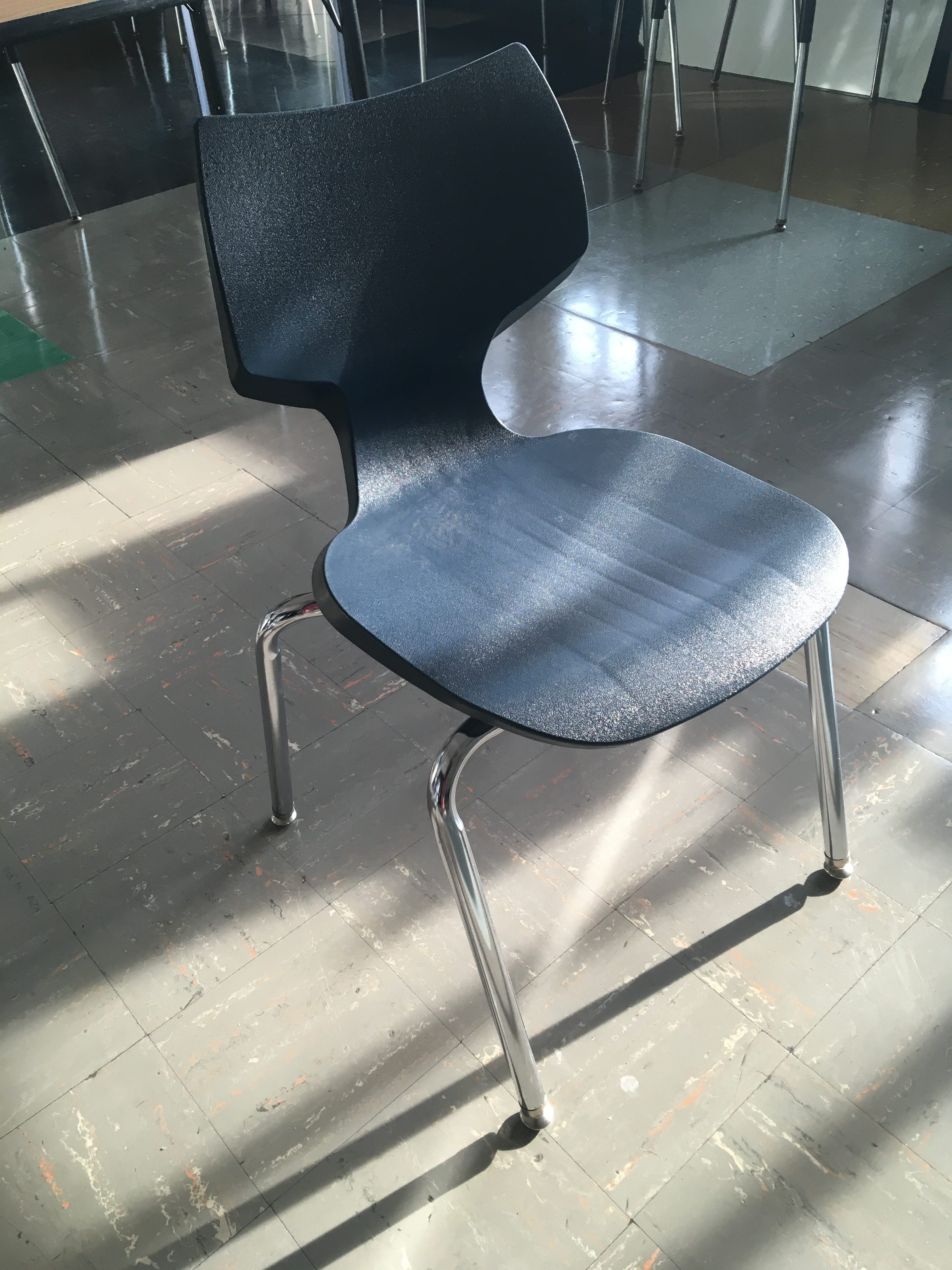
Of course, these babies do their job really well. They’re compact, tough, and easy to clean. They basically last forever. Last year, when one of them broke during class, my students and I were shocked. It was like seeing a shooting star. We stared at it in disbelief, amazed that something like that could actually happen. Given the daily trauma that’s dished out to them at the hands of unassuming students, classroom chairs are marvels of engineering.

But their exceptional durability comes at a cost. Despite all the good they do, these chairs sacrifice something important: comfort. For multiple hours a day, five days a week, they serve as a rigid and unforgiving landing space for students’ bodies. Have you ever tried sitting in them for 30 minutes? They offer no mercy.

And this is coming from someone who buys into the vertical whiteboarding movement of the last 10 years. My kids are frequently standing while doing math. I love how my boards steal my students away from their seats for extended periods of time. Still, the rockhard chairs loom in the shadows, waiting to reclaim students’ bottoms when the dry erase markers are put down. These chairs exert their discomfort at will.

In their defense, students do everything they can to make these chairs more enjoyable. They lean back (risking a head injury), slouch, put their feet up, or maneuver sideways in them. Some students, I suspect, even leave to use the bathroom just to catch a break from being forced to sit in them for as long as they do.

This year I made it a goal to bring a little bit of relief to their backs and bottoms. It took some effort, but I somehow organized my cramped New York City classroom to make space for two lounge chairs. They’re positioned in the corner of the room along with an end table, rug, and plant.
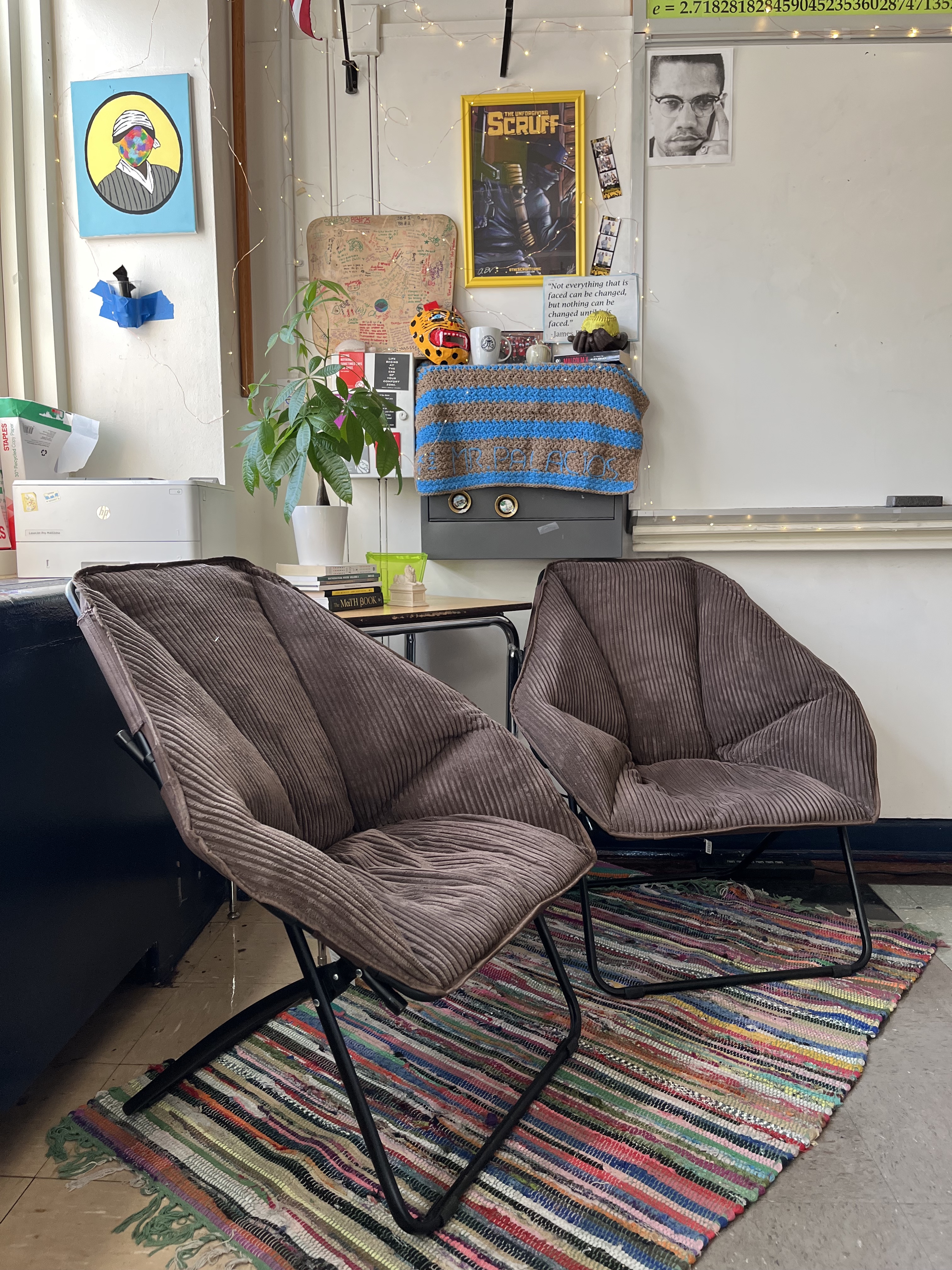
Interestingly, on the first few days of school, no one sat in them. I think my students were unsure whether they could. We’re the chairs simply for looks? Were they reserved for special occasions, like one-to-one conferencing? After reassuring my kids that the chairs really were for their sitting pleasure, the students have gotten over their hesitancy. There’s at least one student lounging in them each class period.

A couple of students have tried to politely and nonchalantly co-opt the chairs and sit in them every day. When that happens, I respectfully push back to make space for others — especially those who aren’t bold enough to sit in them without some advocacy on my part. So far, there haven’t been any qualms. The students get it.

Some kids sit in them for obvious reasons, but many others take refuge in them because they’re not feeling well or unusually tired. Having a space where these students can find a little solace has been, without a doubt, the best part of having these lounge chairs in the room.

I know it’s only two chairs, but it’s a start. If they aren’t a total meltdown, in the next couple of months I hope to expand upon the chairs to include another seating upgrade in my room. I’m not going to count my chickens before they hatch, but I have a few ideas.

It’s worth noting that, when I say “my” room, I use that term lightly. Being the NYC teacher, I share it with two other teachers. Luckily for me, they were gracious enough to lend their support for (or at least not complain about) the chairs. Without them, the chairs don’t happen. The same is true for all the other upgrades I’m making to my classroom this year, which will be detailed in future posts of this series. I’m indebted to these folks for going along with my antics.


bp
Working on my students’ note taking

I’m horrible at helping my students take good notes. Have been for a while. Several years ago, when I started adopting some of the Thinking Classroom norms (like the use of large whiteboards around the classroom), my pedagogy got more robust, but I noticed that my students began writing down fewer notes (mainly because they were using all those lovely whiteboards so much). This trend has continued ever since. Even before that, however, the notes my students took consisted mainly of the guided variety. Don’t get me wrong, guided notes have their place, but mine asked that students simply fill in blanks in a gigantic packet that I used a forest of trees to copy off for them. There was no introspection, no thinking, and no actual note-taking.

This year, I’m making it a goal to do better. The push came from a co-teacher I had last year who, after 30+ years in the classroom, retired in June. In one of our last conversations, I asked for her advice. Given her vast experience as an educator and our year together as co-teachers, how did she think I could improve? Her suggestion: Help my students take better notes.

Her insight was simple, but it shed light on an aspect of my teaching that I avoided for years. Thanks to her, that changes this year! Here are three small things that have helped me place a greater emphasis on effective note-taking so far. By doing them regularly, I hope to uncover more ways to improve my students note-taking skills.

1. Requiring spiral-bound or composition graphing notebooks. To help students take more ownership over their notes, I’ve long since abandoned my use of packets and instead moved towards students using graphing notebooks for their record keeping. Despite doing requiring graphing notebooks, given some of the other things I’m doing with them (see below), they feel very different now. In the past, the notebooks existed on the periphery. This year, they’re more of a centerpiece.

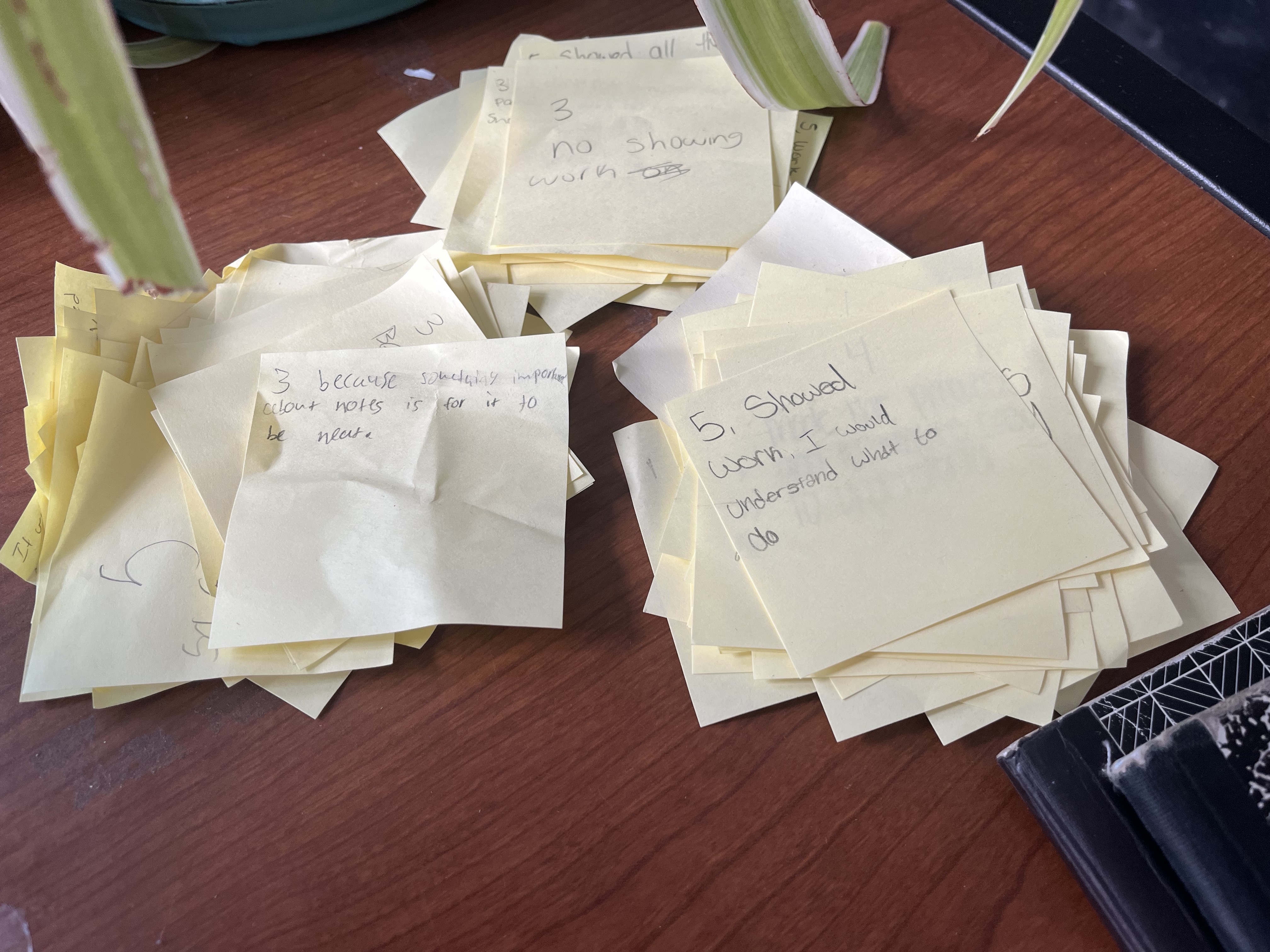
Stickies from a note-taking gallery walk early in the year

2. Being explicit from the start. I started the year with a couple of lessons explicitly focused on note-taking. The idea was simple: The students used the whiteboards put up their notes on a few problems and then did a gallery walk. They used stickies to cite what was good about the notes they saw on the boards and also stated how they could be improved. In the past, I uttered the oft-heard teacher phrase “I would write this down” to my students, but I never dedicated class time to discuss with them what quality notes can look like. I try discuss this a daily conversation now, but because I’m not used to doing it, I have to remind myself constantly.

I’m regularly collecting students notebooks this year

3. Collecting notebooks. If note-taking is a priority for me, I’ve decided to attach a grade to it — at least for this year. I’m collecting my students’ notebooks once every two weeks and scoring them on completeness (are the problems there?), accuracy (are they correct?), and details (are they specific?). It’s a quick two-minute spot check that I use to give the kids small, but immediate feedback on their notes. In the future, hopefully I can find ways to make note-taking an indispensable aspect of our class and thus not have to grade it, but for now, I’m holding this carrot in front of students as motivation. We both need it.

1-2 times a week I supplement student notebooks with info that they glue/tape into their notebooks

4. Using “inserts.” Once or twice a week, I’m giving students something to tape/glue into their notebooks. I’ve gotten all creative and am calling these slips of paper “Inserts.” The Inserts usually highlight an important idea or important example that supplements what we discuss in class. This gives their notebooks the feel of an interactive notebook, but it’s much simpler and a lot less work. For the first couple, I’ve just found a 3″x4″ graphic I found on Google, printed it on colorful paper, and put tape out. It takes two minutes for the students to tape it in. Truth is, I don’t have the capacity (nor the desire) to build interactive notebooks with my students. The Inserts help me add depth to the notebooks, but not get in over my head.

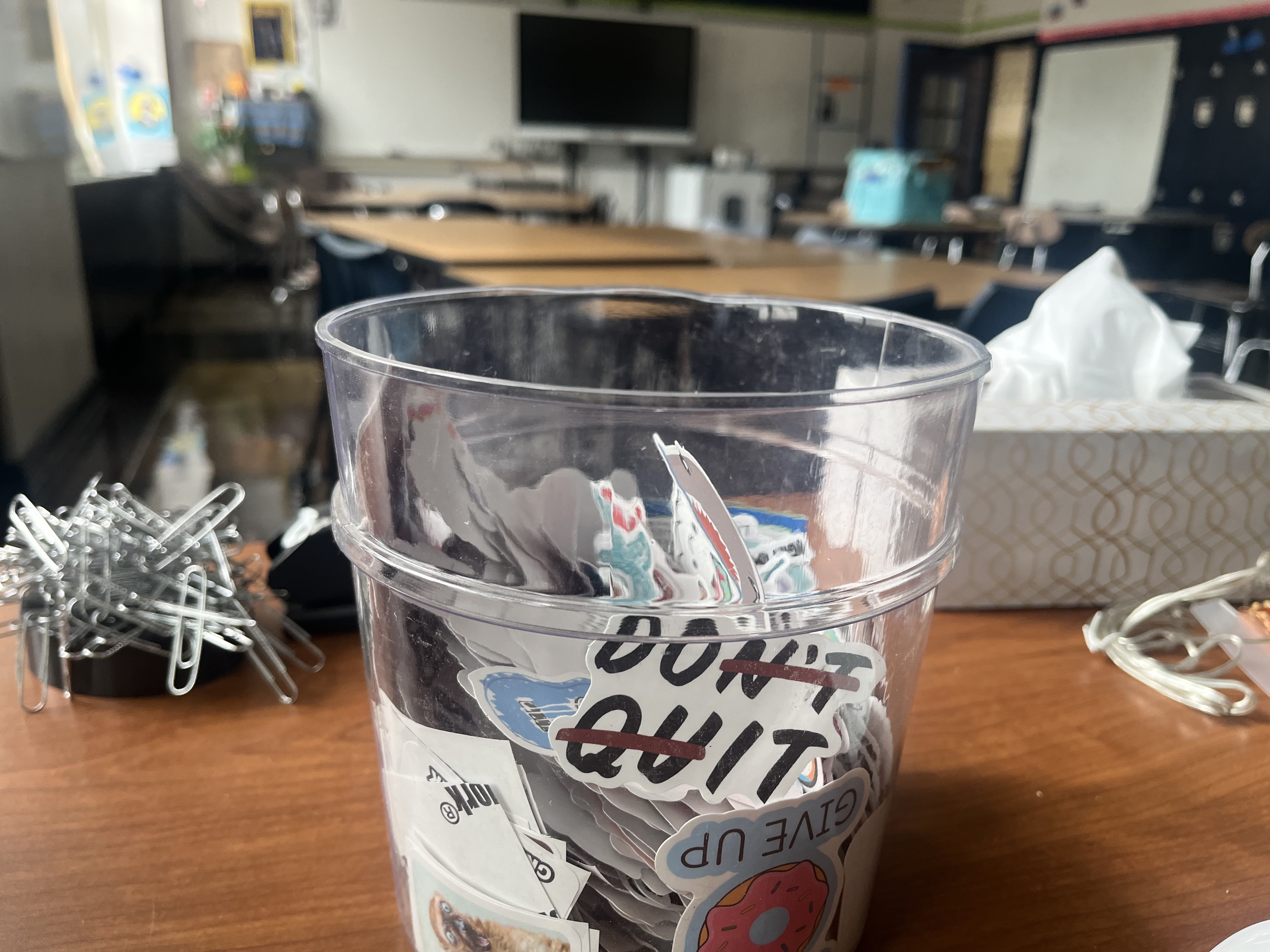
My bucket of fun, random stickers that I’m dishing out this year

5. Giving out stickers. This summer I decided to start giving out random stickers to students this year when they do something good. I figured it would be a fun. Who doesn’t like a good sticker? Crazily enough, little did I know how well this idea would jibe with my newfound notebook fixation! When I given the stickers out, guess where the students put them? ON THEIR NOTEBOOKS. Win! We’re developing a notebook culture and have all these cool, random stickers to customize them with.

bp

A Thousand Words a Day • Sept 19-23 (No. 3)

I am documenting my 2022-23 school year through photography. Each day, I take a photograph and include it in a weekly post here on my blog. The goal is to create a compilation of photos that tells the story of my year and challenges me to go beyond the written word. This is the 3rd post in the series.

Monday, September 19

My students are starting to take advantage of the new lounge chairs I put in our classroom

Tuesday, September 20

Made by someone special, I’m proud of my new tape toolbox

Wednesday, September 21

Completed my first notebook check of the year today

Thursday, September 22

After school, I excitedly attended the girl’s soccer game today

Friday, September 23

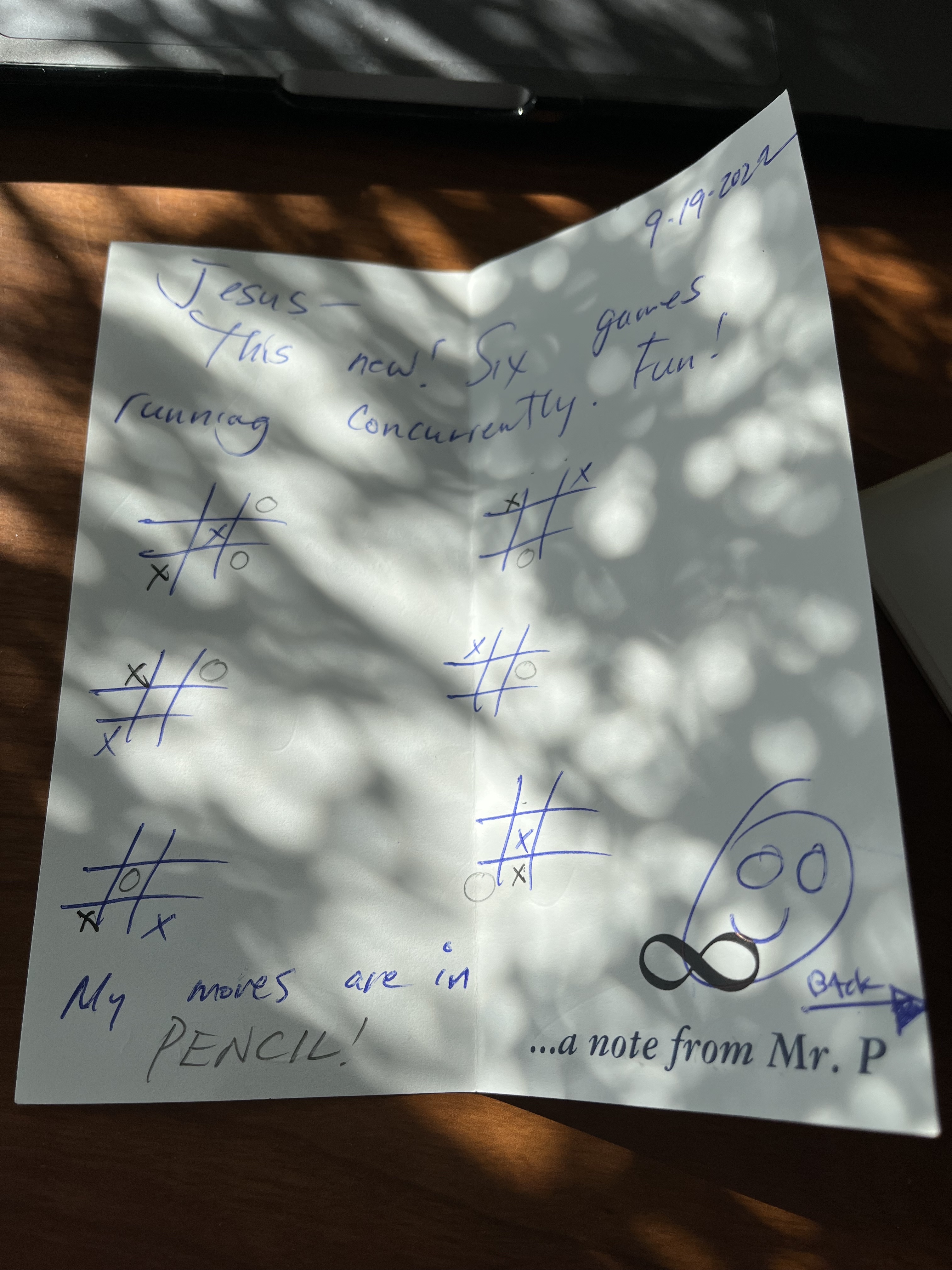
New: a student and I are playing six simultaneous games of tic-tac-toe in an ongoing Friday Letter

bp

A Thousand Words a Day • Sept 12-16 (No. 2)

I am documenting my 2022-23 school year through photography. Each day, I take a photograph and include it in a weekly post here on my blog. The goal is to create a compilation of photos that tells the story of my year and challenges me to go beyond the written word. This is the 2nd post in the series.


Monday, September 12

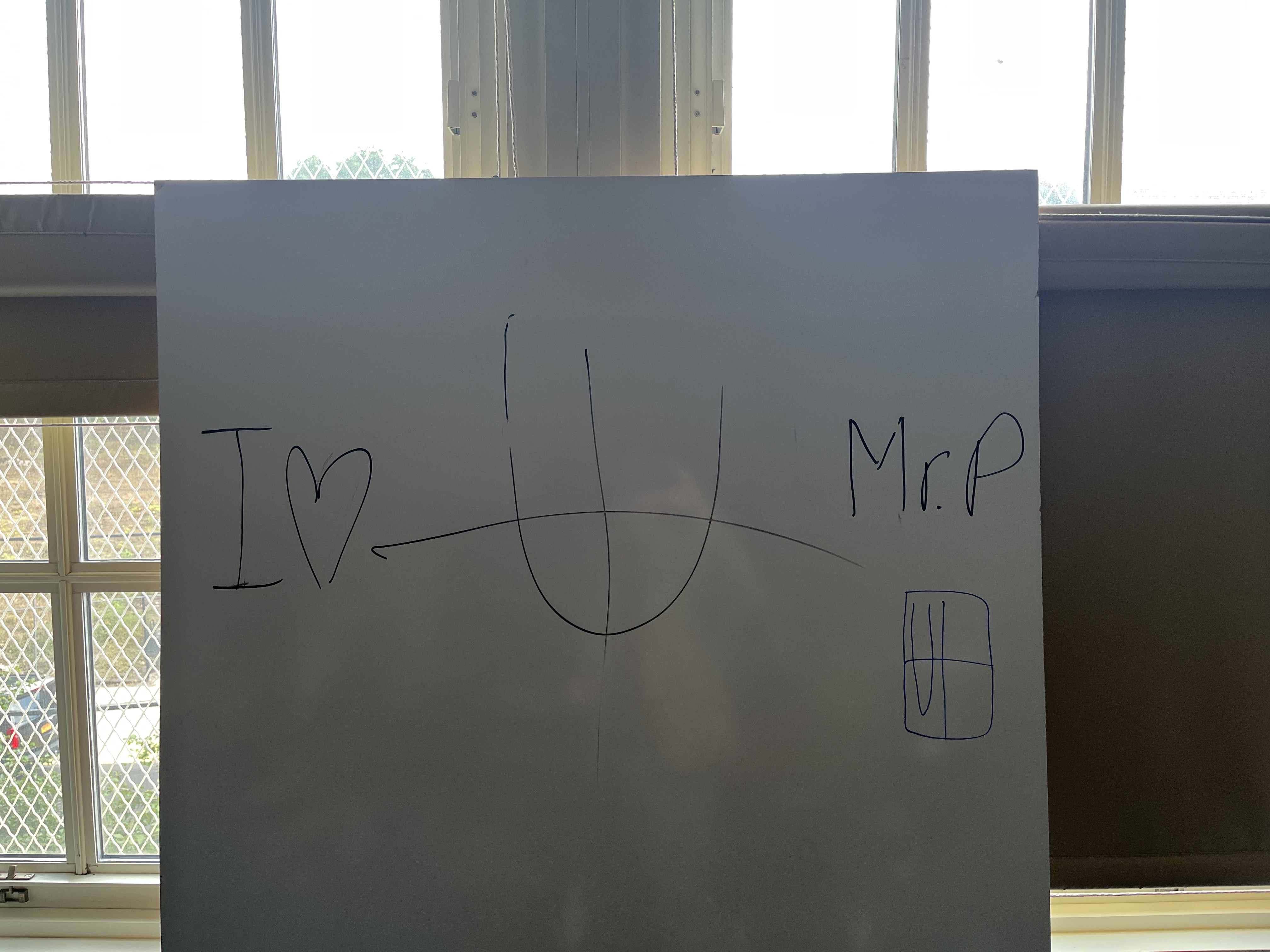
A board in 9th period after the warm up — heartwarming!


Tuesday, September 13

Post-its from a gallery walk on note-taking


Wednesday, September 14

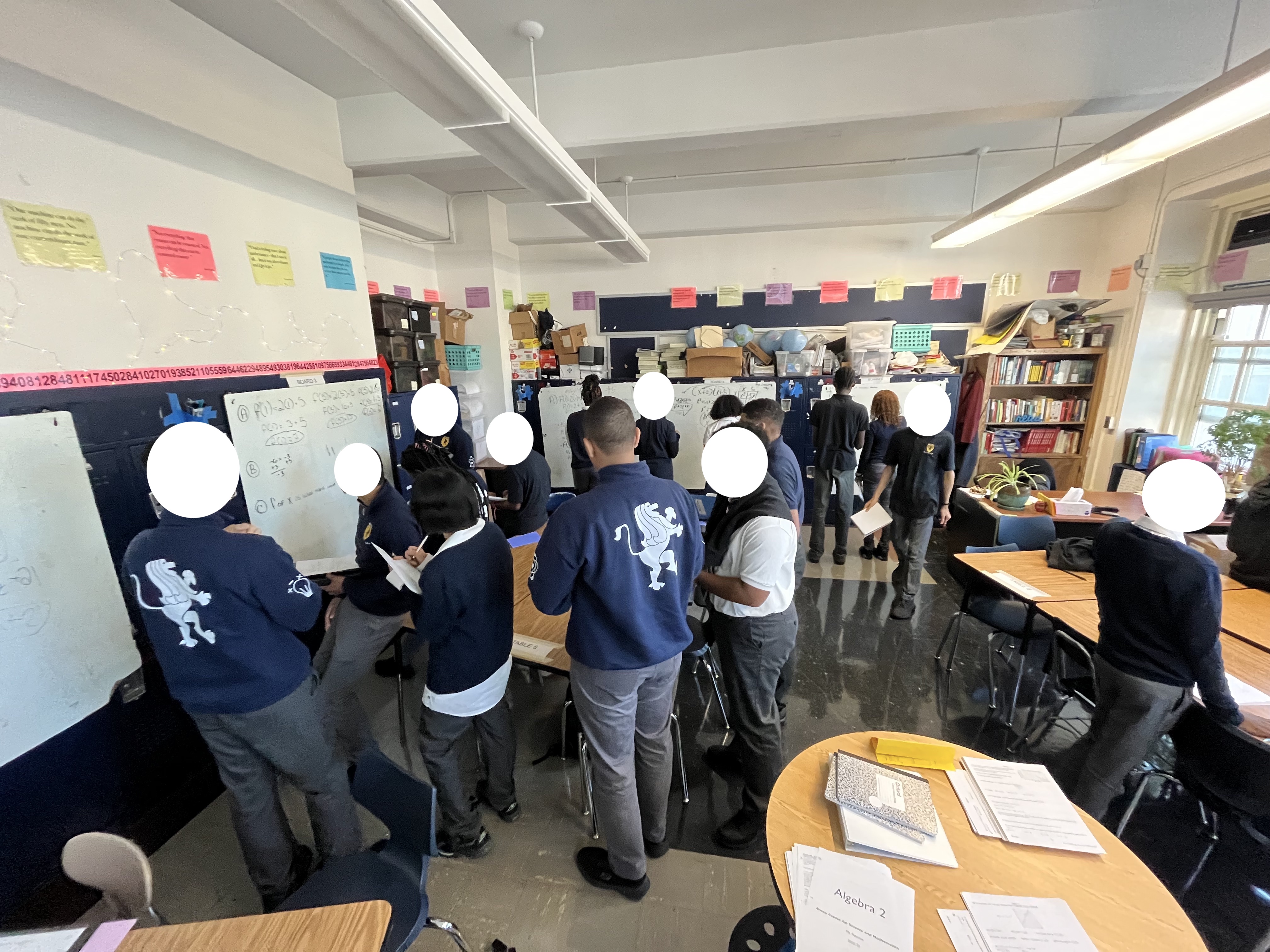
Period 2 getting acclimated to exploring homework solutions on the large whiteboards


Thursday, September 15

First period has a whopping 8 students; the smallest class of my career (that changes tomorrow)

Friday, September 16

Stood on teacher desk to snap a class selfie in ninth period