Year in Review: 2015

I always find it a bit odd reflecting at the end of a calendar year. My real year runs from September to June. That’s how I’m trained. Nonetheless, here are some reflections from my 2015.

Professional Development

  •  I helped facilitate an Arduino PLT with MfA in the spring. Although I helped lead the group, I was truly learning as I went. It was an uplifting testimony to being a novice that’s willing to bring knowledgeable folks together for the greater good.
  • The spring introduced me to Video Clubs and the fall allowed me to bring this rich experience to the math department at my school. I eagerly await to see where this goes. I even got invited to speak at a conference! Of all people, me!
  • The Research Experience for Teachers (RET) with NYU provided the platform to develop and learn through actual, hands-on research. I’ll never again look at human hair or cement the same way. I even got to use an electron microscope. Talk about a wow experience.
  • The Learning Partners Program helped me in unpredictable ways. I was expecting intervisitations, but the experience proved to be far more comprehensive. Some of the resulting transparency caused pain, but in a healthy way.
  • I was about my colleagues. Our relationships got stronger, more interdependent. I thrusted myself into a leadership role and invested in their success. I wanted my opportunities to become their opportunities.
  • I took up juggling. It’s not directly related to my professional growth, but I think it’s pretty cool. Plus, it’s fairly therapeutic, which helped me grow. I’m looking forward dwelving into the mathematics of juggling, which will be fun.
  • I read, and enjoyed reading, more than ever.

Teaching

  • I began assessing my students by means of standards-based grading and then improved it. I should’ve began this a long, long time ago.
  • It seems simple, but exit slips played a significant role in my class for the first time. And, in general, assessment was a running theme for me all year.
  • I once held the belief that if I don’t grade an assignment, the kids wouldn’t do it. I learned that it’s more about the classroom culture and growth mindset that make kids want to (or not want to) work.
  • I wrote to my students more than ever. And loved it.
  • I incorporated writing and discussion techniques regularly. I also thought about my questioning in more sophisticated ways. Simply put, I learned to value these worthwhile activities.
  • After years of waiting for the opportunity, I was able to kickstart an after-school bicycle club in 2015.
  • I realized that I now look at every day, every class period, differently. In fact, I feel different about teaching. I’m more aware, more dedicated, more creative. My perspective matured greatly in 2015. This has pushed me to capitalize on moments with students and colleagues like never before.

This was my first full calendar year maintaining a blog. Is it a coincidence that 2015 was such a game changer for my career?

bp

Why I stopped flipping

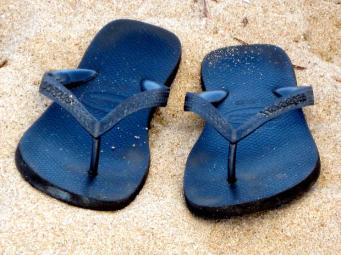
Flip Flops

Four years ago, just before it became heavily commercialized, I flipped my classroom. I created video lessons that my students watched for homework. Class time was used for enrichment, reflection, and collaborative work. I ran with the model for a year and a half.

The other day, out of the blue, I was asked why I stopped. That made me think: back when I stopped flipping, I didn’t have this blog and never wrote about why I stopped. Here goes. Four years later.

Before flipping, I usually lectured. Sure, I disguised it with an enthusiastic and energetic delivery, but I lectured nonetheless. I wasn’t critical of my own teaching at the time, so I didn’t really think twice about it.

After I flipped, I had significantly more facetime with my kids and they had more time to reinforce new concepts. I was really happy about this. My students sat back absorbing new content like sponges, this time from a video embedded with summary questions. After all, a video lecture, however dressed up, is still a lecture.

The problem was that students weren’t discovering mathematics from my lessons. They weren’t interacting with mathematics or each other during the learning process. They weren’t debating with one another while learning something new. They weren’t being asked to find patterns and discuss them with a partner. They weren’t being challenged to make connections and develop understanding. They were using technology for learning, but not to learn. Their first impressions of so many beautiful mathematical ideas included pausing and rewinding a video that contained my face. In short, they didn’t construct their own learning. I did all of that for them.

I stopped flipping my classroom because I realized that I wasn’t flipping student learning, I was simply flipping my teaching.

I discovered that I needed them to take ownership and discover how and what they learned. What’s ironic is that I actually had to flip my classroom in order to realize this. Flipping allowed me to see my lessons through a more concentrated lens that highlighted my teacher-centered approach. More on this.

Four years later, do I regret flipping my classroom? Not a chance.


bp

Token of Appreciation

I’m a huge fan of showing appreciation to others, especially for the simple, day-to-day things that often go overlooked. In an effort to promote this, I’ve started a new tradition in my class. It’s called a Token of Appreciation.

Each Friday, the Token, a small chunk of wood, will be given to someone in our class as a symbol of appreciation for something they did during the past week. The person giving the Token must identify someone that they think deserves it, shout them out, and give them the Token.

The recipient gets to keep the Token for the next week. They will make their “mark” on it by drawing their name, putting a sticker on it, or whatever else they feel will best represent them, possibly even carving into it. The following Friday, that person will recognize someone else and give the Token to them. And so on.

I kickstarted the tradition last week by giving the Token to a student in each algebra 2/trigonometry class. Here are the tokens:


A simple act of kindness. And little bit of kindness can go a long way.


bp

Exploring the roots of quadratic functions

In my algebra 2/trigonometry class, I wanted to spend a day with them exploring quadratic functions, their roots, factors, and how everything is related. This is taught in algebra 1, but the students always seem forget all this after geometry. It’s a perfect intro to our quadratics unit.

Part 1. Building off Dan Meyer’s approach to factoring trinomials, I first had the students find all values that make quadratic expressions equal to 0.

find values

Most found this straightforward and doable, which was great because that was the point: accessibility. The third expression had one non-integer value as an answer, which I included on purpose to throw them off. A couple kids actually factored and used the zero-product property, which was ahead of the game…they actually remembered something from algebra 1!

Part 2. I had them use Desmos to examine the graphs of the three functions and find a relationship between the graphs and the values they found that made each equal 0. It took several minutes, but there were definitely some ah-ha! moments when they saw the connection, which was cool.

Screen Shot 2015-12-02 at 4.35.50 PM

I then re-introduced them to be the term “roots” as a way of describing these magic numbers.

Part 3. I also wanted them explore the relationship between the factors and the roots. Because of time, we more or less did this together (instead of them working it out in groups). We first factored all the expressions. I then asked how the factors relate to the roots of each function. Most of the class realized that when each factor is set to 0, the roots result from these “mini” equations.

Screen Shot 2015-12-02 at 4.36.45 PM

Overall, the lesson was solid. I really liked that, other than imparting the term “root,” there was no need for me to lead any part of the lesson. I simply provided resources and asked the right questions that spurred deep thinking.

Exit slips showed their understanding of the connection between the roots and factors wasn’t strong. This was probably due to the fact that the lesson was a bit rushed at that point. The next lesson focuses strictly on finding roots by means of factoring quadratic equations, so hopefully that helps. I also felt the lesson flip-flopped around the term expression and function too much. Leaving the lesson, the difference between the two could have been unclear and may cause some confusion amongst the kiddos. Another thing I would have changed is not having all trinomials…the kids could possibly generalize that all quadratic functions are trinomials, which is obviously not true. Even if they don’t go that far, a variety quadratic functions still would have been better for them to explore.

Here is the document.


bp