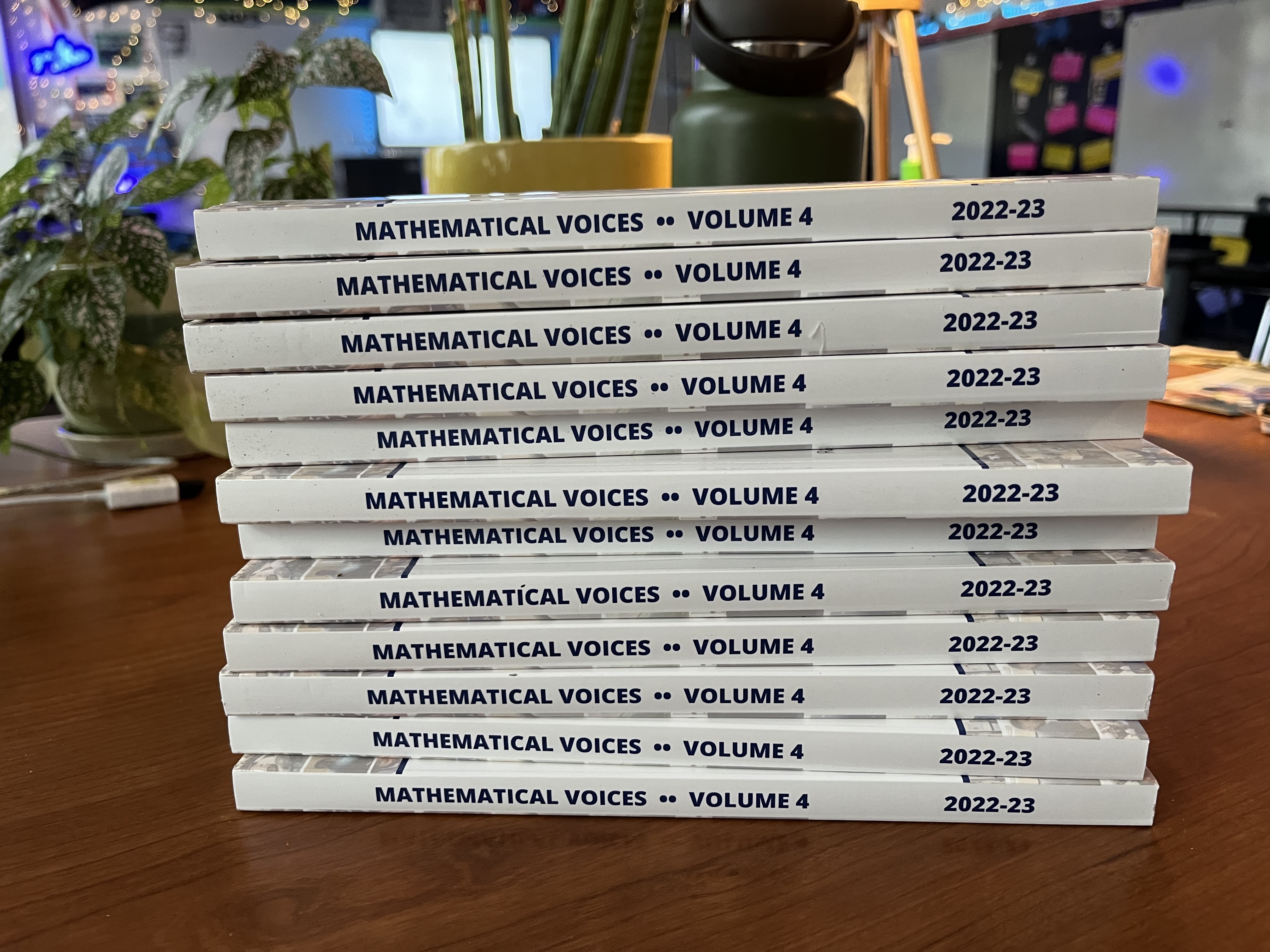
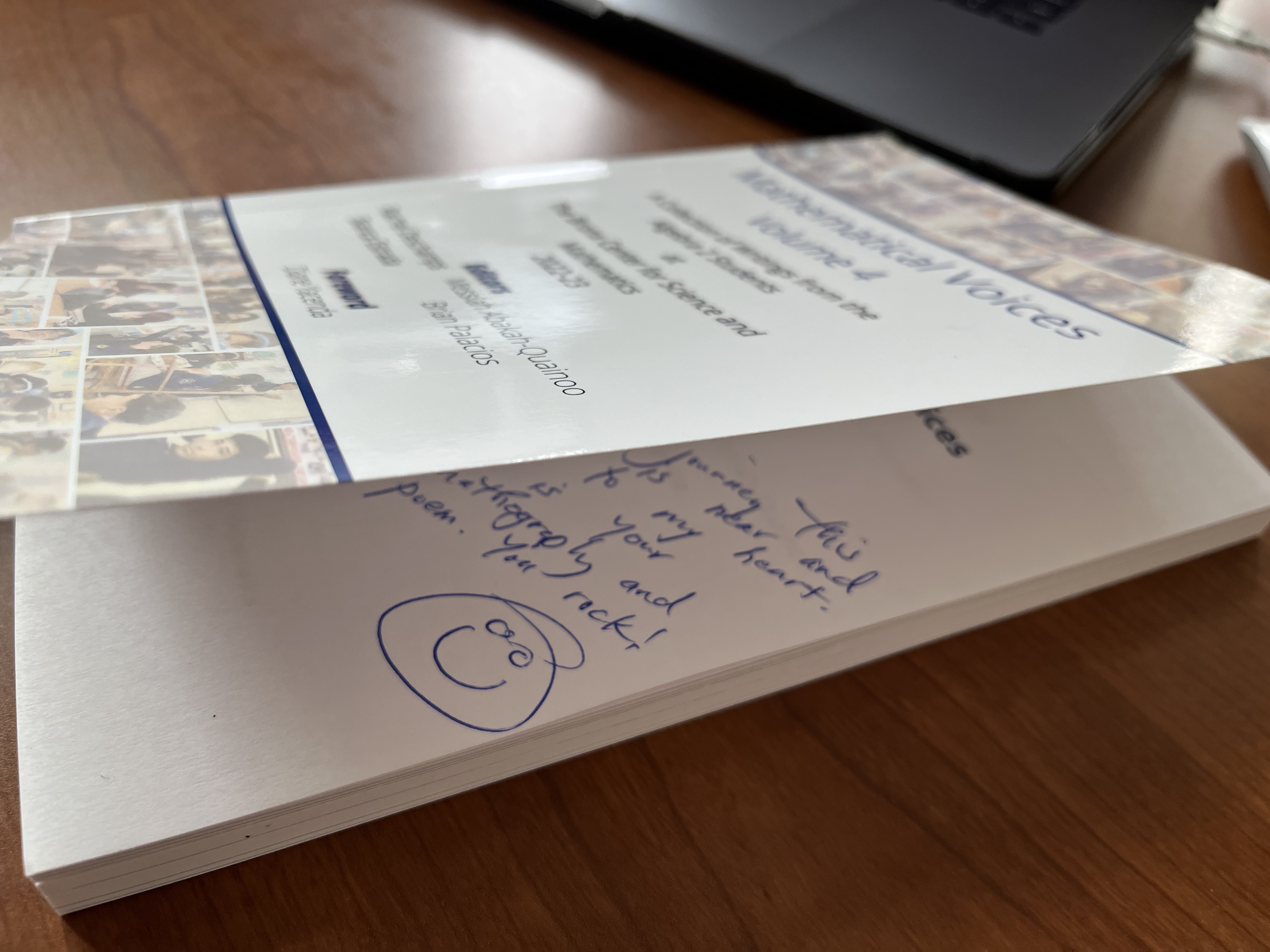
Mathematical Voices, Volume 4

This was the first year creating a book with my students didn’t feel like a complete novelty. In the previous three years, our books generated an “I can’t believe this is happening” feeling within me. The process was mostly surreal. This year, while I still had to pinch myself at times, my emotions were rooted in a feeling of “This is what we do.” The book has become part of the fabric of my class, an expectation to be met.

Thus, Mathematical Voices, Volume 4 continues the tradition of amplifying my students’ voices and telling the story of our school year. No doubt, it’s a complex story to tell. Not only does it play out over the course of 10 months, but there are many twists, turns, and unexpected events along the way. When immersed in a world of bettering oneself, like we are in a school setting, the human condition never fails to reveal itself. The people are complicated, the plot unpredictable. There is struggle and triumph. Joy and pain. Conflict and community.

Volume 4, like all volumes that came before it, audaciously showcases my students and their mathematical selves. Produced within a mile-high bureaucracy teetering to make sense of itself, this tiny book makes space for our greatest, most overlooked asset: students. They are the most precious and dynamic part of the story, but too often get reduced to Student IDs and test scores.

But Mathematical Voices pushes back. It boldly reveals the sweeping world of mathematics through the unique standpoint of 59 brilliant high school students in the Bronx. It tells of their pasts, presents, and futures. It highlights their ability to see and do mathematics in practical and ingenious ways. It’s personal and reflective. It shows how mathematics, often considered rigid and unmoving, can indeed be generative, lively, and fun when placed into the well-equipped hands of young people. Given an Algebra 2 curriculum that prioritizes facts and figures, Mathematical Voices proves that it is stories that matter, not statistics.

Volume 4 is the most voluminous iteration of Mathematical Voices to date, and our sum is richer and more representative as a result. All but four of the students who appear on my Regents-bound roster are present. Half have at least two pieces in this collection, and 9 students have three. One student, Genelly Liberato Gomez, has an unprecedented four pieces of writing. I’m proud that my students’ voices are louder and more vibrant than ever before.

For the second year in a row, I co-edited the Mathematical Voices with students. Its growth this year can be directly attributed to them. With their vision and willingness to read, select, and edit mounds of their peers’ writing, these young people ensured that Volume 4 was the biggest, baddest, and boldest version of itself. They are evidence that teachers must stop and take heed from students if they hope to accomplish anything worthwhile. Working alongside them gives me hope that teachers can persist in challenging traditional power dynamics and be more welcoming of the inherent gifts that students bring to our classrooms.

Vital to any story is its setting. This is why one of my favorite parts of Volume 4 — and the biggest change from earlier editions — is the many photos that can be found throughout the book. Most of these shots were taken unprompted throughout the year, giving readers visual context for what it was like to be in our class this year. The photos showcase our class culture and the conditions under which students’ writing developed. Several students from my classes served as class photographers. The photos are their observations of our time together.

In addition to establishing the setting of our story, the editing team also knew that the photos would be an important upgrade from previous editions of Mathematical Voices because of how they humanize the book and its authors. By pairing each piece of writing with a photograph of the author, we hope that readers can appreciate the author’s message even more. Interestingly, Volume 4 feels like an extension of our classroom since hundreds of these photos were printed and posted on the walls of room 227. The room experienced a renaissance this year, welcoming lounge chairs, whiteboard tables, relaxed lighting, surround sound, overhead space, calming scents, and even a sofa into the room. Of all the improvements, the photos were a defining element and what made being in the room every day so special. It was an unforgettable collage of mathematical humanity and community that manifested itself over the course of the school year. It was our story through photographs. I’m thankful that it lives on in Volume 4.
The relationships I build with students come and go. Students arrive abruptly in September and exit just as quickly in June. Our time together is temporary, a blimp on a timeline. It’s the nature of the work. For my students, I’m one teacher in a long line of many. A smiling face with good intentions and a lesson plan. Other, more capable teachers will come around in the years ahead and push the memory of me and our class to the background. To no fault of our own, our relationships will fade. We’ll move on. We must.

But though relationships fade, stories endure. They transcend time and space. They outlive school years and school buildings. Stories bottle up the moments, thoughts, feelings, and relationships that time steals away. Stories help us remember. The good ones want to be retold.

As mighty as it is, Mathematical Voices Volume 4 fails to tell the complete story of the Algebra 2 students during the 2022-23 school year. Teaching and learning are far too complex, and the book simply isn’t long enough. Despite this shortcoming, Volume 4 still does a wonderful job of preserving an important part of our story and gives it a chance to be told again, even if it is just to ourselves. It safeguards my students and our classroom community against the calamities of time and forgetfulness. This is why, through the years, Mathematical Voices has become so important to me.

My students and I will exist on those pages forever. Our story will wait resolutely for the next person to pick it up and discover (or rediscover) who we were and what we were about. I can think of no higher honor to offer my students.

As a teacher, to live on beside them in this way is the greatest privilege. No accolades or professional recognitions can compare to sharing space with my students on these pages. It’s a teacher’s dream. For their writings about mathematics reveal not only their world, but mine as well.

bp

Another Keepsake

When last school year was ending, my students and I memorialized our time together with a piece of a broken chair. It was a keepsake. The chair came apart on one of the last days of the school and symbolized our long-awaited return to in-person learning. (Not because it came apart, but because it was a classroom chair, something we couldn’t use during remote learning.) All my students signed it. It’s been hanging in my room ever since.

In the final weeks of this school year, I started thinking about another keepsake. What physical object could symbolize our time together as a class? It had to be representative of the year, and my students had to be able to sign it. It also needed to be something I could take with me no matter where I teach.

With the help of a student, my search didn’t take long. The trademark of this year was the physical transformation of our classroom. To see it take shape piece-by-piece was special. Practically every day something new was introduced to the space, most of which came from the students themselves. Given all the interesting and varied objects that contributed to the room’s evolution, probably the most unique part was the sofa. It was brought in at the start of the spring semester. Not only did it provide comfort, but it gave the room a distinctive look and feel. I mean, how many classrooms have a sofa?

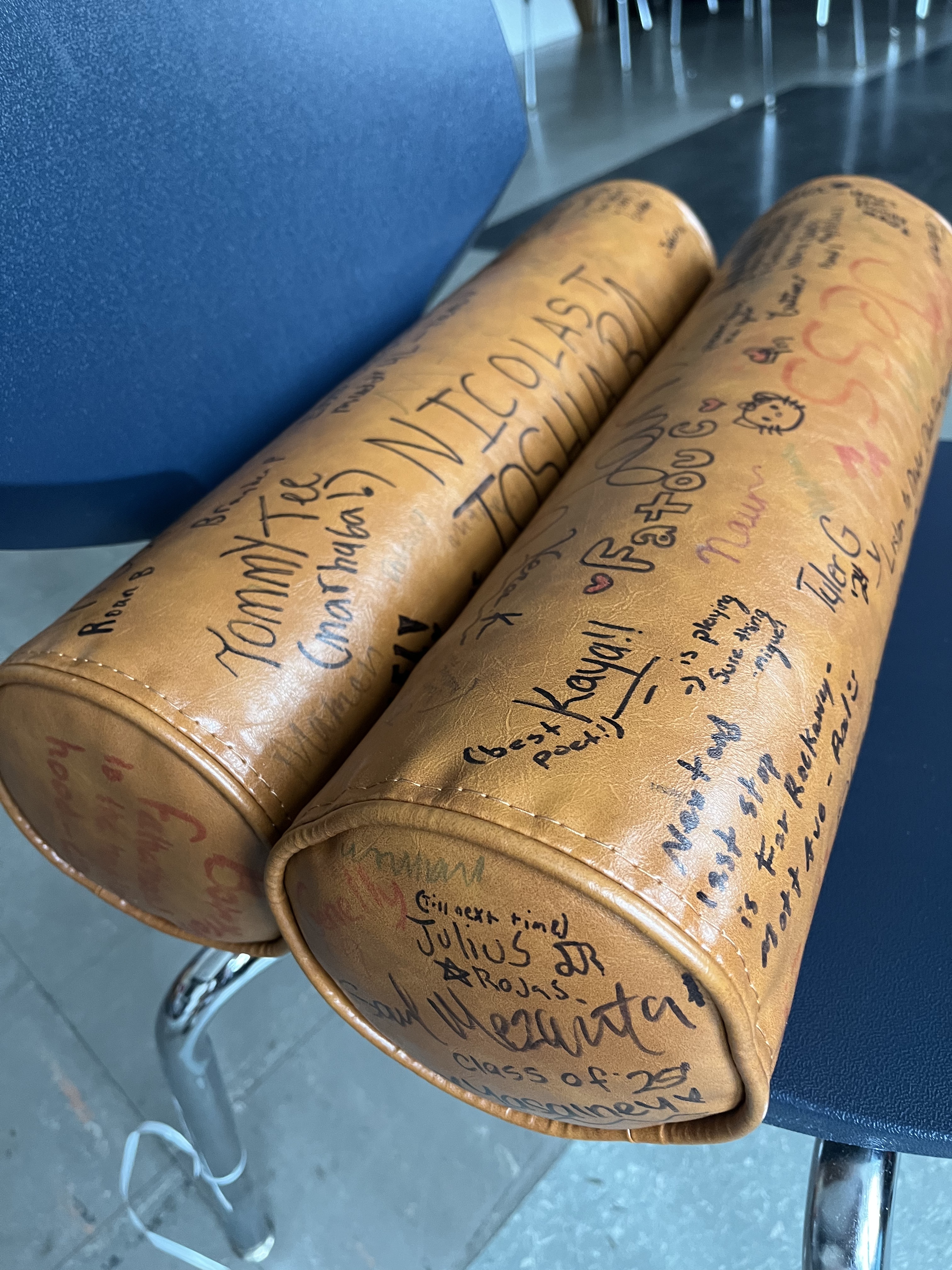
The sofa came with a pair of cylindrical pillows. They were decorative, vinyl, and totally signable. Our keepsake our born.

I don’t know if I’ll ever have a sofa in my room again, but I know I’ll have these pillows. I’ll display them with pride in the years that come. They will be a physical reminder of the students I taught in a classroom that experienced as much growth and transformation as those who inhabited it. The pillows are a relic of a classroom community that represented an important phase of my career. It was a phase that proved to me that the physical surroundings of a classroom deserve as much attention as the mental and emotional dimensions I care so much about.

bp

The Last Word

P.P.S. I guess this wasn’t that short after all. My bad. I guess I was trying to hang on to you for as long as possible.

Those were the last words I offered my students this year. They came at the end of a letter I gave my students yesterday after their state exam in Algebra 2.

The letter was motivated by my outright contempt of exam day. My students and I accomplished many wonderful things throughout the year. We learned lots of math, but math was only the vehicle to greater things. We laughed, bonded, and discovered new parts of ourselves. Given all that happened, the fact that the state exam is the last experience my students have with our class bothers me. I struggle with accepting it as the final chapter of our story. This happens every year at this time. It hurts.

Because of this, my pride gets the best of me at the end of the year. It’s why I resist the urge to cram for the exam on the last few days of class and instead elect to celebrate my students and our time together. It’s also why exam day puts me in a bitter mood and fills me with contempt. It keeps me from handing out peppermints and starbursts to my students as they settle in for the exam. My colleagues do it, and I feel like I should too. Yet I don’t. The goal of these small refreshments is to help students engage during their three-hour battle with the test, but it’s a gesture that supports a conclusion that I hope didn’t exist. I refuse to glorify an ending that fails mightily to provide meaning.

This year, instead of sulking on exam day, I decided to act. I didn’t want my dissatisfaction with the exam to take up more space than it already does. To do so would be disrespectful to all that my students and I built together. This year, New York State was not going to have the last word.

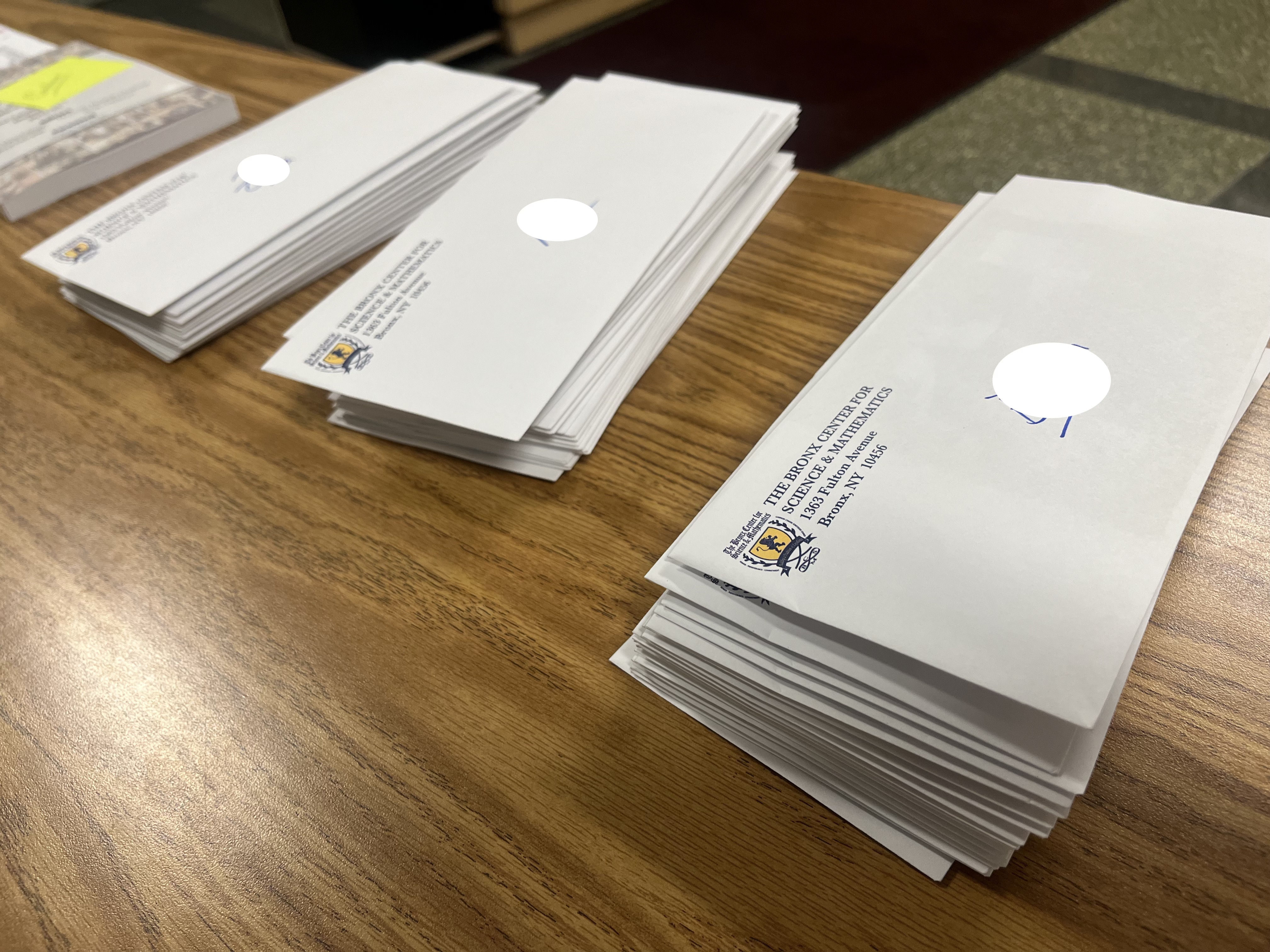
Thus, my letter. I waited for my students in the lobby of the school and handed it directly to them after they finished the exam. I placed each in an envelope bearing their name. Their letter was accompanied by a hug, some words of gratitude, and a smile.

My stack of post-exam letters

In the letter, I asked them to not be too hard on themselves for anything on the exam that they didn’t know. As their leader, so many of their struggles on the exam are the result of my shortcomings throughout the year. I offered my apologies for not being more organized and efficient to help them be better prepared for today.

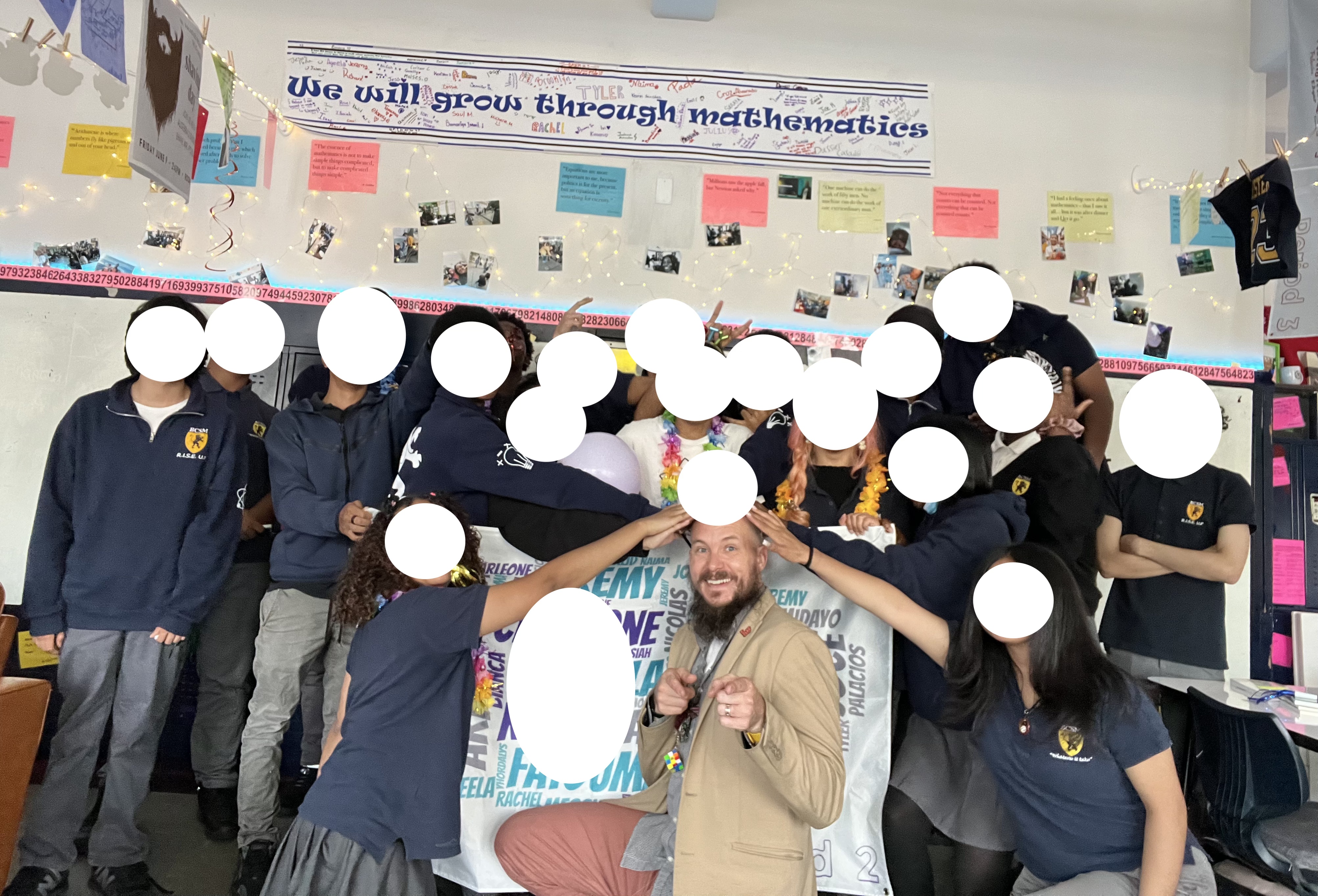
While the letter each student received was mostly the same, I used a mail merge to personalize them. My comments reflected a connection we developed during the year and the unique appreciation I have for each one of them. We took a class photo on the last day of class, and I included a 4″ x 6″ print of it in their envelopes.

Each student got a class photo with their letter

I closed the letter by thanking them. I wasn’t always great, but they were. Most of us must go outside to see the stars. Not me. This year, I was lucky enough to teach among them each day right inside room 227. What a wonderful gift they gave me.

The letter was a symbolic gesture more than anything else, but it was significant. It served as a rewriting of the final chapter of the school year to give ownership of it back to me and my students. We got the last word.

bp

The Final Week

The end of the school year can be anticlimactic. With state exams looming and summer within reach, it is easy to count down the days. Teaching is complex, demanding, and depending on the situation, downright harsh. There’s no blame in anyone sprinting towards the finish line.

Maybe I’m getting older, but for me, I’m starting to see the end of the school differently. Instead of waiting for it to end, I now view the closing of the year as the ending of a great story. A ten-month plot has been building, and it’s all come down to this. The finale, the last act — it’s a vital part of the story. Contrary to my earlier beliefs that test prep should be the priority, I now think the last few days should provide closure and allow us to celebrate our time together as a class. I owe it to my students and myself. The last week of school should be given as much attention as the first.

Thus, instead of counting the days that remain in the final week of school, these days, I’m in the business of savoring them. I spent the last week of class with several “events” to close the year. These events served as our final act. Here’s what it looked like.

Tuesday, June 6: Off the Wall
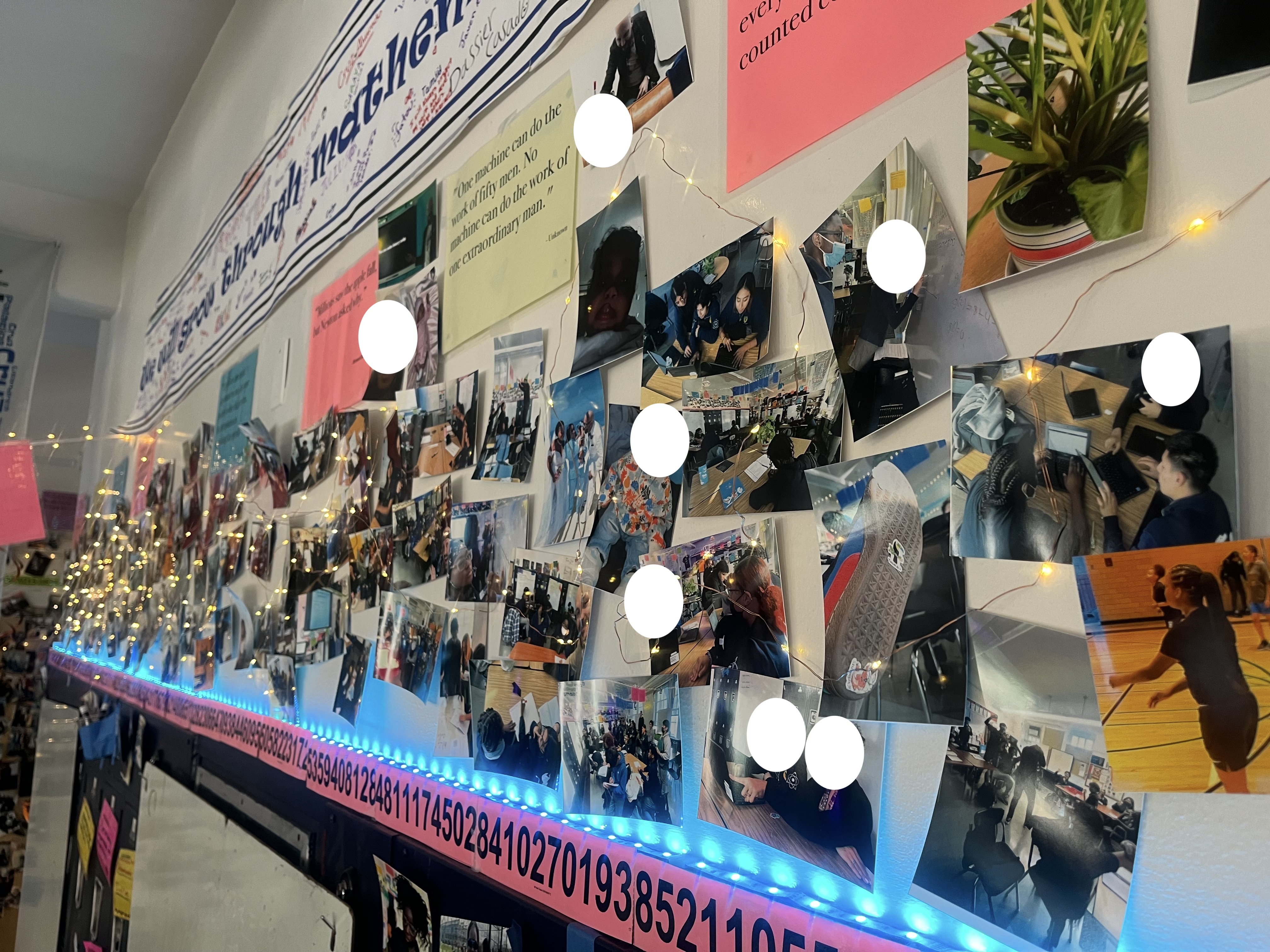
A really cool part of my classroom this year was the photographs I had on the walls. There were hundreds of them. They covered three of our walls, the door, and the SmartBoard. They mainly featured my students during class, but some included their families (and mine). Several class photographers used old iPod Touch to snap many of them. A Kodak printer did the rest. It was an unforgettable display.

Our photo collage plastering one of the walls

To end the year, I decided to give the photos to my students. There was no other way. I called the event “Off the Wall.” After school, students came by the dozens to claim the photos they wanted. It was a mad dash to grab memories. While thrilling to witness, it was also sad to see all the smiling faces and memorable moments recede into pockets and backpacks. The photo collection was my favorite part of the room.

Wednesday, June 6: Cogen Reunion
My weekly cogenerative dialogues (or cogens) were a success this year. While the first cohort got off to a rocky start in October, I’m thankful things got smoother as the year went on. We accomplished a lot. This was the third year in a row I’ve used cogens to improve my teaching and classroom community. I was fortunate to have 22 students take part.

To honor them and bring closure to our time together, our Cogen Reunion brought all the members from the entire year together in one place. I created some cheap gift bags, and we spent an hour after-school thinking back on the year and eating pizza. Total fun in spite of the eery smog outside from Canada’s wildfires.

The entire cogen gang is together!

Monday, June 12: Book Release, Plus/Minus Awards, Flag Raffle, Last Pass of the Token of Appreciation
Today was a busy day. This was a consequence of us being remote on Friday because of air quality concerns. In my planning, I had evenly dispersed my end-of-year events so as to not get overwhelmed. Now I had to squeeze even more in today. Agh!

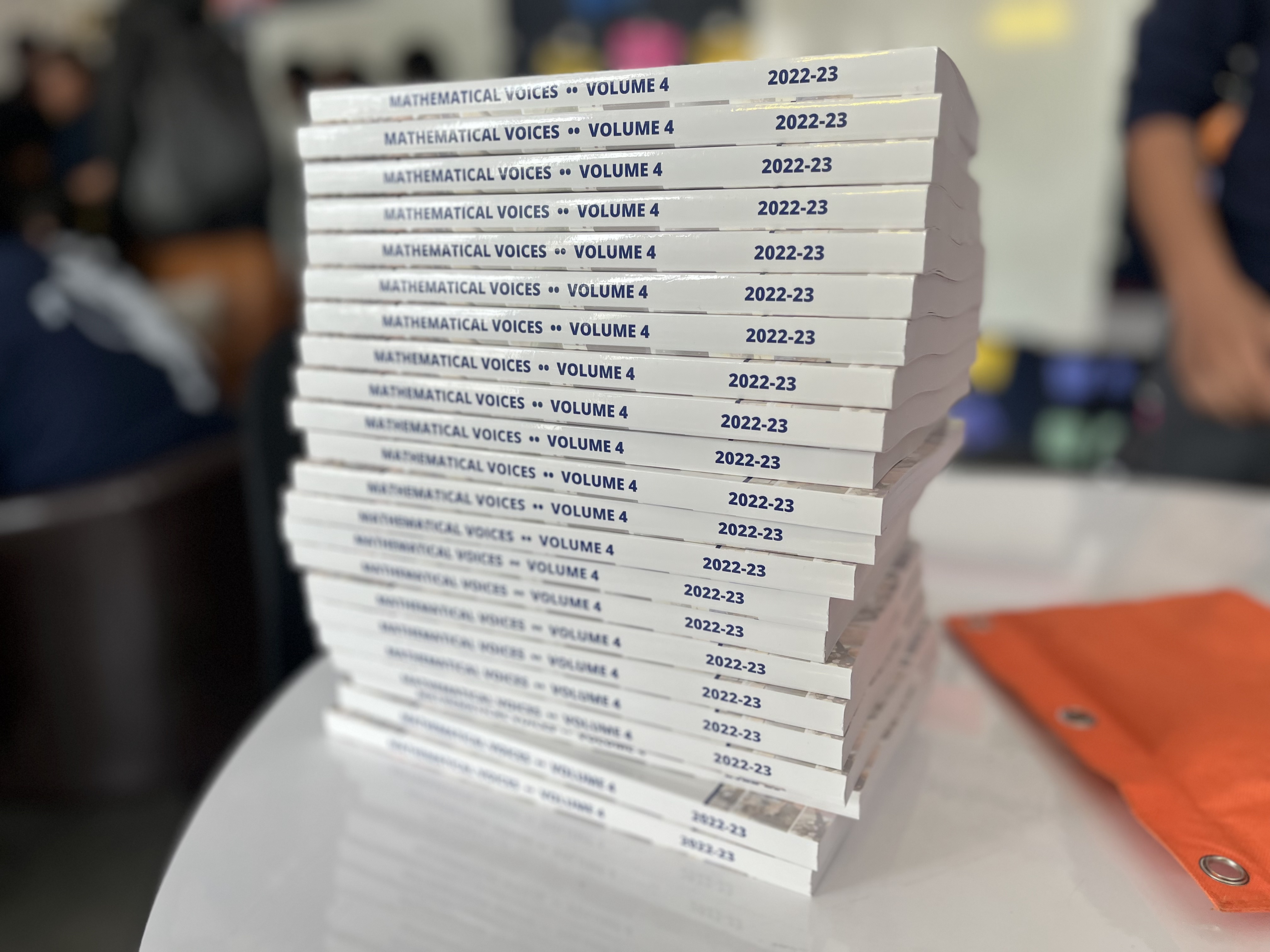
Class started with the release of Mathematical Voices, Volume 4. It was special to give each student their dedicated copy and personally thank them for making it possible.

Mathematical Voices, Vol. 4

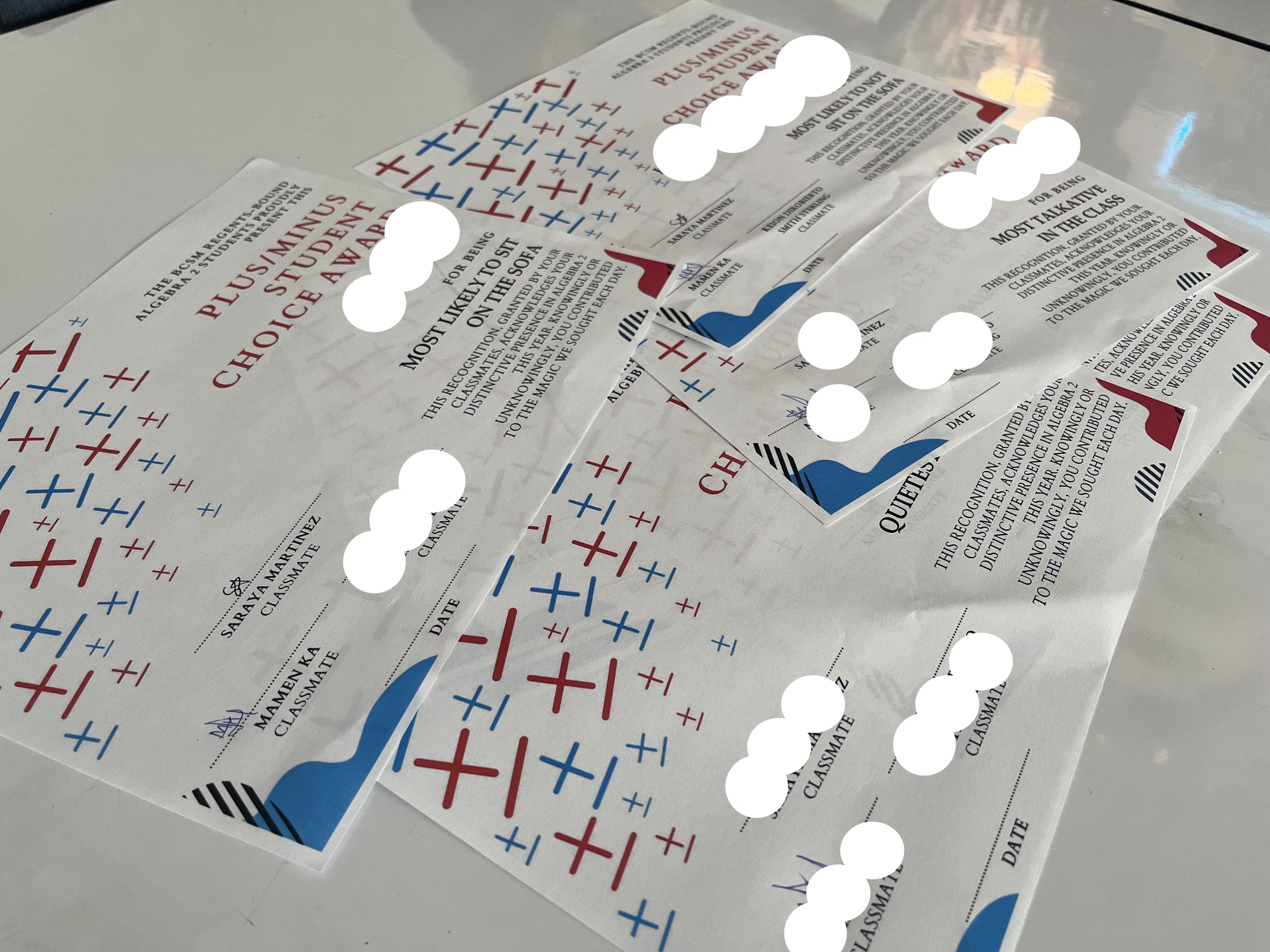
After that, two cogen students from each of my three Regents-bound classes hosted the first-ever Student Choice Plus/Minus Awards. I had been meeting with the students for a couple weeks during lunch to plan out this award ceremony. This felt similar to The Algeys, which I hosted back in January. I helped create the nifty certificates, but the students came up with all of the awards themselves, which included polling the class. It was great.

Certificates for the Student Choice Plus/Minus Awards

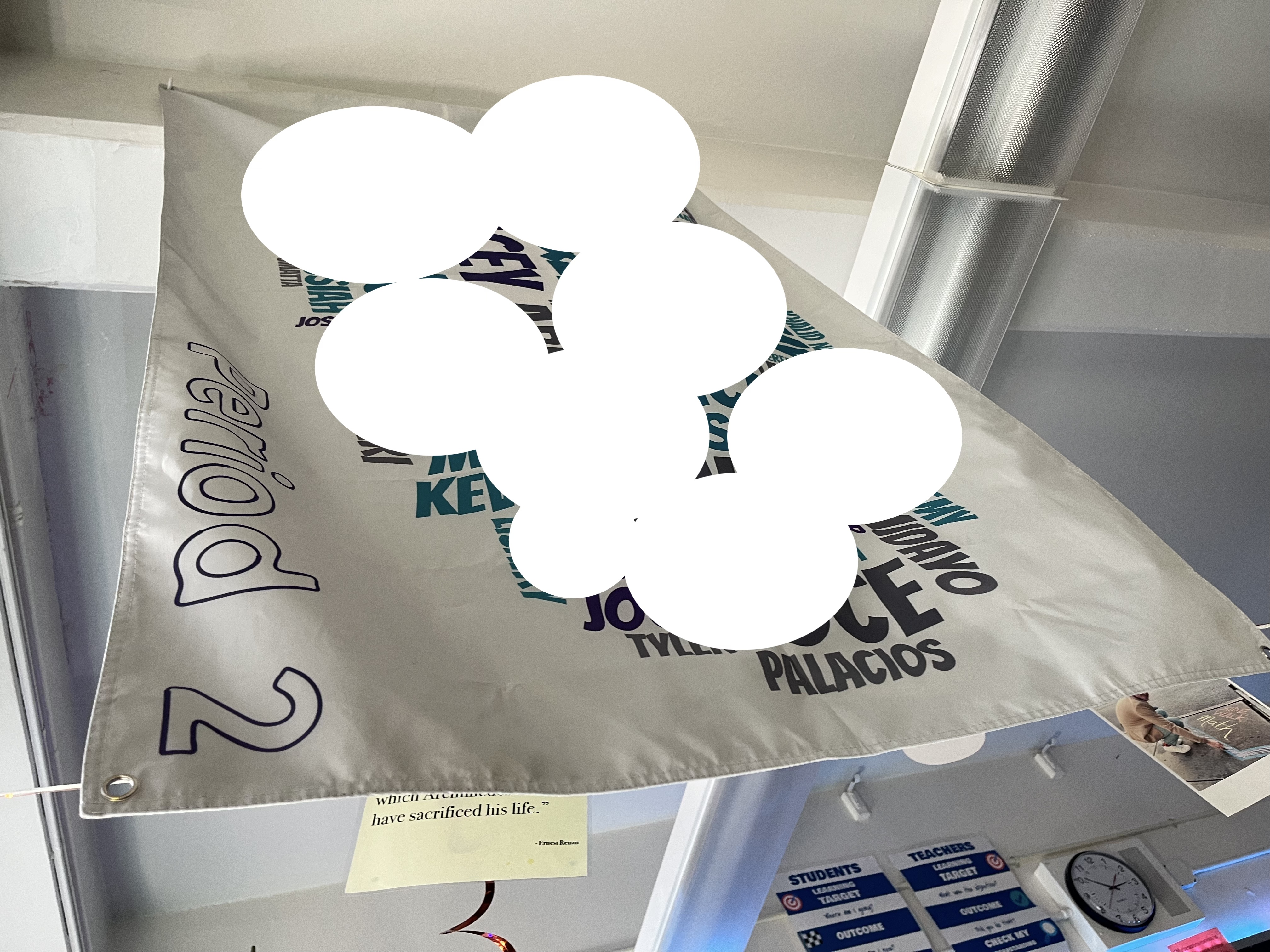
After the award show, with 10 minutes remaining, we held our Flag Raffle. Early in the year, I had custom flags made for each of my five classes. Each displayed the names of students in a trendy word cloud. I hung the flags from the ceiling around the classroom. Having no need for them at the end of the year, I raffled them off to interested students. It was a unique takeaway from our class.

The period 2 class flag hanging from the ceiling

The last thing we did was pass the token of appreciation for the last time. The personality of each class was on full display in this heartfelt send-off to our weekly class tradition.

Tuesday, June 13: Class Offerings and Shaving Day
The last day of class. In addition to filling out my end-of-year report card and writing a letter to a future Algebra 2 student, my Regents-bound classes received a letter from me. I do this every year. In the letter, each student gets mentioned by name. I highlight their significance to our class and why I’m grateful for them being part of our class this year. During the last few moments of class, I read the letter aloud.

Given the physical transformation of my classroom this year, I accompanied this year’s letter with what I called a “Class Offering.” These Offerings were objects from the classroom that I gifted to students when I reached their name in the letter. I gave out lamps, quotes from the walls, art, pillows, signs, and plants, among other things. The week prior, I went through my roster and connected each student to a particular object in the room that I thought represented them.

As I walked around the room reading my letter and handing out offerings, I got emotional. It was hard to let my students go. I found solace in them taking a piece of our classroom with them.

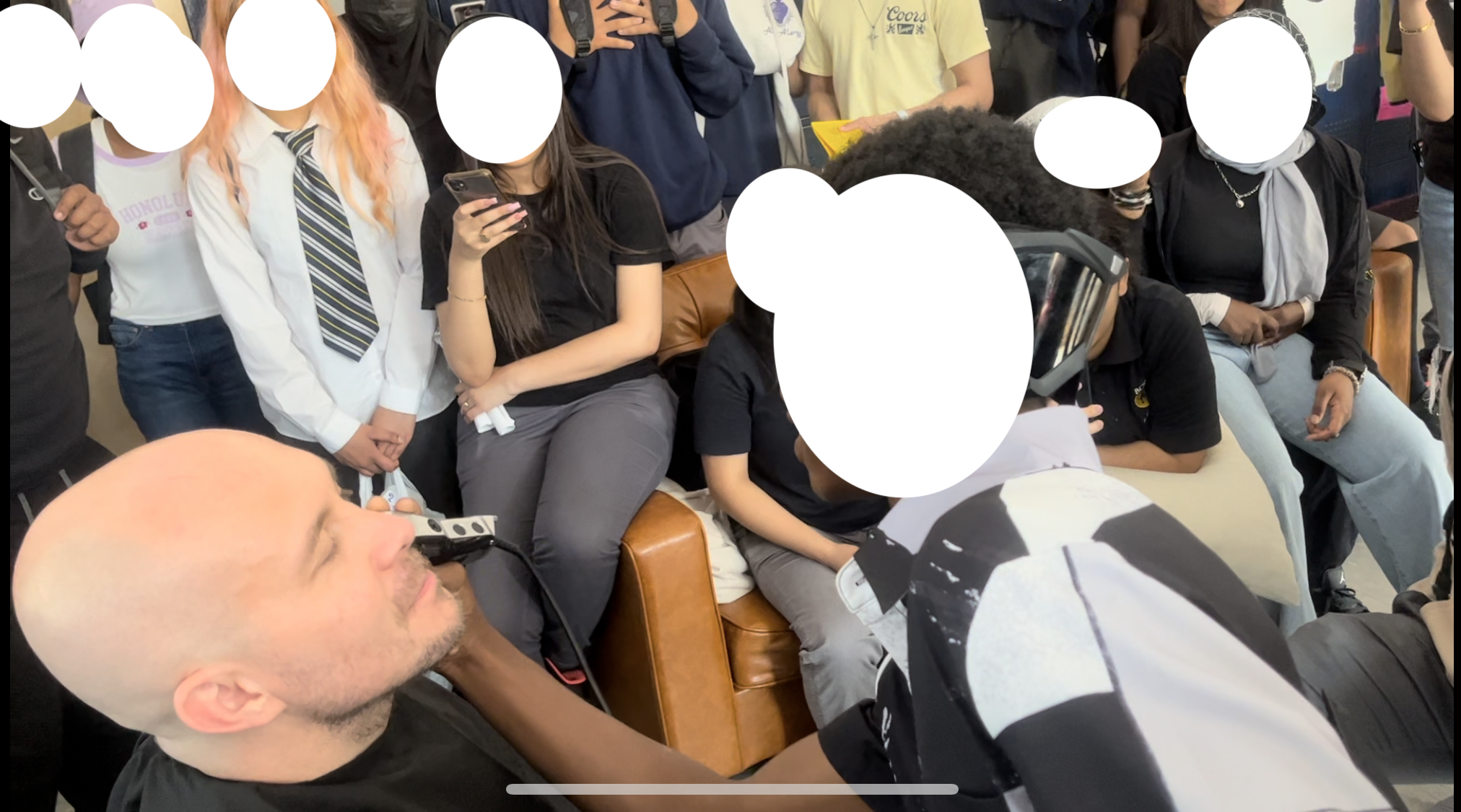
After school, I held my much-anticipated Shaving Day event. To symbolize the growth that my students experience with me, I grow my beard out all school year. I shave in September, and my face doesn’t get touched again until my students shave it again in June. This is the fifth year I’ve done it.

After school, with many students gathered around me in a chair near the SmartBoard, my beard came off at the hands of my students. It was calmer and more focused than in years past, but still held the same excitement. A fitting send-off to a memorable year.

My students shaving my 10-month-old beard as part of “Shaving Day”

bp