A Thousand Words a Day • Sept 6-9 (No. 1)

I am documenting my 2022-23 school year through photography. Each day, I take a photograph and include it in a weekly post here on my blog. The goal is to create a compilation of photos that tells the story of my year and challenges me to go beyond the written word. This is the 0th post in the series.


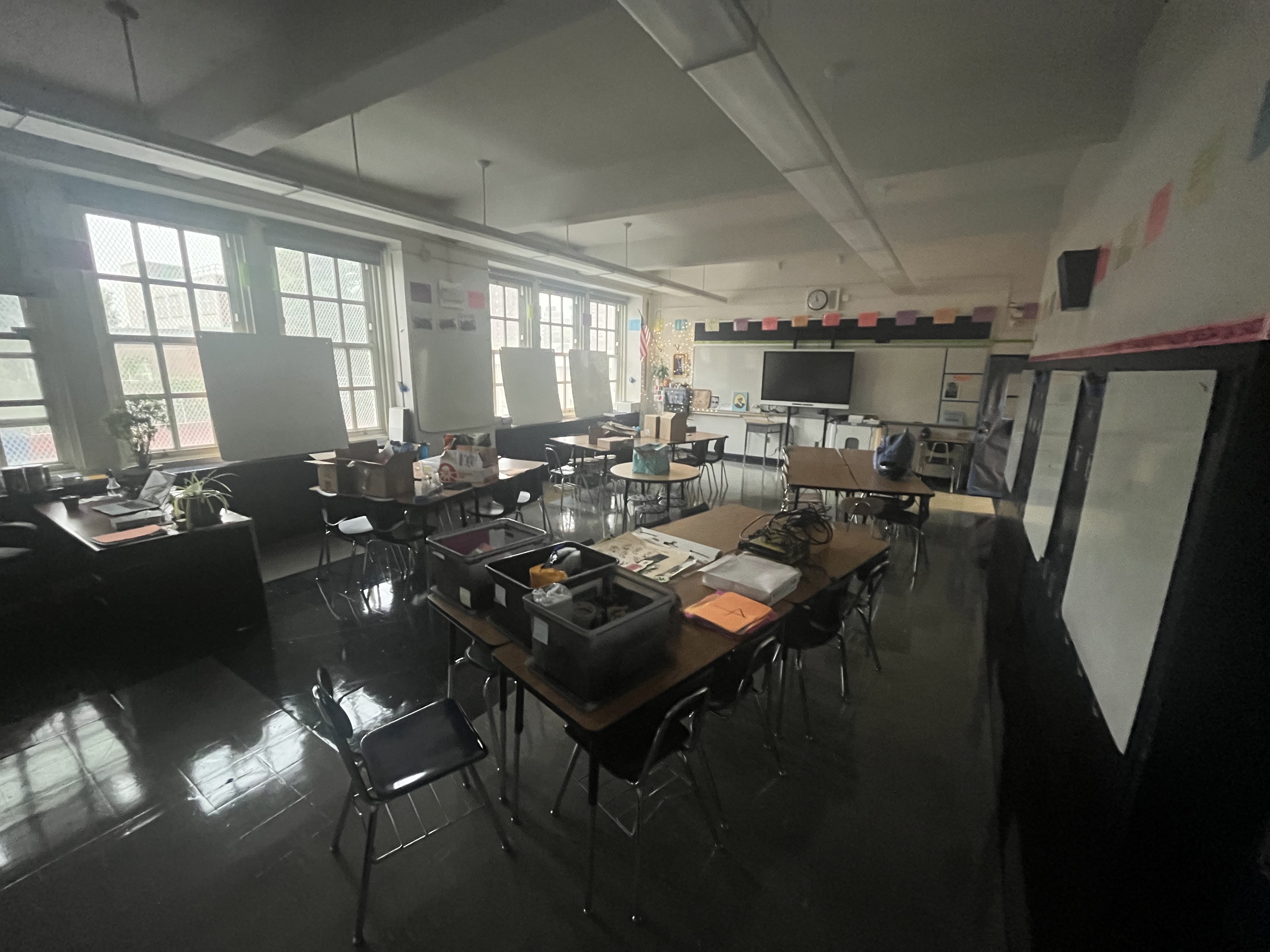
Tuesday, September 6

How I left the room on a teachers-only day 1

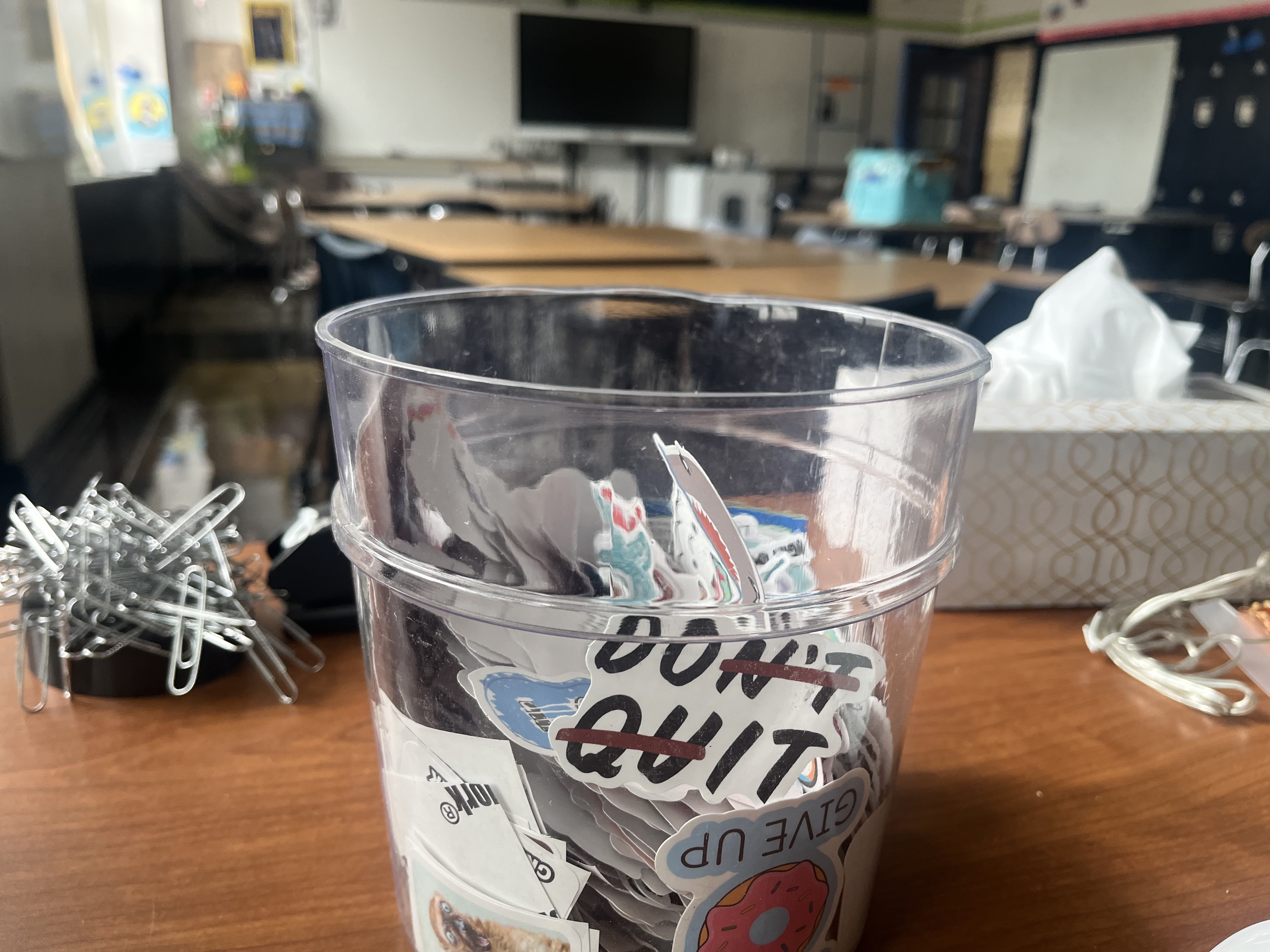
Wednesday, September 7

A bucket of stickers on my desk at the end of the day


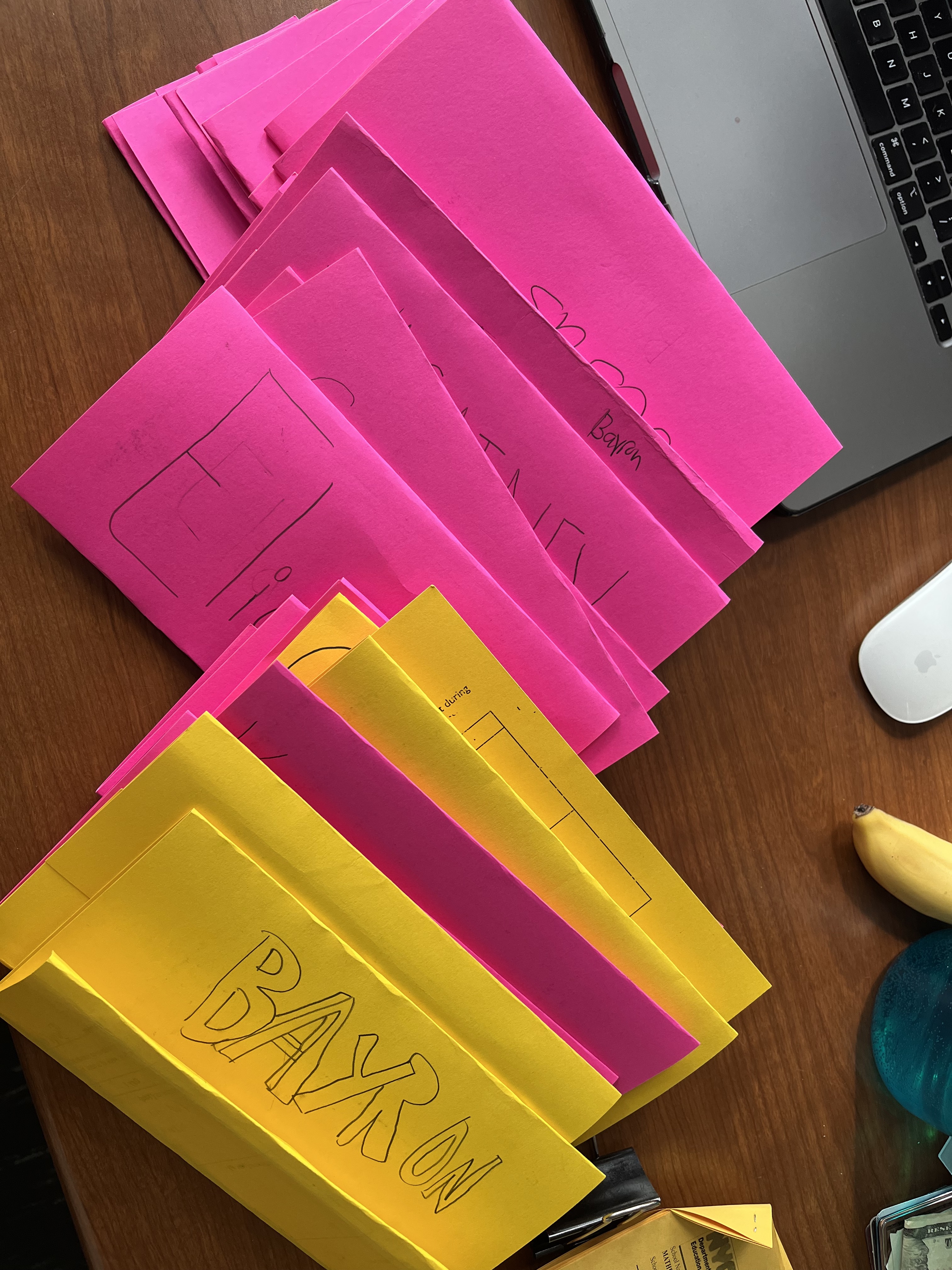
Thursday, September 8

Day 1 with students, responding to name tents


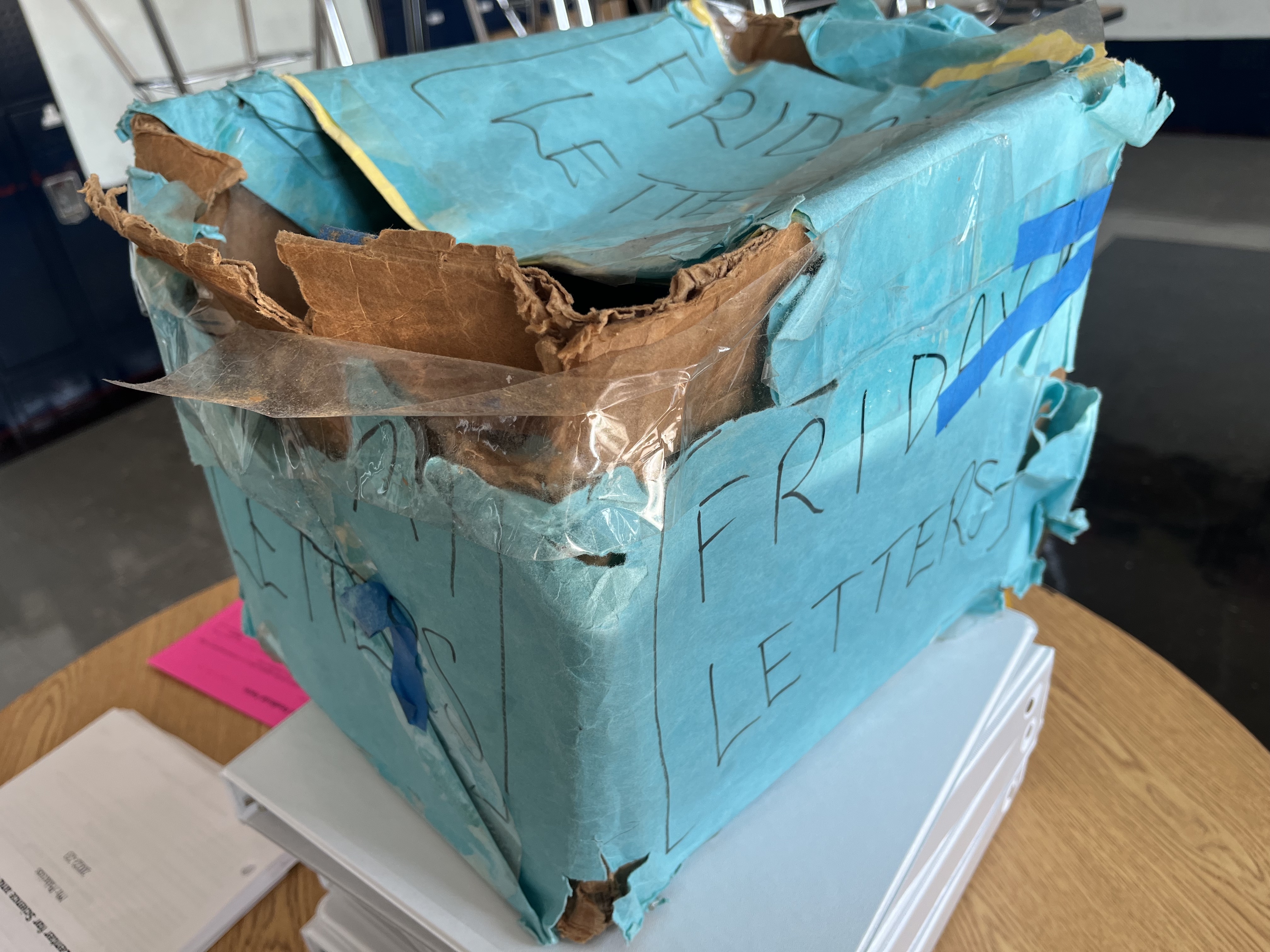
Friday, September 9

Introduced Friday Letters today — my box is still going strong!

bp

A Thousand Words a Day • Introduction (No. 0)

I am documenting my 2022-23 school year through photography. Each day, I take a photograph and include it in a weekly post here on my blog. The goal is to create a compilation of photos that tells the story of my year and challenges me to go beyond the written word. This is the 0th post in the series.

Last spring, I visited the Bronx Museum. It’s a stone’s throw away from where I live, but I’d never been. While strolling around their Bronx Calling exhibit, I saw two paintings by artist and NYC public school art teacher Clare Kambhu. Interestingly, as a teacher herself, some of Kambhu’s art centers on classroom furniture. The two paintings I saw at the museum were classroom chairs (here and here, I think). While simple, it blew my mind how she turned a mundane, everyday classroom object into a creative focal point. I’d looked at these types of chairs for over 16 years, but Kambhu somehow made me see them differently that day. I was fascinated.

At that moment, I couldn’t help but look inward. I thought about my own creative output and how all of what happens here on my blog involves writing. Don’t get me wrong, I love writing as a form of personal expression and reflection, but that day at the museum, surrounded by so much creative genius, and by Kambhu’s chairs, I had a surge of inspiration to try something new. Why not blog through a different medium?

Thus, this school year I’m trying something new. I’m still going to write my standard posts, but I’m also going to tap into my inner artist to help my blog reach for more. I can’t paint to save my life, so, despite Kambhu’s inspiration, I won’t be picking up a paintbrush anytime soon. But I do have a hidden passion that I’ve decided will help me reflect on my school year: photography.

I’ve long found that photographs have a unique way of defying time. They suspend a moment — and a perspective — forever. I appreciate photography because of its unique ability to take our noisy, busy world and hold it still. The right photos often help me see something I’ve never seen before. This year, I hope the same will happen to my teaching.

So here’s how it’s going to work. I will use my phone to take one photograph each school day, give it a caption, and post it here on my blog. The photos will be unedited, posted weekly, and organized by month. In addition to simply bottling up my 17th year of teaching, the goal of this series is to create a compilation of photos that will tell the story of my year in a way that I never have before. As they say, a picture is worth a thousand words. This series, then, will be a thousand words a day.

In recent years, I’ve taken to using serial blog posts to help me document my school year. These posts help me process what happens during the year, see how it’s all connected, and give me something to look forward to. Every day in the classroom overflows with tiny moments that come and go. Some are funny, others are frustrating. Most don’t get remembered. This year, I hope that photography can challenge me to hold onto these moments a little longer and see them (literally) in a new light.

bp

On being a mentor

When I was a first-year teacher, like all first-year teachers in the New York City public schools, I had a mentor. She was a veteran teacher with 15 years of experience, assigned to me by my school to show me the ropes. She was caring and strict — a teacher who students feared, but also deeply respected because of her high standards.

My mentor and I met once a week, I think, but it may have been twice a month. A district-mandated binder filled with worksheets drove our conversations. All mentees back then got one. Like clockwork, during each session, we would sit in the 5th-floor teacher’s workroom and pull out another worksheet from the binder. The worksheets helped us talk about all sorts of things, none of which I remember now.

While my mentor helped me get through that first year, which is no small feat, I didn’t gain much insight into teaching from her. It wasn’t that she did a poor job or didn’t care. Looking back, I think she just relied too heavily on the binder instead of her intuition. We were there to discuss whatever the next worksheet prescribed. The whole experience felt staged, divorced from my first-year struggles.

In the end, did I get what I needed as a mentee in my first year of teaching? No. But to be fair, did I even know what I needed? Probably not. I was surviving.

Since that time, I have myself been a mentor on three different occasions. The first was in my seventh year of teaching. I did a horrible job. Why my school thought I was ready to be a mentor, I don’t know. Trapped in my own world, I made little time for my mentee. Our relationship consisted mainly of rushed check-ins in the hallway.

My second and third mentorships were better. The second came in year 14 and the most recent was last year. In both of these instances, I found myself far more secure in who I was as an educator and seasoned enough to understand my role as a mentor. Our conversations were meaningful and focused, reflective of my own curiosities when it comes to teaching and my mentees’ willingness to grow. The truth: Though I was the labeled the “mentor,” I may have learned more than either of my mentees.

Despite a growing inclination towards mentoring, I’m unsure about what it means to be a “good” mentor. Perhaps it’s to hold up a mirror for your mentee? Maybe it’s to listen carefully and identify key questions for them to dig into their practice? Maybe it’s to remind them that life can suck as a new teacher and that it gets better? As I lean into mentoring more over the next several years, I’m sure I’ll figure it out.

What I do know is that supporting the next generation of teachers is really important right now. Under normal circumstances, teaching is hard to figure out. But pandemic teaching has added layers of complexity to our work causing even the most experienced teachers (like me) to question everything. I can only imagine what it’s been like for new teachers. All the more reason why they need someone in their corner.

Thus, this year I’ll be making space to be a mentor once again. I’ve determined that I’m all in on helping new teachers navigate the confusing early years of teaching. It could be that I’m getting old and seeking new ways to challenge myself, but part of me thinks back to the 5th-floor teachers lounge, my lifeless binder, and how unsatisfied I was during my first year. I hope that I provide a more worthwhile experience for my mentee this year.

bp

The Regents and the Absolute Power They Hold

At the end of school year, a colleague and I were chatting. He was telling me about a student of his. The student had poor attendance. All year, she had attended his math class just a handful of times. She was part of the classroom community, but only in theory. Her name was on the roster and my colleague knew who she was. That’s where it ended. Math class wasn’t a priority for her.

My colleague worked tirelessly to help her make it to class. He called home, tracked her down outside of lunch, offered incentives. But his efforts brought no change to her patterns of attendance.

In June, after 10 months together, her class was scheduled for a Regents exam. Like all state exams, the Regents is but one narrow way of measuring student understanding, but you wouldn’t know that from how much weight these tests are given by the powers that be. Despite their flaws, these tests reign supreme. We kick and scream, but in the end, all of us in the public domain bow to their authority.

Given her lackluster attendance and utter disconnect from the class, this student should have been shielded from the domineering influence of the Regents. She should have been exempt, unmoved by its control. Simply put, since she had little investment in whatever outcome awaited her, the Regents should have been meaningless to her.

But no. What happened on the day of the Regents? She showed up. Bright and early.

What’s interesting about this story is not how the student believed she could be successful on the exam with such little preparation. Instead, what I find fascinating is how the Regents accomplished something that the teacher never could. Despite her teacher’s Herculean efforts, nothing he did moved the needle. His efforts were mere child’s play when compared to the swift and unflinching dominance of the Regents. He practically moved mountains to get her to come to his class and nothing worked. The Regents snapped its fingers and she arrived promptly.

Hearing from my colleague how the exam cast its spell over this student was disappointing, but it wasn’t alarming. I’ve seen it happen many times before. For these students, in these instances, the Regents wields power that arrives every June like a savior: it instills undying hope that grades can be rescued if a 65 is earned. This power is absolute and supersedes anything their teacher might have done to support their growth in the months leading up to that ominous day in June. The teacher becomes a footnote.

While this phenomenon wasn’t new for me, because of a two-year, Covid-inspired hiatus from the exams, it did serve as a gloomy reminder: I matter very little when stacked up against the institution that is the New York State Regents. It commands a level of respect from students that I can only dream of achieving. It always attracts a crowd eager to oblige. It achieves more on paper (literally) than I ever have in my pedagogy.

Remote learning made me feel small. Now, with the return of the Regents, I remember how small I actually am.


bp